


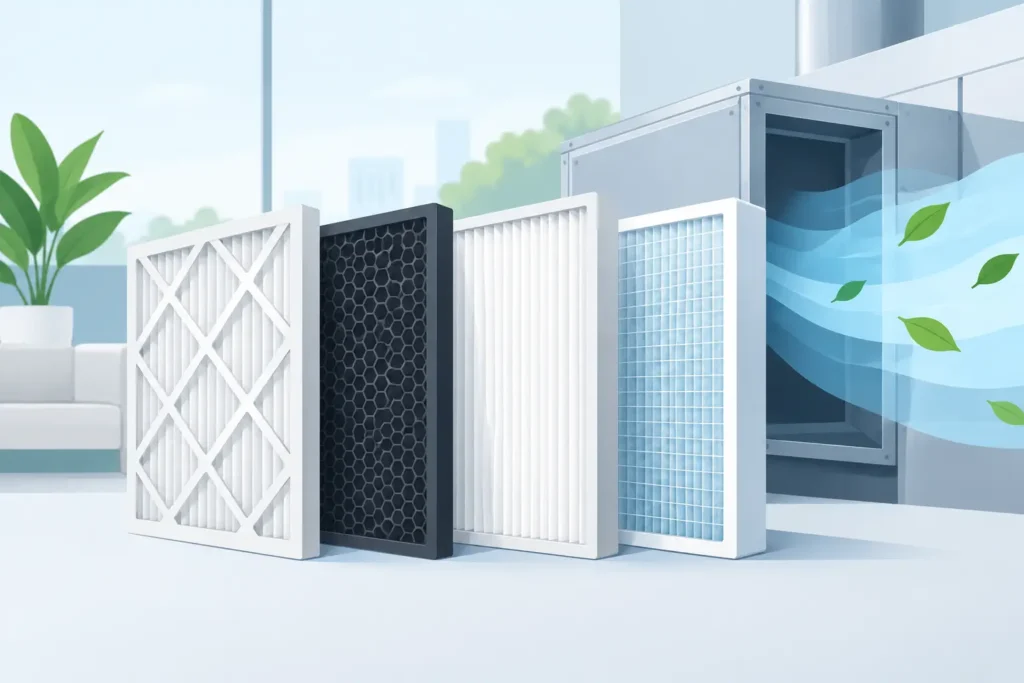
A filter that looks clean enough can still be the reason a furnace runs harder, a room feels dusty, or allergy symptoms flare up. This HVAC filter selection guide helps homeowners and building managers choose filtration that protects indoor air without choking the equipment meant to move it.
The best filter is not automatically the one with the highest rating. It is the one that fits your HVAC system, addresses the particles you actually care about, and gets replaced before restricted airflow becomes a costly service call.
Start With the Filter Size and Fit
Before comparing ratings, confirm the size printed on the existing filter frame or in the equipment manual. A common mistake is buying a nominal size, such as 16 x 25 x 1, without checking the actual dimensions. The actual filter may measure slightly smaller so it can slide into the rack correctly.
A loose filter allows air to bypass the media. That means dust, pet dander, and debris can travel around the filter instead of through it, collecting inside the blower compartment, evaporator coil, and ductwork. A filter that is forced into place can bend, collapse, or make future replacement unnecessarily difficult.
For homeowners, replacing a standard 1-inch filter is usually simple. For condo fan coils, high-efficiency media cabinets, rooftop units, and commercial equipment, dimensions and access can be less obvious. If the filter slot is damaged, missing a cover, or leaving visible gaps around the frame, the issue is not just filter choice. It is an airflow and maintenance issue worth correcting.
What MERV Ratings Actually Mean
MERV stands for Minimum Efficiency Reporting Value. In plain language, the rating describes how effectively a filter captures airborne particles across different size ranges. A higher MERV rating generally captures smaller particles, but it can also create more resistance to airflow.
For many homes with a properly maintained central system, MERV 8 to MERV 11 is a practical range. These filters can catch a meaningful amount of household dust, pollen, lint, mold spores, and pet dander while remaining manageable for many residential systems.
MERV 13 filters capture finer particles and are often considered by households dealing with allergies, pets, wildfire smoke, or greater concern about airborne contaminants. They can be a strong choice, but only when the system can handle them. A restrictive filter in an older furnace or a system with weak return airflow can reduce comfort, strain components, and contribute to frozen coils in cooling season.
The right question is not, “What is the highest MERV filter I can buy?” Ask, “What MERV rating can this system use while maintaining healthy airflow?” Your furnace or air handler manual may state a recommended range. If it does not, an HVAC professional can assess the return setup, blower performance, duct condition, and static pressure before you move to denser filtration.
A practical MERV range for common situations
A MERV 6 to 8 filter often works for a household without major allergy concerns that wants basic protection from larger dust and lint. MERV 8 to 11 is a sensible middle ground for most occupied homes, especially those with pets or normal seasonal allergies. MERV 13 may make sense when finer-particle filtration is a priority and the equipment has been verified for it.
For commercial properties, filter specifications may be set by building design, tenant requirements, or maintenance plans. Changing the rating without reviewing the unit can cause pressure problems across multiple suites or areas of a facility. Consistency matters too. One undersized or poorly seated filter can undermine a larger maintenance program.
HEPA Is Not a Default HVAC Upgrade
HEPA filters are highly effective at trapping very small particles, but a true HEPA filter is not a drop-in replacement for a typical furnace filter. Most residential forced-air systems are not built to push air through HEPA media without a specially designed housing, adequate return capacity, and sometimes equipment modifications.
Installing a true HEPA filter where it does not belong can make the system work against itself. Rooms may receive less conditioned air, energy use may rise, and the blower can experience unnecessary stress. For people with serious respiratory sensitivities, the better path may be a properly designed whole-home filtration solution, a portable HEPA air cleaner in key rooms, or both.
Marketing terms can be confusing here. “HEPA-type” or “HEPA-style” does not mean the product meets true HEPA performance standards. Read the MERV rating, check compatibility, and do not let bold packaging replace a real equipment assessment.
Match the Filter to the Air Problem
Filters are useful, but they are not a cure-all. They capture particles moving through the HVAC system. They do not remove every odor, solve moisture problems, eliminate visible mold growth, or fix dust that is entering through leaky ducts and poorly sealed return pathways.
If your main complaint is dust settling quickly after cleaning, start with a properly fitted MERV 8 to 11 filter and inspect the basics. Are supply vents blowing freely? Is there dust around return grilles? Are filters overdue? Is a renovation, pet, fireplace, or high-traffic household creating more particles than usual?
For allergies, filtration helps most when paired with regular replacement, clean return grilles, vacuuming with appropriate equipment, and control of known triggers. During heavy pollen periods, a higher compatible MERV rating may be worthwhile. But if airflow noticeably drops after the change, step back and have the system checked rather than simply accepting poor performance.
For odors, smoke, or volatile organic compounds, particle filtration alone has limits. Filters with activated carbon can reduce some odors, but the amount of carbon in a thin disposable filter is often modest. Persistent odors need source control first, whether that means addressing moisture, cleaning a cooking area, improving ventilation, or investigating a mechanical issue.
Replacement Timing Matters More Than the Package Claims
A filter’s stated life is only a starting point. A “three-month” filter may need replacement in 30 days in a home with shedding pets, construction dust, frequent cooking, or heavy HVAC use. On the other hand, replacing a lightly used filter every few weeks wastes money without improving results.
Check the filter monthly at first. If it is visibly loaded with dust, bowed inward, gray across the media, or causing weaker airflow, replace it. Do not wait until it is completely blocked. Write the installation date on the frame or set a recurring reminder, especially for rental units, condos, and commercial spaces where responsibility may change hands.
A few signs should prompt faster action: unusually dusty rooms, rising utility costs, hot or cold spots, a whistling return grille, or a filter that becomes dirty far sooner than expected. These can point to return-air problems, duct leakage, excessive indoor particle sources, or a system that needs maintenance beyond a filter swap.
Don’t Ignore the Condition of the Duct System
A quality filter protects the equipment from new debris, but it cannot remove buildup already sitting in supply and return ducts. If you have moved into a recently renovated property, inherited a home with unknown maintenance history, or see debris blowing from vents, it may be time to look beyond the filter rack.
Professional duct cleaning is not a substitute for regular filter changes. The two work together. Clean ducts and return components reduce the material available to circulate, while a correctly selected filter helps keep new dust from accumulating as quickly. The same principle applies to dryer vents: lint belongs outside the appliance and vent line, not building up where it can restrict drying and increase fire risk.
HVAC Filter Selection Guide: When to Call a Professional
Call for help when filter changes repeatedly lead to weak airflow, equipment noise, icing, frequent shutdowns, or uneven heating and cooling. Also get professional guidance before installing a much denser filter than the one your system has historically used. The goal is cleaner air and dependable comfort, not a filter that looks impressive while your furnace struggles to breathe.
For GTA homeowners, condo managers, and facility operators, Dust Chasers can help identify when recurring dust and airflow issues point to dirty ducts, neglected vents, or a maintenance problem beyond the filter itself. Choose filtration with a clear purpose, replace it on schedule, and treat changes in airflow as a warning sign worth acting on.