


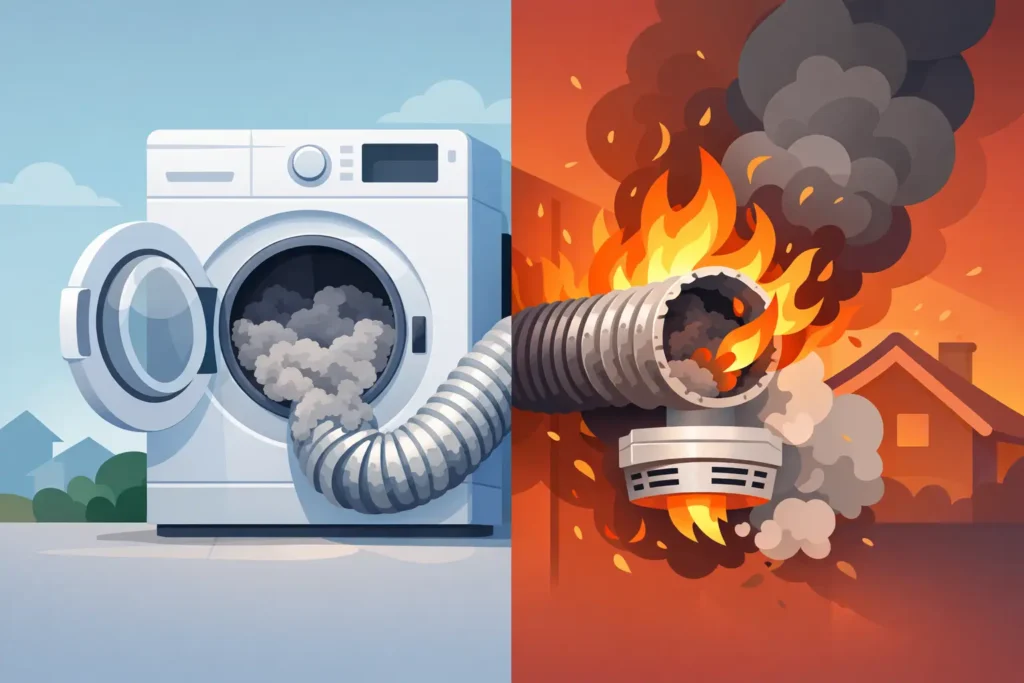
That burning smell after a laundry cycle is not something to shrug off. If you have ever wondered, can clogged dryer vents cause fires, the short answer is yes – and it happens for a very simple reason. Dryers create heat, lint is highly flammable, and a blocked vent gives that heat nowhere to go.
This is one of those home safety problems that starts quietly. Clothes take a little longer to dry. The laundry room feels warmer than usual. Maybe the outside vent flap barely opens. None of it looks dramatic, which is exactly why people put it off. Then the system runs hotter and longer every week, and the risk keeps climbing.
Why clogged dryer vents become a fire hazard
A dryer is built to move hot, moist air out of the machine and outside the building. When the vent line is clear, that process is straightforward. Heat leaves the dryer, moisture leaves with it, and lint is mostly captured by the lint screen.
The problem is that lint never stops at the screen. Fine fibers get past it and collect inside the vent pipe, around bends, at transition hoses, and near the exterior termination point. Over time, that buildup narrows the passage and slows airflow.
When airflow drops, the dryer has to work harder to do the same job. Internal temperatures rise. Drying cycles get longer. Components wear down faster. Most importantly, trapped lint sits inside a hot environment. That combination is exactly why the answer to can clogged dryer vents cause fires is not theoretical – it is a real household risk.
There is some nuance here. Not every clogged vent turns into a fire, and not every dryer that runs hot is moments away from disaster. But reduced airflow absolutely increases the chances of overheating, ignition, and equipment damage. In condos, townhomes, and commercial laundry setups with longer vent runs, that risk can be even higher because the system already has less margin for blockage.
What actually causes ignition inside a dryer vent system
Lint does not need a dramatic spark to become dangerous. It is made of tiny dry fibers, and those fibers ignite much more easily than many homeowners realize. Inside a compromised vent system, several conditions can line up at once.
First, heat builds where it should not. Second, lint accumulates in concentrated pockets. Third, the dryer keeps cycling because the clothes are still damp. That extended run time means more heat, more friction, and more stress on the machine.
In some cases, the trouble starts inside the dryer cabinet rather than the vent itself. In others, the vent line becomes so restricted that hot air backs up into the appliance. A crushed flex hose behind the dryer can make things worse fast. So can bird nests, exterior hood blockages, poor vent routing, or older plastic-style vent materials that were never ideal to begin with.
That is why a clean lint screen alone is not enough. It helps, but it does not protect the full system.
Warning signs you should not ignore
The biggest mistake people make is waiting for obvious failure. Dryer vent problems usually announce themselves early, just not loudly.
If clothes are still damp after one normal cycle, pay attention. If the dryer feels unusually hot to the touch, pay attention. If your laundry room gets humid or stuffy during operation, pay attention. A burning odor, excessive lint around the dryer, or a vent hood that barely pushes air outside are stronger warning signs.
Higher energy bills can also point to the issue. A restricted dryer needs more time and more power to finish the same load. Property managers and landlords sometimes spot this first through repeated tenant complaints about long dry times. Homeowners often notice it when a machine that used to dry towels in one cycle suddenly needs two or three.
For condo residents, the signs can be harder to see because parts of the vent run may be hidden in walls or shared routing systems. That makes professional inspection more valuable, not less.
Can clogged dryer vents cause fires in newer dryers too?
Yes. A newer appliance is not immune to a blocked vent.
Modern dryers may include safety sensors, high-limit thermostats, or automatic shutoff features. Those are helpful, but they are backup protections, not a substitute for vent maintenance. If airflow is poor, the dryer still operates under stress. Parts may fail earlier, cycles may become inefficient, and overheating can still happen.
This is similar to driving a newer vehicle with a blocked exhaust path. The car may have warning systems, but that does not make the blockage safe. A dryer vent works the same way. The machine depends on a clear path to move heat and moisture out.
The hidden cost beyond fire risk
Fire prevention gets the headline, and rightly so. But clogged dryer vents also create everyday costs that build up quietly.
Longer drying times mean wasted electricity or gas. Heat and moisture trapped indoors can make the laundry area uncomfortable and may contribute to humidity problems nearby. Overworked dryers also wear out sooner. Heating elements, thermostats, motors, and blower components all take extra strain when the vent is restricted.
For commercial facilities and multi-unit properties, that can turn into repeated maintenance calls, tenant dissatisfaction, and avoidable equipment replacement. For families at home, it means paying more every month for a machine that is doing a worse job.
What increases the risk faster than people expect
Some vent systems clog much faster than others. Large households that run frequent loads see faster lint buildup. Pet hair makes it worse. So does washing heavy fabrics like towels, blankets, and fleece. Long vent runs with multiple turns collect debris more easily than short, straight runs.
Installation quality matters too. A smooth metal vent line generally performs better than flimsy or overly corrugated materials that trap lint in ridges. If the hose behind the dryer is crushed when the appliance is pushed back into place, airflow can drop immediately. Exterior vent covers that stick shut or collect debris can also create a blockage at the termination point.
This is one reason scam-style pricing in this industry is such a problem. A quick surface cleaning may make the service sound cheap, but if the technician does not inspect the full run, airflow issues can remain. For something tied to fire risk, partial work is not real protection.
How often should dryer vents be cleaned?
It depends on how often the dryer is used, what kind of loads you run, the vent length, and whether the property is a house, condo, or commercial building. Many homes benefit from annual dryer vent cleaning. Busy households, rental properties, and buildings with high laundry volume may need more frequent service.
The better rule is to watch performance, not just the calendar. If dry times are increasing, the vent should be checked. If the system has never been professionally cleaned, that alone is reason enough to schedule it.
In the Greater Toronto Area, where many condos and townhomes have complex vent layouts, routine maintenance is often the safest approach. A hidden blockage is still a blockage.
What professional cleaning should include
Real dryer vent cleaning is not just vacuuming around the machine. It should address the full vent path from the dryer connection to the exterior exit, with attention to airflow, lint removal, and visible problem points.
A proper service should also identify issues like disconnected ducts, crushed transition hoses, poor vent materials, and exterior blockages. If a gas dryer is involved, qualified technicians matter even more. Safety is not the place for guesswork.
That is where experienced specialists stand apart from low-cost operators who rely on rushed appointments and vague promises. A trustworthy company is clear about scope, pricing, and what was actually cleaned. Dust Chasers has built its reputation around exactly that kind of direct, safety-first service.
Simple steps that help between cleanings
You do not need to be a technician to lower your risk. Clean the lint screen after every load. Check that the outdoor vent flap opens properly when the dryer runs. Avoid overloading the machine, because dense loads produce more lint and dry more slowly. If possible, look behind the dryer now and then to make sure the hose is not kinked or crushed.
Those steps help, but they do not replace full vent cleaning. They are the everyday basics, not the complete fix.
A dryer should not struggle to do a routine job. If it is running hot, taking too long, or giving off warning signs, treat that as a safety issue rather than a small inconvenience. A clear vent supports better airflow, lower energy use, and a much safer home or building. That is a problem worth handling before it announces itself the hard way.