


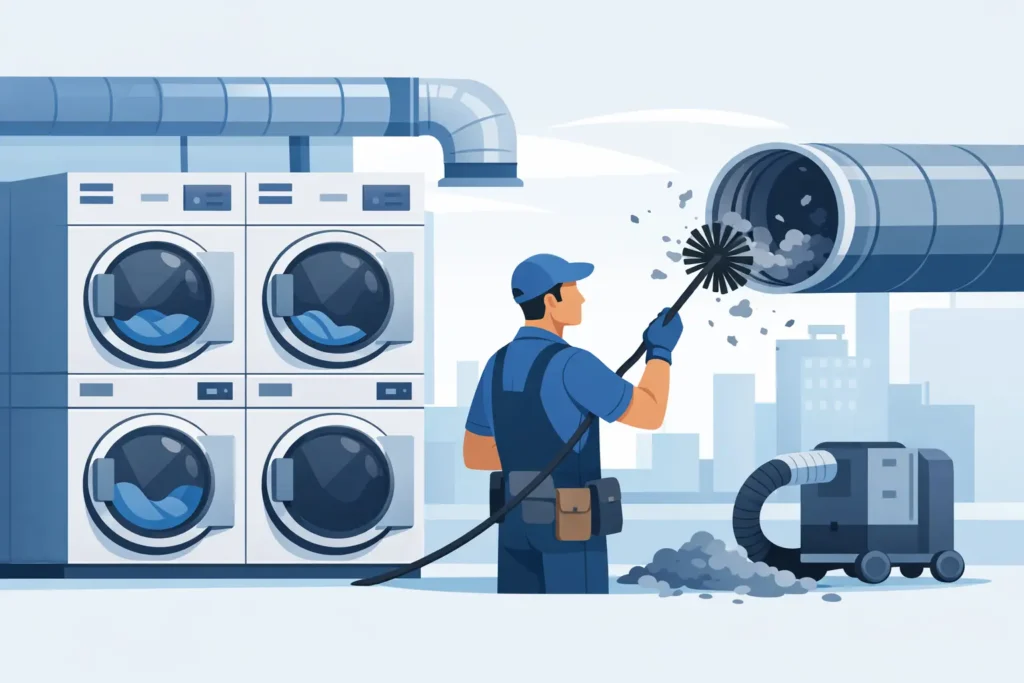
A dryer that suddenly takes two cycles to finish a load is not just an inconvenience in a commercial building. It is often an early warning sign. In laundromats, multi-residential properties, salons, spas, hotels, and care facilities, commercial dryer vent cleaning is one of those maintenance jobs that gets ignored right up until airflow drops, heat builds up, and the risk becomes expensive.
For building operators and property managers, this is not a cosmetic service. It is about fire prevention, equipment performance, tenant safety, and avoiding service calls that could have been prevented. When a dryer vent system is clogged with lint, dust, and debris, the dryer has to work harder, components wear out faster, and moisture can start lingering where it should not.
Why commercial dryer vent cleaning gets overlooked
Part of the problem is simple. Dryer vents are out of sight, and a lot of people assume cleaning the lint trap is enough. It is not. The lint screen catches only part of the debris. Fine lint still moves through the exhaust path, and over time it collects inside the ductwork, the transition hose, elbows, exterior vent termination, and sometimes inside the machine itself.
In a commercial setting, that buildup happens faster than most people expect. More loads mean more lint. Longer vent runs mean more places for debris to collect. Shared laundry rooms and stacked systems add complexity, especially in buildings where maintenance history is incomplete or service has been inconsistent.
There is also a trust issue in this industry. Property managers hear too many vague promises and suspiciously cheap offers. That makes some decision-makers delay service until there is a visible problem. The better approach is to work with a qualified team that explains what is being cleaned, what is being checked, and what condition the system is actually in.
What a blocked dryer vent does to a commercial facility
The first effect is usually poor drying performance. Loads take longer, staff or tenants run extra cycles, and utility costs climb. That may sound manageable at first, but it rarely stays there.
Restricted airflow traps heat in the system. That added heat stresses parts that are already working overtime, including heating elements, thermostats, fuses, and motors. In gas dryers, venting problems can create even more serious safety concerns if exhaust is not moving properly. This is why qualified service matters, especially when gas-fired units are part of the system.
Moisture is another issue. A dryer is supposed to remove warm, humid air from the building. If the vent line is partially blocked, that moisture can back up into the laundry room or vent cavity. Over time, that can contribute to musty odors, residue around vents, and conditions that are harder on walls, ceilings, and nearby mechanical spaces.
Then there is the fire risk. Lint is highly combustible. Combine it with restricted exhaust, rising temperatures, and neglected maintenance, and the hazard becomes very real. For commercial operators, that is not just a maintenance failure. It can become a tenant safety issue, an insurance headache, and a major disruption to operations.
Signs you may need commercial dryer vent cleaning
Some warning signs are obvious, while others are easy to brush off. Dryers that run hotter than usual, laundry rooms that feel humid, and clothing that comes out damp after a normal cycle all deserve attention. So do burning smells, visible lint around the machine or exterior vent, and complaints from tenants or staff that drying times keep getting worse.
In larger properties, the signs can be more subtle. One floor may report no issue while another stack has persistent performance problems. A salon may notice towels staying damp longer than usual. A hotel may see a steady increase in dryer wear without connecting it to the vent path. The pattern matters. If output drops while usage stays the same, airflow should be checked.
What professional commercial dryer vent cleaning should include
Good service goes beyond vacuuming what is easy to reach. A proper commercial dryer vent cleaning appointment should address the full vent pathway, not just the area behind the dryer. That includes the transition connection, internal vent line, fittings, bends, and exterior termination point.
The technician should also assess airflow restrictions, signs of crushed or damaged ducting, disconnected sections, and heavy lint accumulation at critical choke points. In commercial environments, vent design matters. Some systems are long, some have multiple turns, and some were installed in a way that makes lint buildup more likely. Cleaning without evaluating those conditions is only half the job.
For multi-unit or shared laundry systems, the service approach may need to be more methodical. Access points, machine count, vent length, and usage patterns all affect the scope. That is why transparent pricing and clear explanations matter. Facility managers should know what is included before work starts, not after the invoice shows up.
How often should commercial dryer vents be cleaned?
It depends on the type of facility and how heavily the dryers are used. A busy laundromat or hospitality operation may need more frequent service than a small apartment building laundry room. A salon processing towels all day creates a different lint load than a low-traffic residential amenity space.
The right schedule depends on usage volume, vent design, machine type, and whether there have already been performance issues. Annual service may be enough for some properties. Others need cleaning more often to stay ahead of buildup. If you are seeing long dry times before the next scheduled visit, the interval is probably too long.
This is where a practical inspection helps. Rather than guessing, a qualified technician can look at the system condition, identify risk factors, and recommend a maintenance schedule that fits the building. That is a smarter move than waiting for symptoms and treating every problem like an emergency.
Commercial dryer vent cleaning and operating costs
A neglected vent does not just create risk. It quietly raises costs. Every extra cycle uses more power or gas, adds labor time in staffed facilities, and puts more wear on expensive equipment. Across a commercial property, those small losses stack up fast.
There is also the cost of disruption. If dryers go down in a condo building, tenants complain. If they fail in a care facility, laundry flow becomes a serious operational problem. If a hospitality business cannot process linens efficiently, service quality takes a hit. Cleaning the vent system is a relatively small maintenance item compared to the cost of breakdowns, emergency repairs, or reputation damage.
That does not mean every issue is solved by cleaning alone. Sometimes damaged ducting, poor installation, or aging machines are part of the problem. But cleaning is often the first and most sensible step because it restores airflow and reveals whether deeper repairs are needed.
Choosing the right provider for commercial dryer vent cleaning
Not every company offering vent cleaning is equipped for commercial work. Building operators should look for a provider that understands ventilation systems, communicates clearly, and does not rely on bait pricing or vague claims. In this industry, low-cost promises can end up costing more when the work is incomplete or the real issue gets missed.
For commercial properties in the Greater Toronto Area, that means choosing a team that respects building access protocols, works cleanly, shows up on schedule, and understands the difference between a quick surface clean and a full vent service. If gas dryers are involved, proper technical qualifications matter even more.
A serious provider should be able to explain the condition of the system in plain language. What was blocked, how severe it was, whether the ducting has defects, and what should happen next. That kind of transparency builds trust because it gives facility managers something useful to act on.
Dust Chasers has built its reputation around that exact standard – direct communication, qualified service, and no nonsense pricing games. For commercial clients, that matters just as much as the cleaning itself.
Why timing matters more than most operators think
The best time to schedule commercial dryer vent cleaning is before you have a problem, not after the dryers start failing. Preventive service gives you more control over scheduling, less disruption for staff or tenants, and a better chance of catching hazards early.
That is especially true in high-demand seasons or heavily used buildings, where downtime creates a ripple effect across operations. A planned service visit is easier to manage than an urgent call after a shutdown, odor complaint, or overheating issue.
Clean vents will not fix every laundry room problem, and they are not a substitute for broader equipment maintenance. But they do remove one of the most common and preventable causes of poor dryer performance. For any commercial property that depends on safe, consistent laundry operation, that is a smart place to stay proactive.
If your dryers are running longer, your laundry room feels hotter, or your maintenance team keeps chasing the same issue, the vent system is worth a closer look before it turns into a bigger one.