


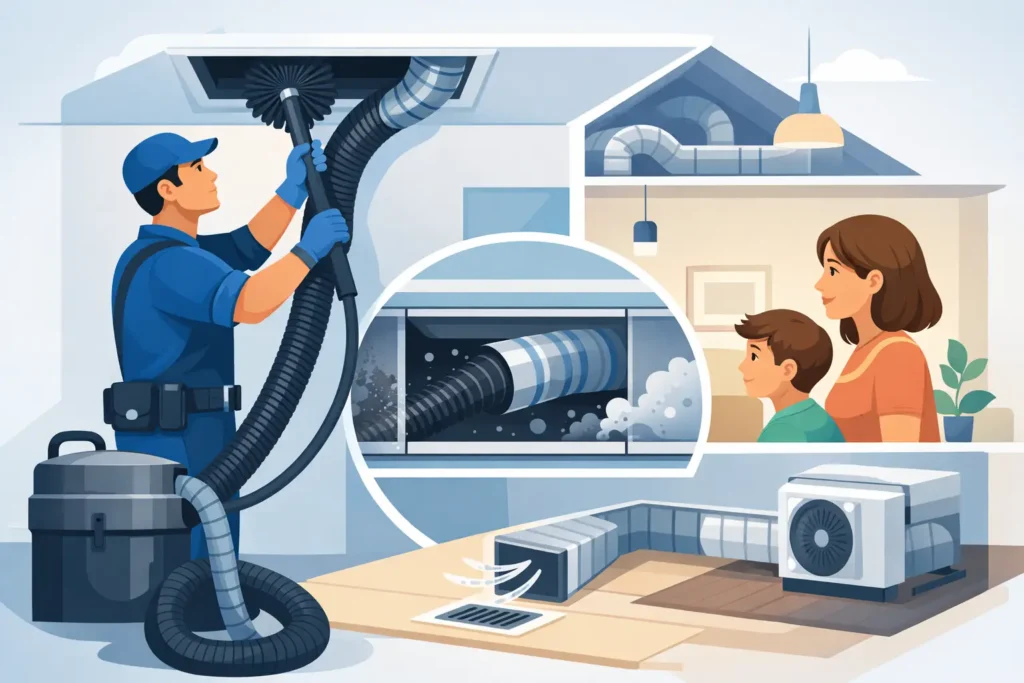
You should not have to guess what a crew is doing inside your HVAC system. When homeowners ask what happens during duct cleaning, they usually want to know two things: Will it make a real difference, and will the work be done carefully? A professional cleaning should be visible, explained, and backed by the right equipment – not a vague promise attached to a suspiciously low price.
For homes, condos, and commercial spaces across the Greater Toronto Area, duct cleaning is a practical maintenance service. It removes accumulated dust and debris from accessible parts of the forced-air system, helps restore airflow where buildup is a factor, and gives you a clearer look at the condition of your ventilation system.
Before Duct Cleaning Begins: Inspection and Setup
A reputable appointment starts with a walkthrough, not a vacuum hose through the front door. The technician should ask about your concerns, such as excess dust, uneven heating and cooling, pet hair, recent renovations, odors, allergy symptoms, or weak airflow at specific vents.
They will identify the main supply and return ducts, furnace or air-handler location, accessible registers, and any special conditions that could affect the work. In a condo, that may mean confirming access to the fan coil unit and building requirements. In a commercial property, it may involve planning around tenant hours, sensitive areas, or equipment access.
The crew should also protect the work area. Floor coverings, corner guards, and careful hose routing matter, especially in finished basements, tight condo hallways, and busy facilities. Duct cleaning is not supposed to create a new mess while removing an old one.
At this stage, be alert for red flags. A company that refuses to explain its process, cannot identify what is included, or suddenly adds aggressive fees after arriving is not earning your trust. Clear pricing and a clear scope should come before the cleaning starts.
What Happens During Duct Cleaning Step by Step
The core of the process is controlled source removal. In plain terms, technicians create negative pressure in the duct system and loosen debris so it can be captured instead of blown back into your living space.
Creating Negative Pressure
A high-powered vacuum collection unit is connected to the ductwork, typically near the furnace or air handler. This equipment pulls air and loosened debris toward the collection system. Depending on the property and system layout, technicians may use access points already available or create and properly seal service openings where needed.
Negative pressure is what separates a thorough service from simply vacuuming around vent openings. The goal is to keep dust moving out of the ducts while the interior surfaces are agitated.
Cleaning Supply and Return Ducts
Technicians work through individual registers and duct runs using tools designed to dislodge buildup. These may include rotating brushes, air whips, compressed-air tools, and flexible agitation devices. The right tool depends on the duct material, accessibility, and amount of debris present.
Supply ducts deliver conditioned air to rooms. Return ducts pull air back to the system for heating or cooling. Both can collect dust, construction debris, pet hair, and other particles over time, but returns are often especially important because they handle the air moving back through the home.
A proper job takes more than treating the registers you can see. The technician should work through the accessible branches and main trunk lines, using the vacuum system to collect material as it is loosened.
Cleaning HVAC Components
Duct cleaning may also include cleaning accessible components around the furnace or air handler, such as the blower compartment, return drop, and other reachable areas. The exact scope depends on the system and the service package, so ask before booking rather than assuming every internal component is included.
The evaporator coil, for example, requires special care and may not be part of a standard duct cleaning. It can affect cooling performance, but cleaning it is a separate technical task in many systems. A trustworthy technician will explain the difference instead of making blanket claims.
If your equipment uses gas, the work should never interfere with gas connections or safety controls. Dust Chasers uses TSSA G2 Gas Technicians, an added level of confidence for homeowners who want ventilation maintenance handled with safety in mind.
Sanitizing When It Makes Sense
Some services include complimentary sanitation after cleaning. A sanitizer is not a substitute for physical debris removal, and it should not be presented as a miracle fix for mold, odors, or indoor air problems with another source.
Sanitation can be a useful finishing step after dust and debris have been removed, particularly following renovation dust, long vacancy periods, or musty ventilation concerns. But if there is visible mold, standing moisture, water damage, pest contamination, or a persistent odor, the underlying cause needs attention. Cleaning ducts without correcting a moisture leak or drainage issue will not prevent the problem from returning.
What You May Notice During the Appointment
Duct cleaning equipment is powerful, so some noise is normal. You may hear the vacuum unit running, compressed air moving through the system, and technicians opening and closing registers. The crew may ask you to keep pets secured and move fragile items away from vents or work areas.
For most homes, the process takes a few hours, though timing depends on the size of the property, number of systems, duct layout, access, and level of buildup. A small condo with one fan coil unit is different from a large detached home with multiple zones. Commercial facilities require their own schedule and access plan.
You do not necessarily need to leave the property, but someone should be available to answer questions and review the work. A good crew will communicate if they find unusual conditions, such as disconnected ducts, heavy renovation debris, damaged registers, or signs that a separate HVAC repair may be needed.
What Happens After Duct Cleaning Is Finished?
Once the cleaning is complete, technicians should remove their equipment, close and seal service access points, reinstall registers, and clean up the work area. They should also explain what was done and raise any findings that deserve follow-up.
This is a good time to ask practical questions. Was there a heavy amount of dust? Were any ducts inaccessible? Is the air filter overdue for replacement? Did the crew notice airflow restrictions, loose connections, or moisture concerns? Straight answers matter more than dramatic sales language.
Your system may operate more smoothly if debris was restricting airflow, and many households notice less dust settling around vents over time. Results vary, though. Duct cleaning will not fix an undersized HVAC system, leaking ducts, an old filter, poor insulation, or outdoor pollutants entering the home. It is one part of a larger indoor-air strategy.
Duct Cleaning and Dryer Vent Cleaning Are Different Services
Air ducts and dryer vents are often mentioned together, but they solve different problems. HVAC duct cleaning focuses on the ventilation system that circulates heated and cooled air. Dryer vent cleaning removes lint from the vent path that carries moist air from the dryer to the exterior.
A clogged dryer vent can increase drying times, waste energy, strain the appliance, and raise fire risk. If clothes need multiple cycles to dry, the laundry room feels unusually hot, or you smell a burning odor, the dryer vent should be inspected promptly. Do not assume duct cleaning automatically includes the dryer vent unless it is specifically listed in the service.
How to Prepare Without Overthinking It
Make the furnace, air handler, and registers reasonably accessible. Move furniture or storage boxes that block vents, secure pets, and let the crew know about renovations, water damage, respiratory sensitivities, or building access rules. You do not need to pre-clean your ducts – that is the job you are hiring out.
The best appointment ends with more than cleaner ductwork. You should understand your system a little better, know whether any maintenance is due next, and feel confident that the work was performed carefully. Clean air starts with clear information, and a professional should be ready to provide both.