


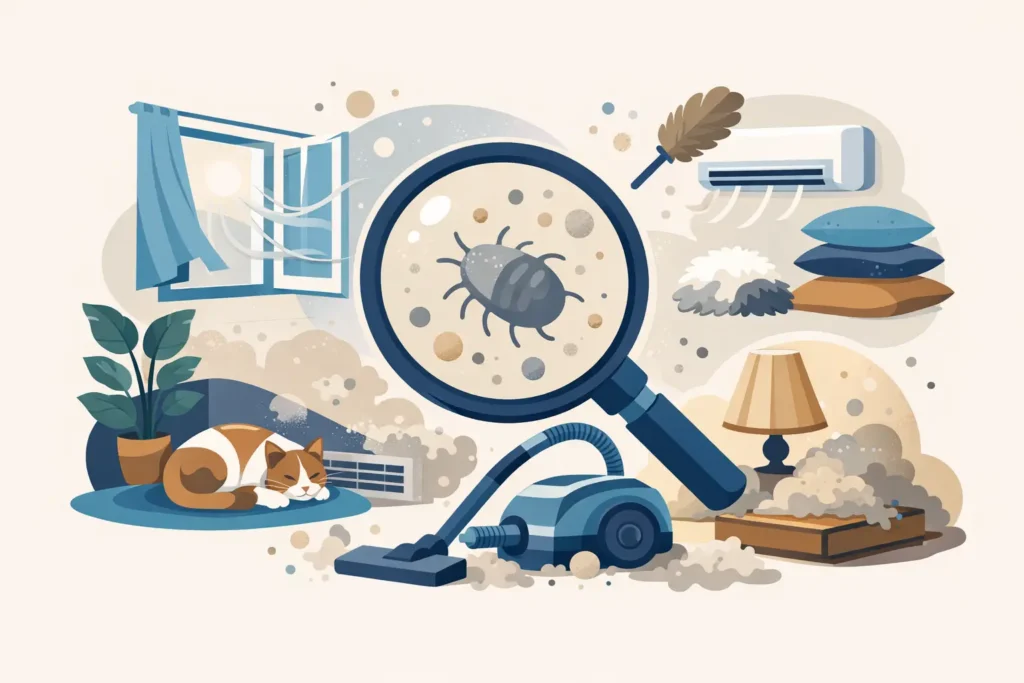
You wipe the shelves, vacuum the floors, and two days later that fine gray film is back on the TV stand, baseboards, and bedroom dresser. If that sounds familiar, understanding the top causes of excessive household dust is the first step to fixing it. Dust is never just a cleaning problem. In many homes, it is a sign that air is moving the wrong way, filters are underperforming, or hidden buildup is circulating through the space.
Some dust is normal. Every home has fibers, skin cells, outdoor particles, and debris that settle over time. The problem starts when the amount feels constant, fast, and hard to control. That usually means one issue is feeding another.
What household dust is really made of
Most people think dust comes from outside dirt, but indoor dust is a mix. It often includes dead skin cells, pet dander, carpet fibers, clothing lint, pollen, hair, drywall particles, and tiny debris pulled in from shoes, windows, and ventilation systems. In a busy home, especially one with kids, pets, or ongoing renovations, dust levels can rise quickly.
That is why the source matters. If the dust is mostly fabric fibers, the solution looks different than if the problem is leaky return ducts or a clogged HVAC filter. You do not want to keep treating the symptom while the real cause keeps feeding the cycle.
Top causes of excessive household dust in a home
Dirty or leaking air ducts
This is one of the most overlooked causes. When ductwork has heavy buildup inside, air passing through the system can push dust and debris back into living areas. If the ducts are leaking, the problem gets worse. Gaps and loose connections can pull in particles from wall cavities, basements, attics, or mechanical spaces and distribute them through the home.
Not every dusty house needs duct cleaning, and that is worth saying clearly. But if you notice dust blowing from vents, uneven airflow, stale air, or years of buildup with no maintenance history, your duct system deserves a closer look. In homes across the GTA, this issue is especially common in older properties and in houses that have gone through renovations.
Poor HVAC filter performance
A weak, clogged, or incorrectly installed filter can turn your HVAC system into a dust-moving machine. Filters are supposed to trap airborne particles before they recirculate. When they are overdue for replacement, too low-grade for the home, or not seated properly, dust slips past and keeps moving.
There is a trade-off here. Some homeowners buy the highest-rated filter they can find, assuming more filtration is always better. In reality, a filter that is too restrictive for the system can reduce airflow and create other problems. The right fit depends on your equipment, your indoor air concerns, and whether you have pets, allergies, or high occupancy.
Pet dander and shedding
If you live with dogs or cats, dust levels are almost always higher. Pet hair is visible, but dander is the bigger issue. These tiny skin particles settle on furniture, float in the air, and get pulled into return vents. Once mixed with lint and fibers, they add to that fast-returning dusty layer homeowners notice on hard surfaces.
This does not mean pets are the whole problem. It means the home needs stronger maintenance around grooming, vacuuming, and filtration. In pet-heavy homes, standard cleaning habits often are not enough.
Carpet, rugs, and upholstered furniture
Soft surfaces hold dust and release it every time someone walks, sits, or fluffs a cushion. Carpets are especially good at trapping debris deep in the pile, where it stays until foot traffic stirs it back up. Area rugs, fabric headboards, drapes, and older sofas do the same thing.
This is one reason dust can seem worse in bedrooms and family rooms even when the home looks clean. The room is not necessarily dirtier. It may just have more fabric collecting and releasing particles throughout the day.
Low humidity or very dry indoor air
Dry air allows particles to stay airborne longer and move more easily through the home. In winter, when heating systems run more often and indoor humidity drops, many homeowners notice a sharp increase in visible dust. Static can also make dust cling to electronics, blinds, and flat surfaces.
Humidity is another area where balance matters. Too dry can worsen dust movement and respiratory discomfort. Too humid can create conditions for mold and other indoor air issues. The goal is controlled moisture, not just more moisture.
Poor airflow and unbalanced ventilation
When a home has weak return air, blocked vents, or rooms that do not circulate air properly, dust tends to collect faster. Stagnant air lets particles settle. On the flip side, overly forceful airflow can keep dust moving and spread it room to room.
Homes with additions, finished basements, or closed interior doors often deal with pressure imbalances that make certain areas dustier than others. Condos can also have unique airflow issues because shared building systems, sealed windows, and smaller layouts change how air moves.
Open windows and outdoor particle intrusion
Fresh air feels good, but open windows also invite pollen, road dust, construction debris, and seasonal particles indoors. If you live near traffic, active development, or tree-heavy streets, outdoor contamination can become a major contributor.
This is not a reason to keep the house sealed at all times. It just means outdoor air is not always clean air. On high-pollen days or during nearby construction, open-window ventilation can add more dust than it removes.
Renovation debris and hidden construction dust
A home does not need active construction to have renovation dust problems. Drywall dust, sawdust, and fine particles can linger in ducts, behind trim, inside closets, and in basement utility areas long after a project is finished. Every time the HVAC system starts, some of that debris can re-enter the air.
This is one of the clearest examples of why normal cleaning sometimes fails. You can mop and vacuum as much as you want, but if renovation dust is sitting in the ventilation system or hidden cavities, it keeps coming back.
Infrequent cleaning of the wrong places
Many homeowners clean the obvious surfaces and still miss the biggest dust reservoirs. Ceiling fan blades, return air grilles, vent covers, under beds, behind furniture, closet floors, and window tracks all collect heavy dust loads. Once disturbed, that material spreads through the room.
Vacuuming technique matters too. A vacuum with poor sealing or a worn filter can blow fine particles back into the air. So the issue is not always a lack of effort. Sometimes it is a mismatch between the cleaning routine and the actual dust sources.
When excessive dust points to a bigger air quality issue
If dust buildup is paired with allergy flare-ups, musty odors, weak airflow, frequent filter clogging, or visible debris around vents, the issue may go beyond housekeeping. That is when it makes sense to look at the ventilation system itself. Dust, airflow, and indoor air quality are tightly connected.
For homeowners and property managers, this matters because dust complaints are often early warning signs. A neglected duct system, poor filtration setup, or blocked dryer vent may not announce itself dramatically at first. Instead, it shows up as constant dust, stale rooms, and a home that never feels fully clean.
What actually helps reduce dust
The most effective fix is usually a combination of better filtration, better airflow, and source control. Replace HVAC filters on schedule, but use the right type for the system. Vacuum soft surfaces with a sealed machine that captures fine particles. Keep return vents unobstructed. Wash bedding regularly and pay extra attention to fabrics, pet areas, and overlooked ledges.
If the house still gets dusty unusually fast, do not guess. Have the ductwork and venting evaluated by a qualified professional, especially after renovations, in older homes, or when there is visible buildup around vents. A reputable company will explain what is actually needed, show you the issue clearly, and avoid the low-price bait tactics that are common in this industry. That straight talk matters because not every dust problem needs the same solution.
At Dust Chasers, we see this pattern all the time: homeowners blame themselves for not cleaning enough when the real issue is hidden in the airflow system. The good news is that excessive dust is usually traceable. Once you find the source, the home starts feeling cleaner, lighter, and easier to maintain.