


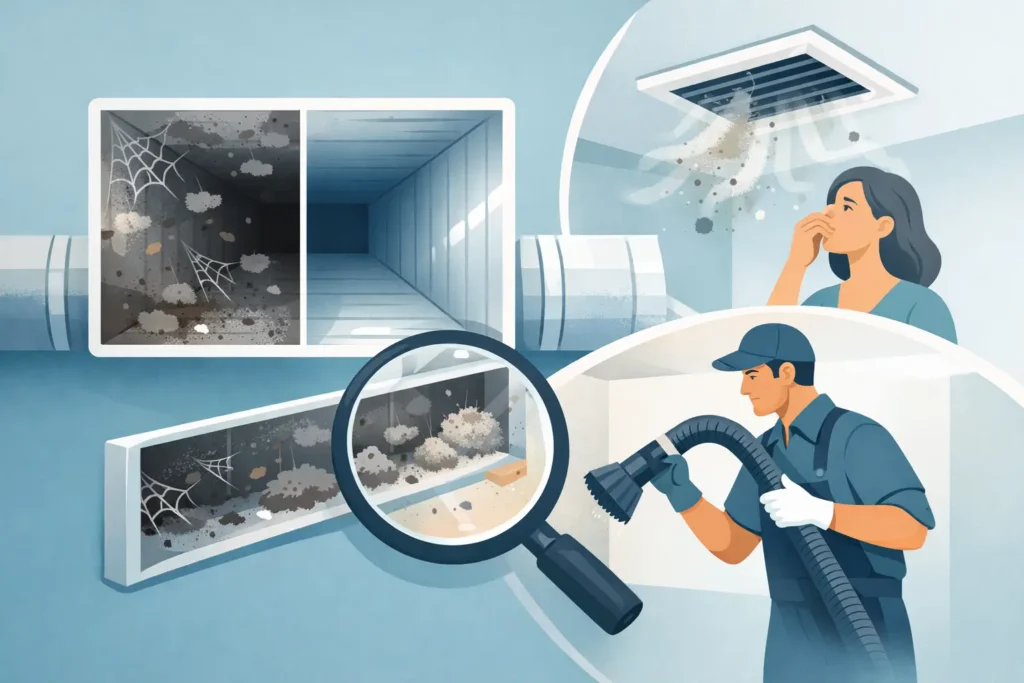
You change the filter, wipe the vents, vacuum more often, and the dust still comes back fast. That is usually the moment people start asking how to tell if ducts need cleaning – not because they want another maintenance task, but because something in the home or building feels off.
Duct cleaning is not something you should book just because a coupon showed up in your mailbox. It should be based on real conditions inside the system. Sometimes the issue is dirty ductwork. Sometimes it is a clogged filter, a leaky return, poor system design, or high indoor humidity. The right move starts with knowing the signs and knowing when those signs point to the ducts themselves.
How to tell if ducts need cleaning in a real-world home
The clearest clue is visible buildup. If you remove a supply vent cover and see thick dust, debris, or matted material sitting just inside the duct, that is worth attention. A light film is normal over time. Heavy accumulation that keeps pushing dust back into the room is not.
Another strong sign is dust that returns unusually quickly after cleaning. If furniture, floors, and vent covers seem dusty again within a day or two, the HVAC system may be circulating contaminants. That does not automatically mean every duct is packed with debris, but it does mean the system deserves a closer look.
Airflow changes matter too. If one room feels weak while another gets plenty of air, the cause could be several things, including dampers, design issues, or duct leaks. But if reduced airflow comes with dirty vent openings, stale smells, and visible debris, duct contamination becomes a more likely part of the problem.
Odors are another giveaway. A musty smell when the heat or AC starts can point to dust, moisture, microbial growth, or debris sitting in the duct system. A burnt smell may have other causes and should be taken more seriously, especially around electrical components or the furnace. The key is not to assume every smell is a duct cleaning issue, but not to ignore persistent odors either.
The signs that matter most
If you want a practical answer to how to tell if ducts need cleaning, focus on patterns instead of one symptom in isolation. The most reliable cases usually involve more than one red flag at the same time.
Dust blowing from vents
Turn on the system and watch the air registers. If you actually see dust puffing out when the system starts, that is a direct sign that buildup is present somewhere in the line. This is especially common after renovation work, drywall sanding, flooring replacement, or years of deferred maintenance.
Allergy flare-ups indoors
If sneezing, itchy eyes, throat irritation, or respiratory discomfort consistently gets worse indoors, dirty ducts may be contributing. They are not always the root cause. Carpets, upholstery, humidity, and filters can all play a role. But if symptoms improve when people leave the home or building, indoor air quality should be investigated as a whole, and the ducts may be part of that picture.
Recent construction or renovation
This is one of the most overlooked reasons to inspect the system. Renovation dust gets everywhere. Even when contractors try to seal off work areas, fine particles often make their way into returns and supply lines. If your home or condo recently had drywall work, tile removal, basement finishing, or major repairs, checking the ducts makes sense.
Signs of moisture or mold concerns
If you see moisture around vents, smell mildew, or notice dark spotting near registers, do not brush it off. Moisture and dust together create a bad mix. Whether the issue is in the ducts, around insulation, or inside HVAC components, it should be assessed properly. This is also where experience matters. Not every dark mark is mold, and not every mold issue is solved by cleaning alone.
Pet hair and debris buildup
Homes with multiple pets usually collect more airborne material inside the system. Hair, dander, and fine dust can build up faster, especially if filters are not replaced on schedule. That does not mean pet owners need duct cleaning constantly. It does mean they should pay closer attention to system cleanliness and airflow.
When the problem is not really dirty ducts
This is where homeowners and property managers often get misled. Plenty of companies push duct cleaning as the answer to every comfort problem. It is not.
If your air feels weak, the issue may be a blocked filter, a blower problem, crushed duct sections, closed dampers, or leaking connections. If your home smells stale, it could be humidity, insulation issues, poor ventilation, or an overworked system. If dust is heavy in one room only, the problem could be a return imbalance or a building envelope issue.
That is why honest assessment matters. A credible technician should be able to explain what they are seeing, what cleaning will help, and what it will not fix. Be cautious of any company that diagnoses your entire system over the phone with a rock-bottom price before they have seen anything.
How often should ducts be cleaned?
There is no single schedule that fits every property. A detached home with pets, kids, and ongoing renovations may need attention sooner than a newer condo with regular filter changes and no indoor air complaints. Commercial spaces vary even more depending on occupancy, dust load, and ventilation demands.
For many properties, every few years is a reasonable checkpoint, not a rigid rule. You may need it sooner if you moved into an older home, completed construction, noticed airflow changes, or had a long period without maintenance. You may need it less often if the system is well-filtered, the home is low-dust, and there are no visible signs of buildup.
In the Greater Toronto Area, seasonal heating and cooling swings can also make hidden issues show up faster. A duct system that seemed fine in mild weather may suddenly reveal dust, odor, or airflow problems once the furnace or AC starts running hard every day.
How to inspect before you book
You do not need to take apart the HVAC system to make a smart first check. Remove a vent cover and look inside with a flashlight. Check whether the buildup is light and dry or thick and stuck to the surface. Look at the return grilles too, since they often reveal how much the system is pulling in.
Pay attention to what happens when the system starts. Do you notice a stale smell, visible particles, or an uneven push of air between rooms? Check your filter as well. If it is loaded quickly and the home still feels dusty, that is useful information.
For landlords and property managers, tenant complaints can be part of the inspection picture. If multiple units or occupants are reporting dust, odors, or comfort issues, it is worth looking at the ventilation system instead of treating each complaint as unrelated.
How to tell if ducts need cleaning or if you are being sold
A legitimate service should be specific. You should hear clear reasons, not scare tactics. The discussion should cover visible debris, renovation dust, airflow observations, odor concerns, and the condition of the system. Pricing should be transparent, and the company should not hide behind vague language or pressure you into add-ons you did not ask for.
This matters because duct cleaning attracts its share of low-price scams. If the offer sounds unrealistically cheap, there is usually a catch. The final bill often changes once the crew arrives, or the work is rushed and incomplete. For homeowners and building managers, that is not just annoying. It wastes money and leaves the real problem behind.
A professional team should be able to explain the process, show what they found, and clean the system in a way that matches the property type, whether that is a house, condo, or commercial space. Dust Chasers has built its reputation around that kind of straight talk because customers need real answers, not bait pricing.
The bottom line for cleaner air and better airflow
If your vents are pushing dust, rooms feel stuffy, odors show up when the system runs, or allergies get worse indoors, those are real signs worth checking. The smart approach is not to assume. It is to connect the symptoms, inspect what you can, and have the system looked at by someone who knows the difference between a dirty duct and a sales pitch.
Clean ducts will not solve every indoor air problem, but when the system is genuinely contaminated, the difference is hard to miss. Air moves better. Dust settles down. The space feels fresher. And that is exactly how maintenance should work – practical, honest, and worth doing when the signs are there.