


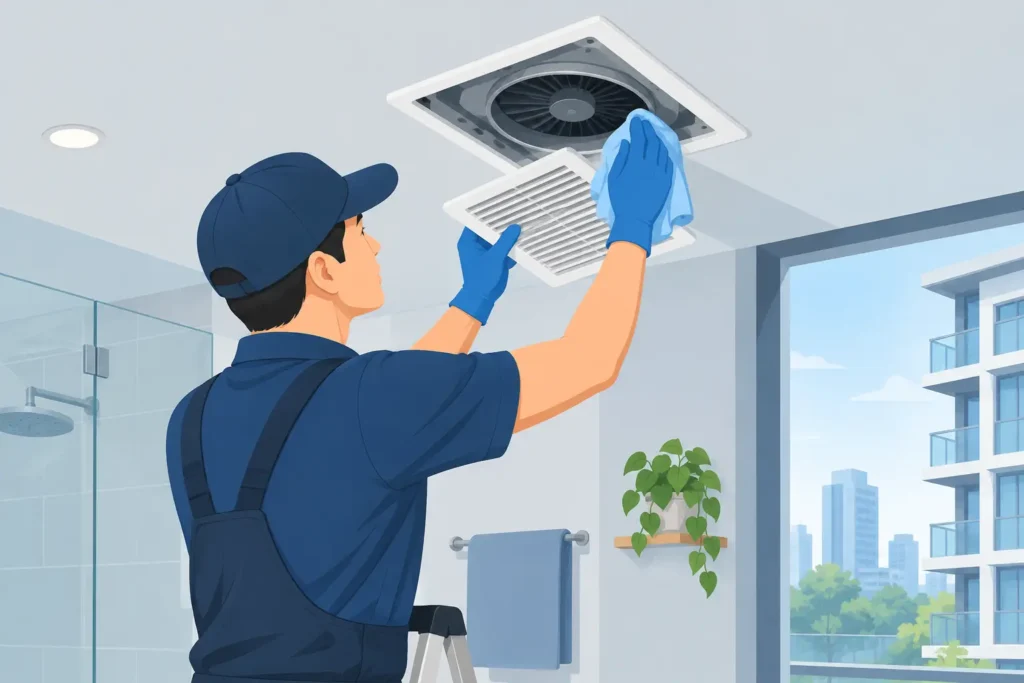
A bathroom mirror that stays fogged long after a shower, lingering cooking odors, or a fan that suddenly sounds louder than usual are not small condo annoyances. They are signs that airflow may be restricted. To maintain condo exhaust fans properly, you need to clean what is inside your suite, recognize what belongs to the building, and avoid damaging a shared ventilation system.
For condo residents and property managers, this distinction matters. A fan grille covered in dust is usually an easy fix. A blocked duct, rooftop exhaust issue, or problem affecting several suites is a building maintenance concern that needs the right professional response.
Why Condo Exhaust Fans Need Attention
Exhaust fans pull moist, stale, and odor-heavy air out of bathrooms, kitchens, and sometimes laundry areas. When they are moving air as intended, they help reduce condensation on walls and ceilings, limit musty odors, and support a more comfortable indoor environment.
But condo fans rarely fail all at once. More often, dust builds up on the grille, lint collects near the housing, the damper sticks, or airflow becomes weak somewhere farther along the duct. In multi-unit buildings, individual exhaust ducts may connect to a larger shared shaft. That means a problem in one location can sometimes affect performance in another.
Ignoring poor ventilation can lead to peeling paint, recurring mildew around bathroom caulking, excess humidity, and complaints from tenants. It can also make residents assume the fan is operating because they hear a motor, even when very little air is actually leaving the room.
Start With the Parts Inside Your Suite
Routine cleaning is the resident’s first line of defense. In most condos, the visible grille can be cleaned safely every few months, especially in bathrooms used daily.
Before touching the fan, turn it off at the wall switch. If you need to remove the grille or reach into the housing, shut off power at the breaker as an added safety step. Do not work around a spinning fan blade or exposed wiring.
Most grilles are held in place with spring clips. Pull the grille down gently, squeeze the clips, and remove it. Wash the cover with warm water and mild dish soap, then let it dry completely. Use a vacuum with a brush attachment to remove dust from the fan housing, around the motor, and from accessible surfaces. A microfiber cloth can handle what remains.
Avoid spraying cleaners, disinfectants, or water directly into the fan housing. Moisture can damage electrical components, and heavy products can attract more dust. You also should not force tools, brushes, or vacuum hoses deep into a duct opening. Condo ductwork can include delicate dampers and shared components that are not designed for resident access.
Check whether the fan is actually pulling air
After cleaning and restoring power, test airflow with a single square of toilet paper held near the grille. A working exhaust fan should hold the paper against the cover with noticeable suction. This is a quick screening method, not a full airflow test, but it can reveal a weak fan.
Pay attention to how long bathroom humidity lingers after a shower. If the room remains damp for 20 to 30 minutes with the fan running, airflow may be insufficient. The cause could be dust buildup, a failing motor, a stuck damper, a blocked duct, or a building-level ventilation issue.
What Not to Do When You Maintain Condo Exhaust Fans
Condo ventilation is not the place for aggressive DIY repairs. The goal is to keep the accessible fan area clean without creating a bigger building problem.
Do not disconnect ductwork above the ceiling, remove a fan motor unless you are qualified to do electrical work, or push a leaf blower into an exhaust opening. These shortcuts can disconnect joints, spread dust into the suite, damage backdraft dampers, or interfere with shared ventilation pathways.
Be cautious with replacement fans, too. A louder or higher-powered model is not automatically a better model. In a condo, the fan may be tied to a designed airflow balance, a central system, or specific electrical requirements. Changing equipment without approval can create noise issues, insufficient exhaust, or conflicts with condo corporation rules.
If you are a tenant, document the issue and report it to the landlord or property manager. If you own the unit, review your condominium declaration or maintenance responsibilities before arranging work. The fan grille may be yours to clean, but the duct and shaft beyond it may not be.
Bathroom Fans, Kitchen Exhaust, and Dryer Vents Are Different
These systems all move air, but they should not be treated the same way.
Bathroom exhaust fans primarily manage moisture and odors. Kitchen exhaust systems handle grease, steam, and cooking particles, so filters require regular cleaning. Dryer vents carry highly combustible lint and require dedicated maintenance. A bathroom fan cleaning does not replace dryer vent cleaning, and a clean kitchen hood filter does not prove the exhaust duct is clear.
This matters in condos because dryers may vent through long runs, concealed routes, or shared building infrastructure. If drying cycles are taking longer, laundry feels unusually humid, or you smell burning near the dryer, stop using it until the vent is inspected. Lint restrictions are a fire-risk issue, not just an efficiency problem.
Signs the Problem Is Beyond Surface Cleaning
A clean grille does not always restore airflow. Contact your property manager or arrange a qualified inspection if you notice persistent warning signs such as these:
- The fan makes grinding, rattling, or buzzing noises.
- The fan runs but fails the tissue-paper airflow check.
- Moisture, mildew, or peeling paint keeps returning despite regular cleaning.
- Odors move between suites or enter your unit from the ventilation opening.
- Water drips from the grille or stains appear around it.
- Several residents report the same ventilation issue.
Water near an exhaust fan deserves urgent attention. It may indicate condensation, a roof or plumbing leak, or an issue in a shared shaft. Do not continue running the fan until the source has been assessed.
Likewise, odors traveling between suites can signal pressure imbalance, duct leakage, or a malfunctioning damper. That is not something a scented spray or a new grille will solve. Proper diagnosis protects air quality for more than one unit.
A Practical Maintenance Schedule for Condo Residents
The right schedule depends on how often the room is used, whether residents smoke or cook heavily, and whether the suite has pets. As a practical baseline, clean bathroom and kitchen fan grilles every three to six months. Clean range hood filters monthly or as soon as grease is visible. Test bathroom fan suction monthly, particularly during humid weather.
For property managers, recurring tenant complaints should be tracked by floor and stack. A single weak fan may be a unit issue. Multiple reports in the same area may point to a shared shaft, rooftop fan, damper, or central ventilation problem. That pattern is valuable because it prevents repeated, incomplete repairs inside individual suites.
Professional ventilation service may be appropriate when accessible cleaning does not improve airflow, when dust has accumulated in connected ductwork, or when a building needs a clearer picture of its ventilation condition. The work should be scoped to the system involved, with transparent findings rather than vague promises or suspiciously low cold-call pricing.
When Professional Help Makes Sense
Condo ventilation work requires care, especially where ducts are concealed or equipment is connected to broader building systems. A qualified technician can inspect accessible components, identify restrictions, and help determine whether the issue belongs to the suite, the condo corporation, or a larger mechanical system.
For GTA condo residents and managers, Dust Chasers provides ventilation maintenance with a focus on cleaner airflow, straightforward service, and safety-first recommendations. The right service is not always a full cleaning. Sometimes the real answer is a fan repair, a damper adjustment, a building maintenance request, or a dedicated dryer vent inspection.
A clean exhaust fan is a simple part of a healthier condo, but the bigger win is knowing when to stop cleaning and start investigating. If moisture and odors keep coming back, treat the fan as a warning signal, not background noise.