


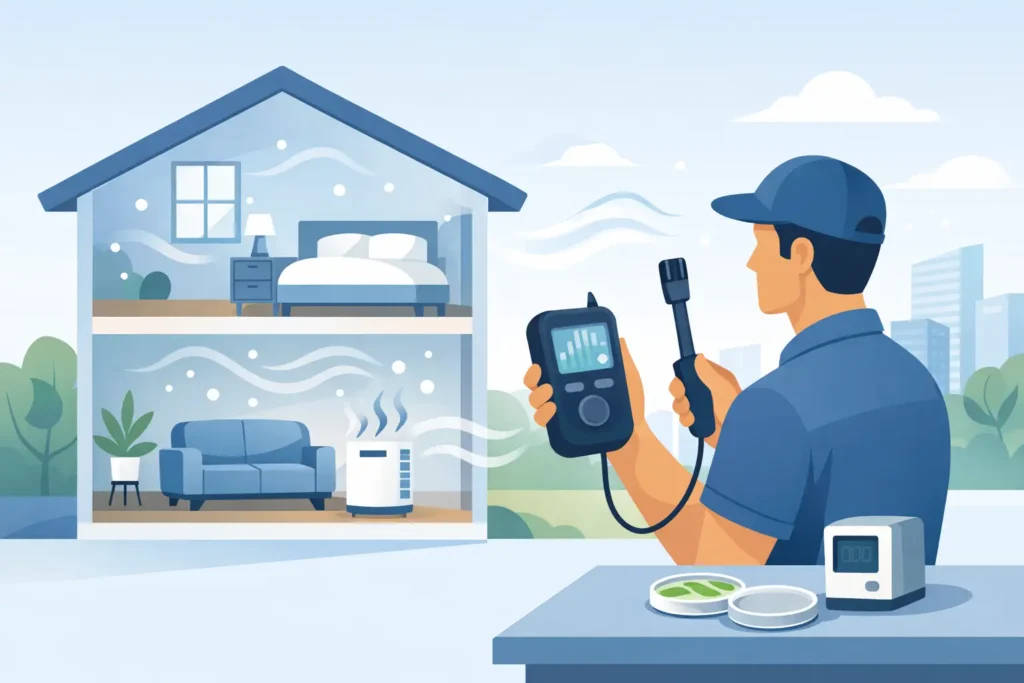
A room can look spotless and still have an air problem. If your family wakes up congested, one room always feels stuffy, dust returns immediately after cleaning, or odors linger with no obvious source, an indoor air quality testing guide can help you separate a real issue from guesswork. The goal is not to chase scary readings. It is to identify what is in the air, where it is coming from, and what practical action will improve it.
For GTA homeowners, condo residents, and property managers, indoor air concerns often start with a simple pattern: more dust than usual, uneven heating and cooling, allergy symptoms indoors, or a dryer taking longer to dry clothes. Testing can be useful, but only when the test matches the problem.
Start With the Warning Signs, Not a Gadget
Air-quality monitors are useful tools, but a number on a screen does not diagnose a home. Before buying a test kit or booking an inspection, pay attention to when and where the issue happens.
If symptoms are worse in one bedroom, a basement, or near a bathroom, the source may be local moisture, poor exhaust, or limited airflow. If the entire home feels dusty or stale, the HVAC system, filter condition, return vents, and ductwork deserve attention. If odors appear only when the furnace or air conditioner starts, contaminants may be moving through the system rather than originating in the room.
A few signs should move the issue higher on your priority list: visible water staining, repeated condensation, a persistent musty odor, unexplained headaches that improve when you leave the building, soot near vents, or a carbon monoxide alarm. Carbon monoxide concerns are urgent. Leave the area if an alarm sounds, call emergency services as appropriate, and have fuel-burning equipment assessed by a qualified technician.
What Indoor Air Quality Tests Can Actually Tell You
No single test checks every indoor-air concern. The right method depends on what you suspect and whether you need a screening result or a source investigation.
Particle and dust monitoring
Many home monitors track particulate matter, often called PM2.5. These tiny particles can come from outdoor traffic, wildfire smoke, cooking, candles, pets, renovation dust, and poor filtration. A monitor can show whether particles spike after cooking or when the HVAC system runs.
That is valuable information, but it does not tell you what every particle is. A high reading may point to cooking smoke, for example, rather than dirty ductwork. Watch the pattern over several days, noting outdoor conditions and household activities before making a major decision.
Humidity testing
Humidity is one of the most actionable indoor-air measurements. Excess moisture supports mold growth and dust mites, while air that is too dry can irritate skin, eyes, and airways. Most homes are generally most comfortable when relative humidity stays around 30% to 50%, though outdoor temperatures and building conditions matter.
High humidity in a bathroom, laundry area, basement, or condo unit may indicate an exhaust issue, a leak, or insufficient ventilation. A dehumidifier can help manage the symptom, but it will not fix a hidden water source or a fan that is not moving air outdoors.
Carbon dioxide monitoring
Carbon dioxide monitors are often used as a rough indicator of ventilation and occupancy. When levels rise in a closed, occupied room and drop after fresh air is introduced, that can suggest the space needs better air exchange.
CO2 is not the same as carbon monoxide, and it is not a general measure of whether air is “good” or “bad.” It is best used to identify stuffiness and ventilation patterns in bedrooms, meeting rooms, classrooms, and shared commercial spaces.
Mold sampling
Mold tests are frequently misunderstood. Air samples and surface swabs may identify spores, but mold exists naturally in outdoor air, and results can vary significantly from one day to another. A negative sample does not automatically rule out hidden moisture, while a positive sample does not always identify the source.
When there is visible growth, water damage, or a strong musty smell, the priority is finding and correcting the moisture problem. Testing may be helpful in complicated cases, especially after a leak or remediation work, but it should not replace a careful visual inspection.
VOC testing
Volatile organic compounds, or VOCs, are gases released from products such as paint, cleaners, new furniture, flooring, air fresheners, and some adhesives. A total VOC monitor can alert you to changing levels, but it usually cannot identify the exact chemical or health risk.
Use VOC readings as a prompt to improve ventilation, reduce fragranced products, and store chemicals properly. If a strong chemical odor causes immediate symptoms or follows a renovation, a more detailed professional assessment may be warranted.
How to Test Without Creating Bad Data
The most common testing mistake is measuring one room once, seeing an unusual result, and assuming the worst. Indoor air changes throughout the day. Cooking dinner, showering, opening windows, running the dryer, vacuuming, and even having guests over can change readings quickly.
Place a monitor in a breathing zone, not directly beside a supply vent, window, stove, humidifier, or air purifier. Record readings at different times over at least several days. Compare a problem room with another area of the home. If possible, note outdoor air conditions too, since outdoor pollution can enter through open windows, leaks, and ventilation systems.
For dust concerns, check the basics before blaming the ducts. Replace or inspect the HVAC filter, confirm it fits properly, and avoid using a filter with a rating so restrictive that it reduces airflow in an older system. Make sure supply and return vents are open and unobstructed. Furniture pushed tightly against a return grille can limit circulation and create hot, cold, or stuffy rooms.
When Air Duct Cleaning Makes Sense
Air duct cleaning is not a cure-all for every allergy or odor complaint. Anyone promising that it will solve every respiratory concern with one low-price visit is not giving you a straight answer. But cleaning can be a sensible part of an indoor-air plan when there is visible dust buildup around registers, debris from renovation work, restricted airflow, pet hair accumulation, or contamination moving through the HVAC system.
A proper service should involve more than a quick vacuum at the vent opening. Ask what equipment will be used, whether the technician will inspect accessible components, what is included in the quoted price, and whether sanitation is included or sold as a surprise add-on. Be cautious with unsolicited cold calls, vague pricing, and extreme discount offers that rise sharply once a crew arrives.
For homeowners in Toronto and across the GTA, Dust Chasers approaches duct and ventilation maintenance as a practical service: cleaner airflow, less circulating dust, and transparent recommendations based on the condition of the system. The right service provider should be clear about what cleaning can improve and what requires another trade, such as an HVAC repair, plumbing repair, or mold remediation specialist.
Do Not Forget the Dryer Vent
Dryer vents are often left out of indoor-air conversations, yet they affect airflow, moisture, and fire safety. A blocked dryer vent can cause clothes to take multiple cycles to dry, make the laundry room hot and humid, and force the appliance to work harder.
Lint buildup is highly combustible. If you notice a burning smell, excessive heat, weak exterior airflow, or lint collecting around the dryer connection, stop treating it as a minor inconvenience. Dryer vent cleaning is maintenance with a safety purpose, particularly in condos, rental properties, and busy family homes where the dryer runs often.
When to Bring in a Professional
Call for qualified help when there is a safety issue, obvious moisture damage, suspected combustion problems, persistent odors, or symptoms that do not improve after basic ventilation and cleaning steps. Property managers should also act quickly when multiple tenants report the same stale-air, odor, or humidity issue, because the source may be in a shared system or building envelope.
A professional assessment should begin with questions, inspection, and evidence – not a predetermined sales pitch. The best outcome is sometimes duct cleaning. Other times it is a new filter, a repaired bath fan, better source control, a dryer vent service, or a referral to the right specialist.
Cleaner indoor air rarely comes from one dramatic fix. It comes from paying attention to patterns, controlling moisture and dust at the source, keeping ventilation pathways clear, and choosing service based on evidence instead of fear.