


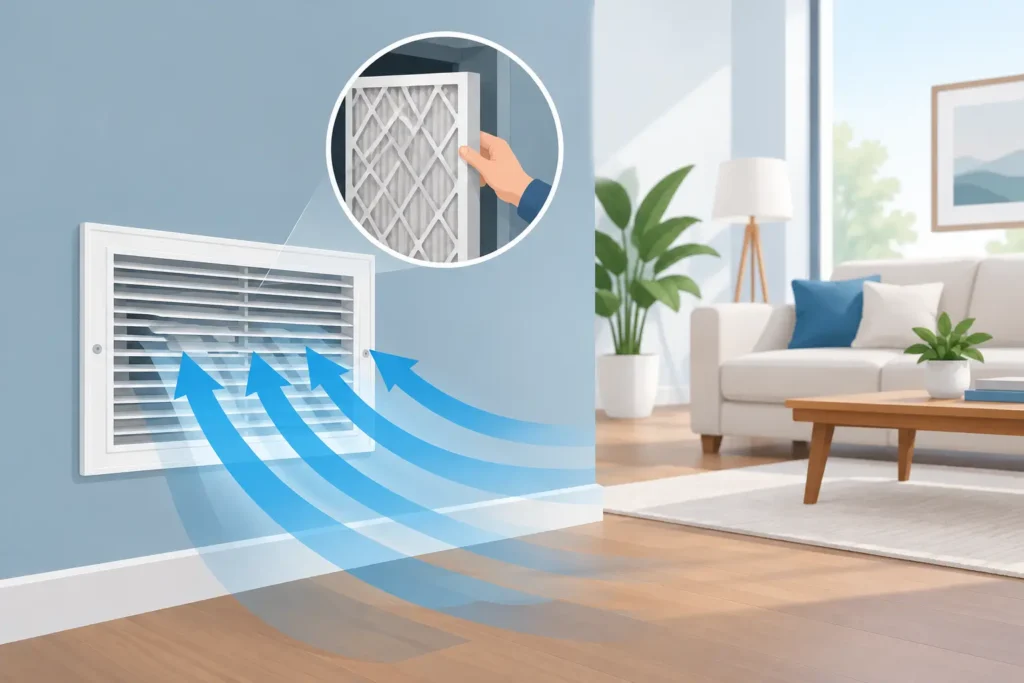
A room that stays stuffy while the thermostat says everything is fine often has a return-air problem, not just a heating or cooling problem. To improve HVAC return airflow, you need to make it easier for air to travel back to the furnace or air handler after it has moved through your home. When that return path is restricted, your system works harder, comfort drops, and dust can become more noticeable.
Return airflow is not glamorous, but it is one of the most important parts of a healthy, efficient HVAC system. The supply vents deliver conditioned air into a room. Return grilles pull that air back through the system to be heated, cooled, and filtered again. If the return side cannot keep up, the entire system becomes unbalanced.
Why HVAC Return Airflow Matters
Your HVAC equipment was designed to move a specific volume of air. A blocked filter, undersized return, closed interior door, or buildup inside ductwork can reduce that volume. The result may be hot and cold spots, weak airflow at supply vents, longer run times, and a system that sounds louder than usual.
Poor return airflow can also affect indoor air quality. Air that should be pulled through the filter may instead be drawn through gaps around doors, windows, attic hatches, or other unconditioned spaces. That can bring more dust, odors, and allergens into the home.
For homeowners, the first sign is often a second-floor bedroom that never feels right. For condo residents, it may be persistent dust around vents or a fan coil system that seems to run constantly. Property managers may notice repeated comfort complaints from tenants even after adjusting thermostats. These are not always duct-cleaning issues, but they are signs worth investigating.
Start With the Simple Restrictions
Before assuming there is a major duct problem, check the items that most commonly restrict return air. These checks are safe for most homeowners and can reveal a straightforward fix.
Replace the filter correctly
A loaded air filter is one of the fastest ways to choke return airflow. Check it monthly during heavy heating or cooling use and replace it according to its condition, not just the date on the calendar. Homes with pets, smokers, renovation dust, or allergy concerns may need more frequent changes.
Higher-rated filters capture smaller particles, but denser is not automatically better. A filter with too much resistance for your equipment can reduce airflow, particularly if the return system is already marginal. Use the filter type and MERV rating recommended by the equipment manufacturer or a qualified HVAC technician.
Also confirm the filter is installed in the correct direction. The arrow should point toward the furnace or air handler, following the direction of airflow.
Clear the return grilles
Return grilles need open space to do their job. A sofa pressed against a large wall grille, a rug covering a floor return, or curtains hanging over a return vent can sharply reduce the amount of air entering the system.
Keep at least several inches of clear space around each grille, and vacuum the grille face when you clean nearby surfaces. Dust buildup on the grille usually will not stop airflow on its own, but it can signal that the return side and filter need attention.
Keep interior doors from trapping air
A closed bedroom door can create a pressure problem when the room has supply vents but no dedicated return grille. Conditioned air is pushed into the room, yet it has no easy path back to the central return. You may notice that the door moves slightly when the system turns on, or that airflow from the supply vent weakens with the door closed.
Opening the door is a quick test. If comfort improves, ask an HVAC professional whether the room needs a transfer grille, door undercut, jump duct, or another properly designed return-air path. Do not cut holes or modify ductwork without advice. Poorly placed openings can create noise, privacy, and fire-safety concerns.
Check for Clues Beyond the Grille
Some return-air issues are easy to see. Others happen inside the system, where guessing can lead to wasted money.
Listen for whistling or a strained blower sound. Look for rooms with noticeably different temperatures. Pay attention to excess dust shortly after cleaning, musty smells when the system starts, or a filter that becomes dirty far sooner than expected. These symptoms can point to restricted ducts, leakage, an equipment issue, or a return design that was never adequate for the space.
A quick visual check can help. With the system off, remove the return grille if it is safely accessible and use a flashlight to look just inside. You may see pet hair, drywall dust, construction debris, or visible buildup near the opening. Do not reach deep into sharp sheet metal or flexible ductwork, and do not use a household vacuum hose to force debris farther into the system.
If you see heavy buildup, professional air duct cleaning may help restore a clearer pathway. It is especially worth considering after renovations, in homes with shedding pets, after a long vacancy, or when visible debris is present around return openings. Cleaning should be based on a real condition, not a scare tactic. No honest provider should promise that duct cleaning alone will solve every comfort problem.
When Duct Cleaning Can Help Improve HVAC Return Airflow
Duct cleaning is most useful when accumulated dust and debris are physically restricting airflow or recirculating through the home. A proper service addresses accessible supply and return ducts, registers, and key components using equipment designed to contain and remove debris.
It will not fix a failed blower motor, a frozen evaporator coil, a crushed flex duct, a poorly sized return, or a closed damper. Those require HVAC diagnosis and repair. The trade-off matters: cleaning a dirty return system can improve cleanliness and airflow, but redesigning an undersized return may be the real solution in an older home or after a finished basement addition.
Be cautious with unusually cheap duct-cleaning offers that appear out of nowhere or use pressure to upsell once they arrive. Ask what is included, whether there are additional charges, and whether the provider can explain what they found. Transparent pricing and a clear scope protect you from the bait-and-switch tactics that have become far too common in the GTA.
For households that need cleaning, Dust Chasers uses trained technicians and straightforward service practices focused on cleaner air and better airflow, not vague promises.
Do Not Ignore Equipment Problems
If a clean filter and open grilles do not improve the situation, the HVAC system needs a closer look. The problem could be a dirty blower wheel, clogged evaporator coil, failing blower capacitor, damaged duct, disconnected return line, or an issue with dampers and zoning controls.
These conditions are not ideal DIY work. Electrical components, gas furnaces, refrigerant systems, and sealed duct connections require qualified service. In particular, do not remove furnace panels, bypass safety switches, or attempt to clean an indoor coil with random household chemicals.
A professional can measure static pressure and airflow rather than relying on how strong a vent feels by hand. That measurement tells the real story. It can distinguish between a simple filter restriction and a return system that needs repair or modification.
Practical Habits That Keep Air Moving
Once your system is operating properly, regular habits can prevent a return-air problem from coming back. Change filters before they become visibly packed. Keep returns clear during furniture moves and seasonal decorating. Use a vacuum with good filtration to reduce the dust that eventually reaches grilles and ducts.
After renovations, inspect return grilles and filters right away. Fine drywall dust and construction debris can spread quickly through a running HVAC system. If contractors worked near open vents, arrange an inspection rather than assuming the debris stayed in one room.
For commercial spaces and multi-unit properties, make return-air checks part of scheduled maintenance. Tenant comfort complaints are easier and less expensive to address before they become emergency calls or repeated service tickets.
Better return airflow starts with an open path back to the equipment. If basic checks do not change the way your home feels, choose a technician who will diagnose the cause, explain the options clearly, and recommend only the work the system actually needs.