


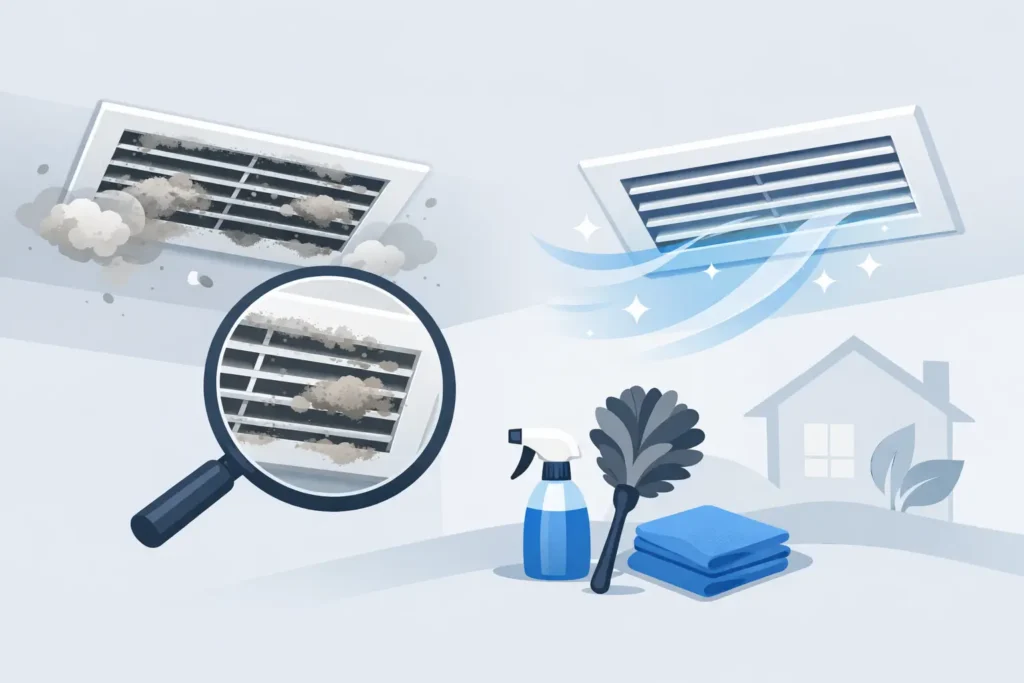
You wipe the vent cover, step back, and a day later it looks dusty again. That usually means the vent is not the real problem. If you are searching for how to stop dusty vents, the fix starts upstream – with airflow, filtration, duct condition, and the habits inside the space.
Dust around supply and return vents is one of the most common signs that your HVAC system is moving more debris than it should. Sometimes it is a simple filter issue. Sometimes it points to leaky ductwork, heavy household dust load, or years of buildup sitting inside the system. The trick is knowing which cause you are dealing with so you do not waste time cleaning the same vent cover over and over.
Why vents get dusty so fast
A vent gets dusty because air is constantly passing through it, and air always carries particles. That part is normal. What is not normal is when the buildup is heavy, fast, or keeps showing up in dark streaks on the wall or ceiling around the grille.
In many homes and condos, the biggest culprit is a weak or overdue air filter. If the filter is too cheap, clogged, installed backward, or simply left in too long, fine dust keeps circulating and settles where airflow is strongest. Vent covers become the visible evidence.
The second issue is leakage. If return ducts pull air from gaps in walls, ceilings, crawl spaces, or utility areas, they can drag in insulation particles, construction debris, and dusty air that was never meant to enter the system. Supply duct leaks can create pressure problems that make dust settle faster around registers.
Then there is the room itself. Pets, carpeting, fabric furniture, renovations, candles, and even busy foot traffic all add particles to indoor air. In dry seasons, static and low humidity can make the problem look even worse.
How to stop dusty vents at the source
If you want a lasting fix, start with the parts of the system that control what moves through the air.
Check the air filter first
This is the fastest win. A filter that is packed with dust cannot trap much more, and a flimsy filter may never have done the job well in the first place. Check the size, fit, and direction of the filter. If there are gaps around the edges, air can bypass it.
A better filter can help, but there is a trade-off. If you jump to a very high MERV rating without checking what your system can handle, airflow may drop. That can lead to comfort issues and extra strain on equipment. For many homes, a mid-range pleated filter changed on schedule is the better move than buying the most aggressive filter on the shelf.
Clean the vent covers, but do it properly
Vent covers should be part of routine maintenance, just not your only strategy. Remove the grille if possible, wash it, dry it fully, and vacuum around the opening. If dust is caked just inside the duct throat, that is a clue there may be more buildup deeper in the line.
If you only dust the face of the vent, you are treating the symptom. It will look better for a short time, but the airflow will keep delivering the same debris.
Seal duct leaks and loose connections
This is one of the most overlooked reasons vents stay dusty. Leaks in return ducts are especially problematic because they can suck in dirty air from hidden spaces. In older homes, after renovations, or in buildings with basement mechanical rooms, this can make a major difference.
Professional duct sealing is often worth it when dust keeps returning despite regular housekeeping and filter changes. It can also improve airflow balance, which helps rooms heat and cool more evenly.
When dusty vents mean the ductwork needs attention
Not every dusty vent means you need full duct cleaning. But some situations clearly point in that direction.
Signs the dust is coming from inside the system
If dust puffs out when the system starts, if vent covers get dirty within days, or if you see debris around multiple vents at once, there may be buildup sitting in the ductwork. The same applies after major construction, drywall work, flooring replacement, or a period of vacancy.
You may also notice stale air, more frequent allergy irritation, or reduced airflow in certain rooms. Those signs do not prove the ducts are the only problem, but they do suggest the system deserves a closer look.
Be careful with too-good-to-be-true cleaning offers
This industry has its share of low-price bait tactics. A coupon that promises whole-house duct cleaning for next to nothing usually leads to upsells, incomplete work, or no meaningful cleaning at all. If a company cannot clearly explain what is included, how long the job takes, and what equipment they use, that is a problem.
For homeowners and property managers in the GTA, this matters. A real service should be transparent, not vague, rushed, or built around scare tactics.
Housekeeping changes that actually help
Even with a clean HVAC system, indoor habits still affect how fast vents collect dust. The good news is that small changes can reduce the load significantly.
Vacuuming with a sealed HEPA unit does more than sweeping, which often kicks fine particles back into the air. Washing bedding often, grooming pets regularly, and reducing clutter near return vents can also help. If furniture blocks returns, the system has to work harder, and dust can settle more visibly around openings.
Humidity matters too. Air that is too dry lets particles stay airborne more easily, while air that is too damp can create other air quality problems. The ideal range depends on the season and the building, but balance matters more than extremes.
If you burn candles often, use a fireplace, or run a lot of cooking without proper exhaust, soot and fine particles may be adding to the dark residue around vents. In those cases, the fix is not just HVAC maintenance. It is reducing the source.
How to stop dusty vents in condos and shared buildings
Condos can be trickier because unit owners do not always control the entire ventilation system. If your vent covers keep collecting dust, start by checking the filter if your unit has one, and inspect the fan coil or in-suite HVAC cabinet for buildup.
If the issue seems building-wide, property management may need to inspect shared components, corridor pressurization, exhaust balance, or aging duct runs. Dust problems in multi-unit buildings can come from renovation activity in nearby units, pressure imbalance, or neglected maintenance schedules.
For landlords and building operators, recurring dust complaints should not be dismissed as cosmetic. They often point to a mechanical issue that affects tenant comfort and trust.
How to know whether this is a DIY fix or a service call
Some cases are straightforward. If the filter was overdue and the vent cover was dirty, you may solve most of the problem with a proper replacement and basic cleaning. If you recently remodeled, a targeted system cleaning may be enough.
But if dust returns quickly, airflow feels weak, rooms stay uneven, or you are seeing buildup across multiple vents, it makes sense to bring in a qualified professional. The right technician should assess the full system, not just sell a quick vacuum pass. That includes checking filters, blower components, accessible ductwork, vent conditions, and, when relevant, dryer vent safety too.
Dust Chasers approaches this the way it should be handled – by focusing on the real source of the problem, not just the visible mess. That matters when you want cleaner air and fewer repeat issues, not another temporary patch.
What lasts the longest
The most effective answer to how to stop dusty vents is rarely one single fix. It is usually a combination of proper filtration, routine maintenance, sealed ductwork, and lower dust generation inside the building. When those pieces line up, vent covers stay cleaner longer and the whole space feels better.
If your vents keep getting dusty no matter how often you wipe them down, take that as useful information. Your system is telling you something. The sooner you deal with the cause, the sooner the dust stops winning.