


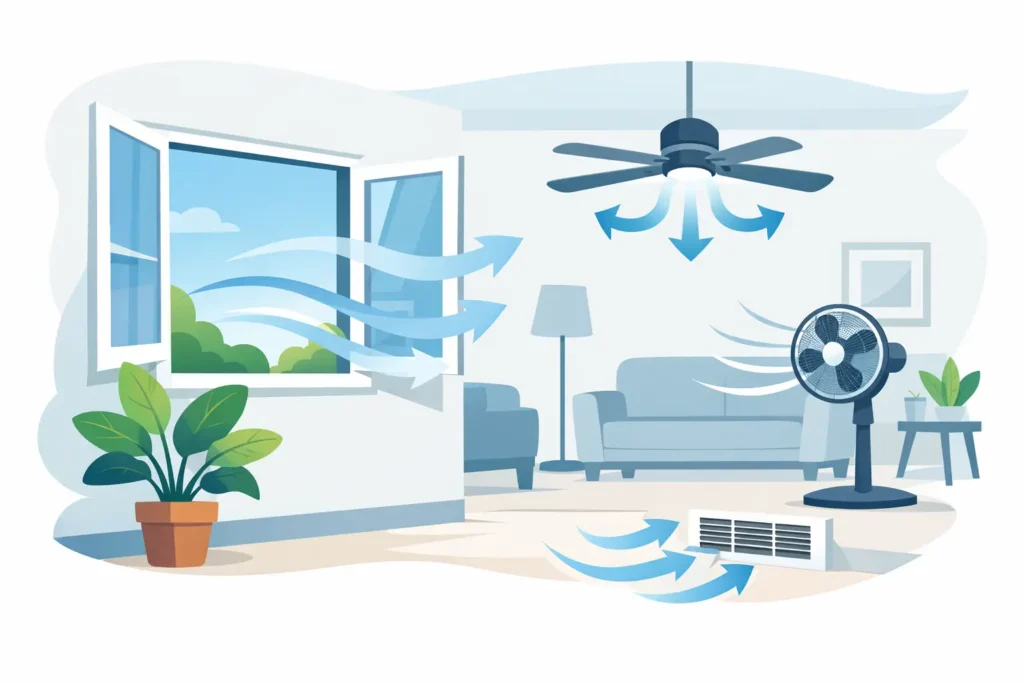
One room feels stuffy, another feels freezing, and the dust on your shelves seems to come back a day after cleaning. That is usually not random. If you are wondering how to improve indoor airflow, the answer is often a mix of small fixes, overlooked maintenance, and one or two bigger issues hiding in your vents, filters, or ductwork.
Better airflow is not just about comfort. It affects how your home smells, how evenly it heats and cools, how much dust keeps circulating, and how hard your HVAC system has to work. In condos, houses, and multi-unit properties, poor airflow can also make indoor air feel stale fast, especially when windows stay shut for long stretches.
How to improve indoor airflow without guessing
A lot of people start by buying an air purifier or running a fan harder. Sometimes that helps. Sometimes it barely touches the real problem.
The better approach is to follow the path air takes through your space. Air needs to enter, move, and exit properly. If that path is blocked anywhere, the whole system feels off. That is why airflow problems often show up as hot and cold spots, weak vent output, lingering odors, excess dust, or rooms that never feel fresh.
Start with the basics that have the biggest impact.
Check your air filter first
A clogged air filter is one of the most common airflow killers. When the filter is packed with dust and debris, your system has to strain to move air through it. That can reduce airflow across the entire home, not just in one room.
If you have pets, recent renovations, or a high-dust household, your filter may need changing more often than you think. The right replacement schedule depends on the filter type, the season, and how much your system runs. A high-MERV filter can improve particle capture, but if your system is not designed for that level of resistance, it can also restrict airflow. This is one of those areas where better filtration is not always better movement. It depends on the equipment.
Make sure vents and returns are actually open
This sounds obvious, but it gets missed all the time. Supply vents get covered by rugs, sofas, dressers, and curtains. Return vents get blocked by storage bins, laundry baskets, or furniture placed too close to the wall.
Your HVAC system needs both sides to work. Supply vents push conditioned air into the room. Return vents pull air back through the system so it can circulate again. If either side is restricted, airflow drops. Closing vents in unused rooms can also backfire. In some homes it creates pressure imbalance and makes the rest of the system work worse, not better.
Use ceiling fans the right way
Fans do not clean the air, but they do help move it. In summer, your ceiling fan should usually spin counterclockwise to create a cooling effect. In colder months, reversing it to a low clockwise setting can help redistribute warm air that rises to the ceiling.
Portable fans can help too, especially in rooms with weak circulation. The key is placement. Pointing a fan randomly around a room is less effective than using it to support the natural path of air between windows, doors, hallways, and vents.
The hidden reasons airflow stays poor
If you changed the filter, opened the vents, and still have weak circulation, the issue may be deeper in the system.
Dirty ducts can restrict movement
Ductwork collects dust, debris, pet hair, and sometimes construction residue over time. In some cases, buildup is heavy enough to affect airflow, especially if vents have not been cleaned for years or if the property has gone through renovation work.
This matters even more if you notice visible dust blowing from vents, persistent stale smells when the system starts, or rooms that never seem to get enough airflow no matter what you adjust. Professional duct cleaning is not a magic fix for every comfort issue, but when contamination and buildup are part of the problem, it can make a noticeable difference in both airflow and cleanliness.
For homeowners and property managers in the GTA, this is also where it pays to be careful about who you hire. Low-price duct cleaning offers often sound good until the service is rushed, incomplete, or not legitimate at all. Real airflow improvement comes from proper inspection, clear pricing, and technicians who know what they are doing.
Leaks in the ductwork waste air before it reaches the room
If your system is pushing air into damaged or disconnected ducts, some of that air may be escaping into wall cavities, utility spaces, or unfinished areas instead of the rooms that need it.
Leaky ducts can show up as weak airflow in certain rooms, higher energy bills, or major temperature differences between floors. This is especially common in older homes and some larger properties where duct runs are longer. Cleaning helps when the ducts are dirty, but cleaning alone will not solve leakage. That requires inspection and repair.
Return air problems create pressure issues
Some airflow problems are not about the supply vents at all. They happen because air cannot get back to the system properly. This is common in bedrooms with doors kept closed, finished basements, and condo layouts with awkward air paths.
If a room feels pressurized when the door is closed, or if airflow changes noticeably when doors open and shut, return air may be part of the issue. Sometimes the fix is simple, like undercutting a door slightly or improving vent placement. Other times it takes system adjustments.
How to improve indoor airflow room by room
Not every property needs a whole-system solution right away. Sometimes you can improve airflow by fixing the most affected areas first.
Bedrooms and upper floors
Upper rooms often trap heat and feel stuffier because warm air rises. Start by checking that vents are fully open and not blocked by beds, curtains, or dressers. Use a ceiling fan to keep air moving, and keep interior doors open when possible if return airflow is limited.
If one upstairs room is always worse than the others, that can point to a balancing issue in the duct system rather than a general HVAC problem.
Basements
Basements can feel damp, cold, or stale even when the rest of the home feels fine. That is partly an airflow issue and partly a moisture issue. A dehumidifier can help with comfort, but it does not replace actual air movement.
Make sure vents and returns are clear, and pay attention to musty smells. If basement air always feels heavy, inspect for blocked ducts, disconnected runs, or signs of moisture buildup that may be affecting air quality.
Kitchens and bathrooms
These rooms need strong exhaust, not just circulation. Cooking fumes, steam, and odors should be vented out effectively. If they linger, the exhaust fan may be weak, dirty, or improperly ducted.
This is where maintenance gets overlooked. A fan can still make noise while moving very little air. Cleaning the fan housing and checking for duct restrictions can improve performance quickly.
When airflow problems are really maintenance problems
A surprising number of indoor air issues come down to neglected maintenance. Filters stay in too long. Vents get covered. Ducts collect debris for years. Dryer vents clog up and create another kind of restriction entirely.
Dryer vents do not affect whole-home airflow the same way HVAC ducts do, but they matter for air quality and safety. A blocked dryer vent can increase humidity, reduce dryer efficiency, and raise fire risk. In condos and multi-unit buildings, it can also create hidden ventilation problems that get ignored until they turn serious.
That is why airflow should be looked at as part of the bigger ventilation picture. Clean movement in, through, and out of the property matters. If one part of that chain fails, the indoor environment suffers.
Signs it is time to bring in a professional
If airflow has been poor for a while and basic fixes have not solved it, it is time for a proper inspection. The biggest signs are consistent hot and cold spots, weak airflow from multiple vents, heavy dust buildup, stale odors when the system starts, visible debris around registers, or unexplained spikes in heating and cooling costs.
Property managers and landlords should also pay attention to repeat tenant complaints about stuffy units, uneven temperatures, or lingering smells. Those are often treated like comfort issues when they are really ventilation issues.
A qualified team can tell the difference between a dirty system, a damaged duct run, a balancing problem, and a filter or vent issue. That matters because the fix should match the cause. Throwing random products at poor airflow usually costs more and solves less.
If you want cleaner, more even air movement, start with the obvious, but do not stop there. Good airflow is not about one trick. It comes from a system that is clean, open, balanced, and maintained properly. And when the air in your home moves the way it should, you feel the difference right away.