


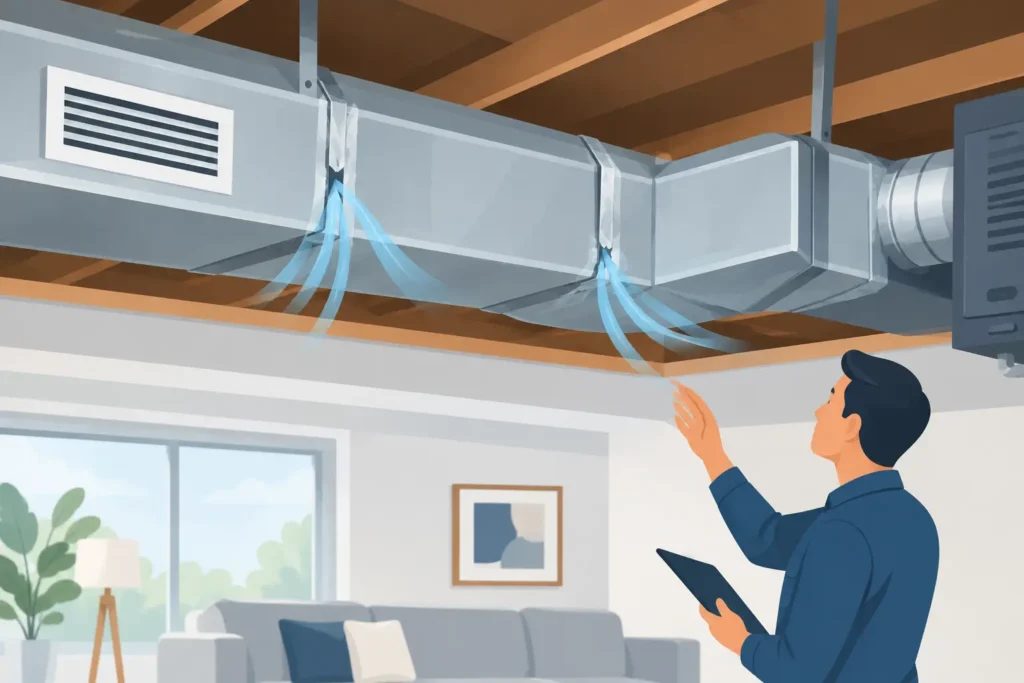
A bedroom that stays cold while the rest of the house feels fine is not always a furnace problem. Neither is a layer of dust that returns days after cleaning, a vent that barely pushes air, or utility bills that keep climbing without an obvious reason. Do ducts leak? Absolutely. And when they do, the conditioned air you paid to heat or cool can disappear into attics, basements, crawlspaces, wall cavities, and other areas where it does no one any good.
Duct leaks are common, but they are often overlooked because the ductwork is mostly hidden. Homeowners may replace filters, adjust thermostats, or blame aging equipment before considering the air distribution system itself. For homes, condos, and commercial spaces across the GTA, checking the ducts can be the practical next step when comfort and airflow do not match what the HVAC system should be delivering.
Do Ducts Leak? Yes, and Small Gaps Add Up
Duct systems are built from connected sections of metal, flexible duct, boots, collars, and fittings. Every connection is a potential weak point. Over time, tape can fail, mastic can crack, flexible duct can sag or tear, and joints can separate as a home settles or equipment vibrates.
A leak does not have to be dramatic to matter. Several small gaps along supply ducts can reduce the air reaching rooms furthest from the furnace or air handler. Return-side leaks can be just as troublesome. Instead of drawing air through the intended return grille, the system may pull dusty, unconditioned air from an attic, basement, utility room, or wall cavity.
That is why a home can have a newer furnace or air conditioner and still feel uneven, stuffy, or expensive to run. The equipment may be doing its job. The duct system may be wasting part of its output before it reaches the living space.
Warning Signs Your Ductwork May Be Leaking
No single symptom proves a duct leak. A blocked filter, undersized equipment, poor insulation, closed dampers, or a failing blower can create similar issues. But when several of the following signs show up together, ductwork deserves attention:
- Rooms are noticeably hotter or colder than the thermostat setting.
- Airflow from certain registers feels weak, especially in rooms far from the HVAC equipment.
- Heating and cooling bills rise even though your habits have not changed much.
- Dust accumulates quickly around vents, furniture, or return grilles.
- The system runs for long periods but struggles to maintain a steady indoor temperature.
- You notice musty, stale, or basement-like odors when the fan starts.
You may also hear whistling, rattling, or rushing noises from ceilings and walls. Those sounds can come from leaks, loose connections, or ducts that are too restrictive for the amount of air moving through them.
For property managers, complaints from tenants about one cold office, one stuffy suite, or one area with poor air movement should not be dismissed as isolated comfort preferences. Repeated localized complaints can point to distribution problems in the duct system.
How Leaking Ducts Affect Air Quality and Comfort
Leaky supply ducts waste conditioned air. Leaky return ducts can bring unwanted material into the system. That difference matters.
If return ductwork pulls air from dusty areas outside the conditioned space, particles can travel through the HVAC system and recirculate indoors. Depending on where the leak is located, that air may carry insulation fibers, construction dust, pet debris, odors, or other contaminants that were never meant to enter the return path.
Leaks can also create pressure imbalances. When too much supply air escapes into an attic or wall cavity, the home may draw replacement air in through gaps around doors, windows, or other openings. In winter, that can mean colder drafts. In summer, it can mean warm, humid air working against your air conditioner.
The result is not always a major health emergency. Often, it is a persistent comfort and cleanliness problem that makes a home feel harder to maintain. Families dealing with allergies, respiratory sensitivities, or frequent dust buildup may notice the impact sooner than others.
Why Duct Cleaning and Duct Sealing Are Different Services
This distinction is worth making because homeowners are often sold the wrong solution.
Professional duct cleaning removes accumulated dust and debris from accessible HVAC ductwork and components. It can improve cleanliness and help restore airflow when buildup is part of the problem. Duct sealing closes gaps, disconnected joints, and damaged sections that allow air to escape or enter where it should not.
Cleaning a dirty duct does not automatically seal it. Sealing a leaky duct does not remove years of debris. In some homes, both services make sense. In others, the main issue may be a damaged flex duct, an improperly connected return, a clogged filter, or equipment that needs an HVAC technician rather than a cleaning appointment.
A trustworthy service provider should be clear about that. Be cautious with anyone who promises that one low-cost service will fix every airflow, odor, and energy-bill issue without inspecting the system. Real answers come from identifying the source of the problem, not from pushing a one-size-fits-all package.
Where Duct Leaks Usually Happen
Leaks commonly occur near the equipment because that is where the ductwork has the most connections. The supply plenum, return plenum, filter cabinet, branch takeoffs, and connections to flexible ducts are all areas worth checking.
Ducts running through unconditioned spaces are particularly important. A leak in a basement utility room may still waste energy, but a leak in a freezing attic or hot garage can have a much bigger effect on delivered air temperature. Poor insulation around ductwork can make the issue worse, even when the ducts themselves are mostly sealed.
In condos and multi-unit buildings, access can be more limited. Shared mechanical spaces, fan coil systems, bulkheads, and in-suite duct runs can complicate diagnosis. That does not mean the problem is unsolvable. It means the inspection needs to account for the building layout and the responsibilities of the unit owner, property manager, and condominium corporation.
What You Can Check Before Calling a Professional
Start with the visible basics. Make sure supply registers and return grilles are open and not blocked by furniture, rugs, or storage. Replace a heavily loaded HVAC filter with the correct size and rating recommended for your system. Check whether one room is affected all the time or only during very hot or cold weather.
If accessible duct connections near your furnace or air handler show loose tape, obvious gaps, disconnected flex duct, or black streaks of dust around a joint, take photos. Dust marks around a connection can indicate that air is moving through a gap. Do not rely on standard cloth-backed duct tape as a permanent repair. Despite the name, it often dries out and fails on HVAC ductwork. Proper repairs typically use approved mastic, compatible foil tape, mechanical fasteners where needed, and insulation for ducts outside conditioned areas.
Avoid crawling through tight attics or attempting repairs near gas appliances, electrical components, or sharp sheet metal if you are not trained for the work. An apparent duct issue can sometimes be connected to a larger ventilation or equipment problem.
When a Professional Inspection Makes Sense
Call for an assessment when airflow problems persist after filter changes and basic checks, when rooms remain inconsistent season after season, or when you see obvious damage or disconnections. It is also smart to investigate after renovations, pest activity, water damage, or work in an attic or basement that may have disturbed duct runs.
A proper inspection should look beyond the visible vents. The goal is to identify whether the problem is leakage, debris, restriction, insulation, damaged ductwork, equipment performance, or a combination of factors. For gas-related equipment concerns, use appropriately qualified technicians rather than guessing at the cause.
Dust Chasers approaches duct concerns with the practical goal homeowners and building operators actually care about: cleaner air pathways, better airflow, and clear information about what needs attention. If cleaning is appropriate, it should be performed as part of a transparent service, not used as a shortcut around repairs the system genuinely needs.
A duct leak is hidden, but its effects are not. If your home feels uneven, dusty, or costly to heat and cool, trust the pattern you are seeing. A careful inspection can turn an ongoing annoyance into a specific repair plan – and help the air you pay for reach the rooms where your family actually lives.