


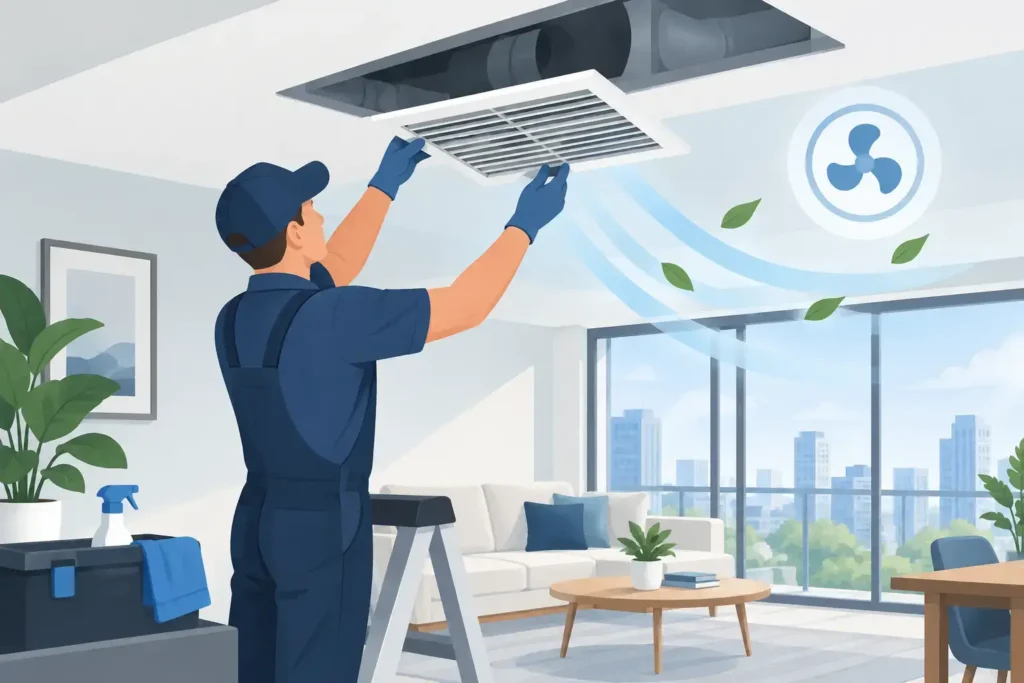
A condo can look spotless while its ventilation system quietly collects dust, lint, pet dander, and moisture behind walls and ceilings. That is why condo ventilation maintenance is not a cosmetic task. It is a practical part of protecting indoor air, keeping airflow moving, and reducing avoidable fire risks in a space where systems are often shared or tightly connected.
For condo residents, the warning signs can be easy to dismiss: dust returning soon after cleaning, a bathroom fan that seems weak, lingering cooking odors, uneven temperatures, or a dryer that takes two cycles to finish a load. For property managers, those same issues can become tenant complaints, higher maintenance costs, and safety concerns across multiple units.
What Condo Ventilation Maintenance Actually Covers
Condo ventilation is not always the same as a detached home’s duct system. Your building may have individual in-suite ductwork, centralized ventilation equipment, corridor pressurization systems, heat recovery ventilators, exhaust risers, or a combination of these. Responsibility can also be divided between the unit owner and the condominium corporation.
That distinction matters. A resident may be responsible for an accessible dryer vent connection or in-suite equipment, while the building manages shared shafts, rooftop exhaust equipment, and common-area systems. Before scheduling service, review your condo’s rules or ask property management where unit responsibility ends.
Professional maintenance commonly includes inspecting accessible ducts and vents, removing accumulated debris, checking airflow restrictions, and cleaning dryer vent pathways where permitted. The goal is straightforward: remove buildup that limits performance and identify conditions that need a building-level repair or inspection.
Why Condos Need a Different Approach
Condo ventilation has less room for guesswork. High-rise and multi-unit buildings have stacked layouts, long vent runs, limited access points, and interconnected systems. Cleaning one component without understanding where it leads can create more problems than it solves.
For example, a bathroom exhaust grille may connect to a shared vertical riser. A technician should not treat that riser like a private residential duct. Likewise, a dryer vent may travel a considerable distance before reaching an exterior termination point. The longer and more complex the run, the more lint can collect at bends, joints, and dampers.
A qualified provider starts by identifying the system, confirming access, and working within building requirements. This is especially valuable for property managers who need documented work, clear communication with residents, and technicians who respect elevator bookings, loading procedures, and site rules.
The Problems Maintenance Can Help Prevent
Regular service cannot fix every indoor air issue. Mold behind a wall, a mechanical failure, or a poorly designed ventilation system may require a different trade or a building engineer. But cleaning and inspection can address common sources of restricted airflow and debris buildup before they become bigger frustrations.
Dust That Keeps Coming Back
Dust in a condo comes from more than vents. Outdoor particles, fabrics, pets, cooking, and daily activity all contribute. Still, dirty supply ducts, return ducts, and fan components can recirculate settled debris when the HVAC system runs.
If residents are dusting constantly, it is worth looking at the full picture: filters, vent covers, visible buildup, recent renovations, and whether the system has ever been professionally serviced. Duct cleaning is most useful when there is a real accumulation issue, not as a substitute for routine housekeeping or filter changes.
Weak Exhaust and Lingering Moisture
Bathrooms and kitchens depend on reliable exhaust to move humid, odorous air out of the living space. When grilles are clogged or the pathway is restricted, steam may linger longer after showers and cooking odors may spread through the unit.
Cleaning a grille is a useful first step, but it is not always the whole solution. If the fan remains weak after the accessible components are cleaned, the issue could be a failing fan motor, a closed damper, or a shared building exhaust problem. Residents should report persistent moisture, condensation, or recurring musty odors promptly rather than trying to force a fix themselves.
Dryer Lint and Fire Risk
Dryer vents deserve special attention in condos. Lint is highly combustible, and a blocked vent can make a dryer run hotter and longer. That affects drying performance, increases energy use, and creates a safety concern no resident or property manager should ignore.
Warning signs include clothes that need extra cycles, a dryer that feels unusually hot, a burning smell, excess humidity in the laundry area, or visible lint around the dryer connection. Stop using the appliance if there is a burning odor or clear overheating concern, then arrange for proper inspection.
Do not rely on the lint screen alone. Cleaning the screen after every load is essential, but it does not remove lint from the ductwork behind the dryer. A professional dryer vent cleaning reaches the areas a homeowner cannot safely access with a brush or vacuum attachment.
A Practical Maintenance Schedule for Condos
There is no single schedule that fits every unit. A one-bedroom condo with no pets and light dryer use will not need the same attention as a family unit with pets, frequent laundry, recent construction dust, or residents with allergy concerns.
As a general rule, dryer vents should be inspected and cleaned about once a year, with more frequent attention for heavy-use households or long vent runs. In-suite HVAC filters should be checked regularly and replaced according to the equipment manufacturer’s guidance and building requirements. Vent grilles can be vacuumed or wiped when dust is visible, taking care not to push debris deeper into the system.
For air ducts, timing depends on conditions rather than a calendar alone. Consider professional assessment after renovations, when moving into a previously occupied unit, after visible debris is found around vents, or when airflow and dust issues persist despite changing filters and cleaning accessible surfaces.
Property managers should also build ventilation checks into preventive maintenance plans. A recurring schedule is easier to coordinate than emergency access after a tenant reports a dryer failure, a moisture complaint, or poor airflow. It also helps create a record of what was serviced, when, and where follow-up is needed.
What Residents Can Do Between Appointments
Residents play a role in keeping the system working properly. Keep supply and return vents clear of furniture, rugs, and storage bins. A blocked vent cannot deliver or remove air effectively, even if the duct behind it is clean.
Clean the dryer lint screen after every load and avoid crushing the transition hose behind the appliance. Use the bathroom fan during showers and leave it running long enough to clear humidity. If your condo allows it, clean accessible vent covers gently with a vacuum brush or damp cloth.
Avoid spraying strong fragrances or disinfectants into vents. These products can leave residue, irritate sensitive occupants, and hide an odor problem that needs to be investigated. If you smell mildew, burning, gas, or persistent sewer-like odors, report it to property management right away.
Choosing a Service Provider Without the Guesswork
Ventilation service should never begin with a suspiciously low cold-call price that rises once a crew arrives. Unfortunately, scam-style duct cleaning offers are common, and condo residents can be easy targets because access is limited and the work is hidden from view.
Choose a company that provides clear pricing, explains what system it can service, and confirms any building approval needed before arrival. Ask what equipment will be used, whether the technician will inspect the dryer vent termination or accessible exhaust route, and what happens if a shared system is involved.
For gas dryer connections or equipment concerns, the right credentials matter. Dust Chasers serves GTA condos with trained technicians, transparent service, and a safety-first approach to air ducts and dryer vents. The point is not to sell a cleaning when one is not needed. It is to remove real buildup, improve airflow where service can make a difference, and flag issues that require the building’s attention.
A clean condo should not come with stale air, weak exhaust, or a dryer that works overtime. Start with the symptoms you can see and feel, confirm who is responsible for the system, and schedule qualified help before a small airflow problem turns into a safety headache.