


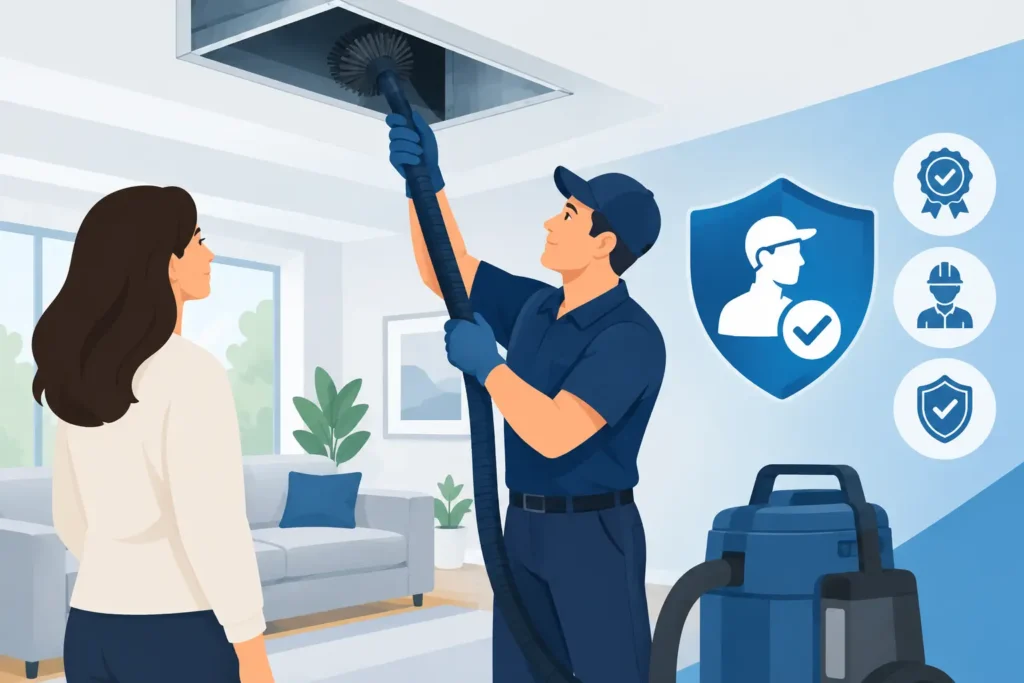
A duct cleaning appointment should not begin with a vague promise and a too-good-to-be-true price. Certified duct cleaning technicians should be able to explain what they are cleaning, how they will protect your HVAC equipment, and what results are realistic for your home or building.
That matters in the Greater Toronto Area, where homeowners, condo residents, landlords, and facility managers are regularly targeted by cold-call duct cleaning offers. A low advertised price can turn into pressure sales, surprise fees, rushed work, or a crew that never properly connects professional equipment to the duct system. Cleaner air and better airflow are worth pursuing. Paying for a service that is not actually performed is not.
What “certified” should mean in duct cleaning
The phrase “certified duct cleaning technicians” can sound straightforward, but it deserves a closer look. There is no single credential that automatically makes every technician qualified for every part of an HVAC system. A credible company should be transparent about the training, equipment, insurance, and service scope behind that claim.
For standard air duct cleaning, look for technicians who understand forced-air systems, safe access methods, containment, and negative-pressure cleaning. They should know the difference between cleaning supply ducts, return ducts, registers, blower components, and accessible furnace areas. They should also know when a problem falls outside a cleaning appointment and requires an HVAC contractor, mold professional, or gas technician.
Gas-fired equipment is a separate safety issue. If a technician needs to disconnect, service, or work around gas appliances, ask whether the appropriate licensed gas professional is involved. Dust Chasers highlights TSSA G2 Gas Technicians for work that requires that level of safety knowledge. That distinction is more meaningful than a generic badge or a sales script.
Why the technician matters as much as the equipment
A powerful vacuum alone does not guarantee a proper cleaning. The best equipment can still be used poorly, while a trained technician can recognize access limitations, protect delicate components, and avoid creating a mess inside the home.
A professional visit typically begins with an assessment of the system layout and accessible openings. The crew should identify the furnace or air handler, supply and return sides, vents, and any special concerns such as renovations, pet hair, excessive dust, weak airflow, or a dryer that takes too long to dry clothes.
From there, proper duct cleaning generally uses a high-powered collection system to place the ducts under negative pressure. Agitation tools help loosen debris from inside the ductwork, while the vacuum captures it rather than allowing it to blow back into the living space. The exact approach depends on the home, duct design, access points, and condition of the system.
There are trade-offs. Older ductwork, tight condo mechanical rooms, flex ducts, and systems with limited access may require a more cautious approach. A technician who promises to clean every inch without first seeing the setup is making a claim they may not be able to keep.
Questions to ask before you book
A reputable provider should welcome direct questions. If the person on the phone becomes evasive, pushes for an immediate deposit, or will not give clear pricing information, move on.
Ask what the quoted service includes and whether the price is based on the number of vents, furnaces, systems, or units. Ask whether there are additional charges for access panels, sanitizing, dryer vents, condos, or commercial spaces. Complimentary sanitation can be valuable when it is clearly explained, but it should not be used to disguise a surprise upsell.
You should also ask how the technicians protect floors, walls, furniture, and HVAC equipment. Confirm whether they carry insurance and whether they provide a clear service record or invoice. For property managers, it is sensible to ask about scheduling, access coordination, parking requirements, resident communication, and proof of completed work.
Four questions are especially useful:
- What equipment will be connected to the duct system, and how will debris be contained?
- Which parts of my HVAC system are included in the quoted service?
- Are there any likely extra charges, and when would you tell me about them?
- If gas equipment or a dryer vent is involved, does the crew have the right qualifications for that work?
Clear answers are a strong sign. So is a company that explains what cleaning can improve without promising to solve every indoor air concern in one visit.
Watch for duct cleaning scams and pressure tactics
The duct cleaning industry has a well-earned problem with scam-style marketing. The familiar pattern is a random call or flyer advertising an extremely low price, followed by a crew that claims your system is unusually dirty, unsafe, or contaminated before demanding hundreds of dollars more.
Some bad actors use generic business names, avoid confirming a local address, or make exaggerated health claims. Others show a small vacuum at the door and call it professional duct cleaning. Do not let fear make the decision for you. Dust inside ducts is common. It does not automatically mean mold, dangerous contamination, or an emergency.
Be cautious when someone says they found mold but cannot explain where it is, how it was identified, or what testing supports the claim. Visible growth, moisture problems, and musty odors deserve attention, but cleaning alone will not fix the moisture source. The right next step may be an HVAC inspection, leak repair, humidity control, or specialized remediation.
A trustworthy company earns the job with transparent scope, documented pricing, and professional conduct. It does not need to pressure a homeowner into approving work on the spot.
Duct cleaning and dryer vent cleaning are not the same service
Many customers book duct cleaning because rooms feel dusty or airflow seems weak. Others call because the dryer is taking two or three cycles to finish a load. These services are related, but they solve different problems.
Air duct cleaning focuses on the forced-air system that heats and cools the building. Dryer vent cleaning removes lint buildup from the dryer exhaust path. Lint restriction can reduce drying efficiency, increase wear on the appliance, and raise fire risk. A clean furnace duct system will not clear a clogged dryer vent, and a dryer vent cleaning will not address dust in supply returns.
For homeowners, it can make sense to schedule both services when they are due, especially after a renovation, move-in, long period of pet shedding, or noticeable dryer performance change. For condo buildings and commercial properties, the decision should be based on unit layout, equipment access, maintenance history, occupancy, and the building’s responsibilities.
What results should you expect?
Professional cleaning can remove accumulated dust, debris, and allergens from accessible ductwork and improve airflow when buildup is part of the problem. It can also reduce the dust that circulates after construction work or long-term neglect. Dryer vent cleaning can restore more efficient exhaust flow when lint is restricting the line.
It cannot repair damaged ducts, fix an undersized HVAC system, eliminate every odor, or cure respiratory conditions. If one room is always hotter or colder than the rest, the cause could be a closed damper, poor duct design, insulation gaps, equipment sizing, or a mechanical issue. A qualified technician should help you understand when cleaning is appropriate and when another trade needs to step in.
For tenants and condo residents, documentation matters. Ask for the work performed to be clearly described so there is a record for owners, property managers, or future maintenance planning. For commercial operators, request a scope that matches the building rather than a one-size-fits-all package.
The right technician does more than remove dust. They give you a clear view of your system, respect your property, and tell you the truth about what will make a difference. That is the standard worth booking for.