


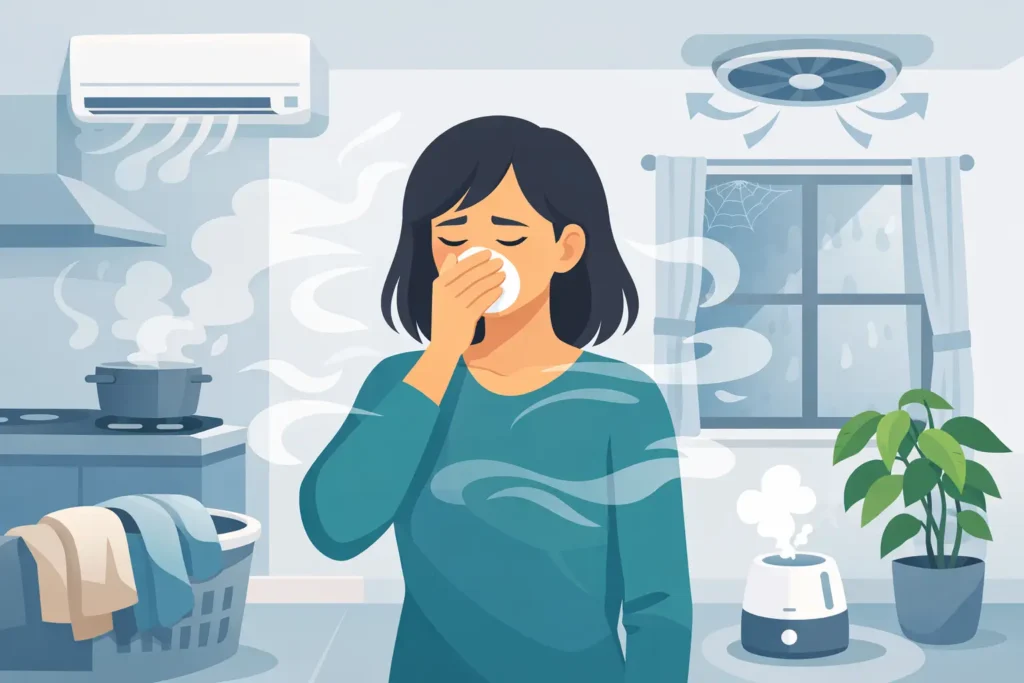
A room can look spotless and still feel heavy, stuffy, or oddly unpleasant after a few hours with the door closed. If you are asking what causes stale indoor air, the answer is rarely one dramatic problem. More often, it is a buildup of everyday issues: limited fresh-air exchange, trapped moisture, airborne particles, and an HVAC system that is not moving air as well as it should.
For homes, condos, and commercial spaces across the GTA, stale air is more than a comfort complaint. It can make rooms feel warmer than they are, leave odors hanging around, aggravate allergy symptoms, and point to ventilation problems worth fixing before they get worse.
What Causes Stale Indoor Air? Usually, Air Is Not Moving Enough
Indoor air becomes stale when the air inside is repeatedly recirculated without enough fresh outdoor air replacing it. Modern buildings are often tightly sealed to control heating and cooling costs. That is good for energy efficiency, but it also means cooking odors, pet dander, cleaning-product vapors, moisture, and dust can stay indoors longer.
Your HVAC system may be running, yet still not provide enough fresh-air exchange. Most forced-air systems circulate conditioned indoor air. Unless the system includes properly functioning fresh-air intake equipment, or windows and exhaust systems are used strategically, that same air can keep traveling through the home.
This is why stale air often shows up in closed bedrooms, basements, interior offices, and condo units with limited windows. The space may have a vent, but the airflow may be weak, restricted, or simply not designed to bring in fresh air.
Dirty Filters and Ductwork Can Reduce Airflow
A clogged furnace or HVAC filter is one of the simplest causes of poor circulation. When a filter is loaded with dust, lint, pet hair, and other debris, the system has to work harder to pull air through it. Less air reaches the rooms that need it, and the air that does circulate may carry more particles and lingering odors.
Ductwork can create a similar problem. Over time, dust and debris can collect inside supply and return ducts. This buildup does not automatically mean a home is unsafe, but heavy accumulation can restrict airflow, especially when paired with a dirty filter, damaged ducts, or vents blocked by furniture.
Look for signs such as uneven room temperatures, barely noticeable airflow from certain registers, dust collecting quickly near vents, or a musty smell when the heat or air conditioning starts. These symptoms do not all have the same cause, but they are a strong reason to inspect the system instead of masking the problem with air fresheners.
Return Vents Matter as Much as Supply Vents
Supply vents push conditioned air into a room. Return vents pull air back to the HVAC system to be filtered and conditioned again. If return vents are blocked by a couch, rug, storage bins, or closed interior doors, the system cannot complete that circulation cycle efficiently.
A bedroom with a closed door and no clear return-air path can feel stale overnight even when the rest of the home feels fine. Keeping vents open and clear is a practical first step. If a room continues to feel stuffy, it may need an HVAC assessment rather than another portable fan.
Moisture Makes Indoor Air Feel Heavy and Uncomfortable
Humidity changes how air feels. When moisture levels are high, sweat does not evaporate as easily, so rooms can feel warmer, heavier, and less fresh. Bathrooms, kitchens, laundry rooms, basements, and poorly ventilated condo units are common trouble spots.
Showering, cooking, drying clothes, and even breathing add moisture to indoor air. That is normal. The concern starts when the moisture has no reliable way out. A bathroom exhaust fan that does not vent effectively, a range hood that is rarely used, or a dryer vent restricted with lint can allow humid air to linger where it should not.
Persistent humidity can also support mold and mildew growth on surfaces, behind furniture, around windows, or in damp building materials. A musty odor is not proof of mold, but it should not be ignored. Find the moisture source first. Cleaning the visible area without fixing a leak, condensation issue, or ventilation failure usually leads to the same problem returning.
Everyday Pollutants Build Up Faster Than Most People Expect
Stale air is often a mixture of particles and odors rather than one identifiable smell. Cooking smoke, scented candles, aerosol sprays, paint, new furniture, pet dander, and cleaning chemicals can all affect indoor air. In commercial settings, occupancy itself plays a role. A busy meeting room, salon, office, or retail space can become stuffy quickly when ventilation does not match the number of people inside.
Carbon dioxide from normal breathing can also rise in occupied, poorly ventilated rooms. At typical indoor levels, it is often used as a signal that fresh-air ventilation is inadequate, not as the sole cause of symptoms. If people regularly report sleepiness, headaches, or difficulty concentrating in one room, airflow and ventilation deserve attention.
Be careful not to assume every odor is routine. A persistent burning smell, fuel odor, sewer-gas smell, or suspected carbon monoxide issue needs immediate professional attention. Leave the area and contact the appropriate emergency service, utility, or qualified technician when there is a potential safety risk.
Dryer Vent Restrictions Affect More Than the Laundry Room
A dryer that takes multiple cycles to dry clothes is not just inconvenient. It may indicate a restricted dryer vent. Lint buildup, crushed transition hoses, long vent runs, or exterior vent flaps that do not open properly can reduce exhaust performance.
That trapped warm, humid air can contribute to a stuffy laundry area and excess moisture in the building. More importantly, lint is combustible. Dryer vent maintenance is a fire-prevention task, not a cosmetic cleaning service.
Property managers should pay close attention in multi-unit buildings, where vent routing can be longer and access can be more complicated. Homeowners should also avoid treating a clean lint screen as proof that the full vent path is clear. The screen catches only part of the lint created during drying.
Seasonal Habits Can Make Stale Air Worse
Stale indoor air is especially common during extreme weather. In winter, windows stay closed for long periods while heating systems run continuously. In hot, humid weather, people rely on air conditioning and may keep homes sealed for days. Both situations reduce natural ventilation.
Opening a window can help in the right conditions, but it is not always the complete answer. During high pollen days, wildfire smoke events, humid weather, or near heavy traffic, bringing in outside air may introduce new concerns. The right approach depends on the season, outdoor conditions, the building, and the needs of people inside.
For a typical home, a sensible routine includes changing filters on schedule, using kitchen and bathroom exhaust fans, keeping registers and return vents unobstructed, and watching for changes in airflow or drying time. For condo boards, landlords, and commercial operators, regular maintenance plans make it easier to catch ventilation issues before tenants start reporting odors and discomfort.
When Professional Ventilation Cleaning Makes Sense
Air duct cleaning is not a substitute for fixing water damage, mold, a failing HVAC component, or inadequate fresh-air design. A reputable provider should be clear about that. But professional cleaning can be useful when there is visible debris around vents, heavy dust buildup, post-renovation residue, reduced airflow linked to dirty ducts, or recurring dust and odor concerns that routine cleaning has not solved.
The same standard applies to dryer vents. If drying times have increased, the laundry area feels humid, or the exterior exhaust flap barely moves, arrange an inspection. Avoid bargain offers that sound too good to be true or rely on aggressive cold calls. Ask what the service includes, whether pricing is transparent, and whether the technician can explain the condition of the system without pressure tactics.
Dust Chasers helps GTA homeowners, property managers, and commercial facilities address duct and dryer vent concerns with a safety-first approach. The goal is simple: cleaner airflow, fewer hidden restrictions, and a building that feels as fresh as the people inside expect it to.
If stale air keeps returning after you change the filter and clear the vents, treat it as useful information. Your building is telling you that airflow, moisture control, or ventilation needs a closer look.