


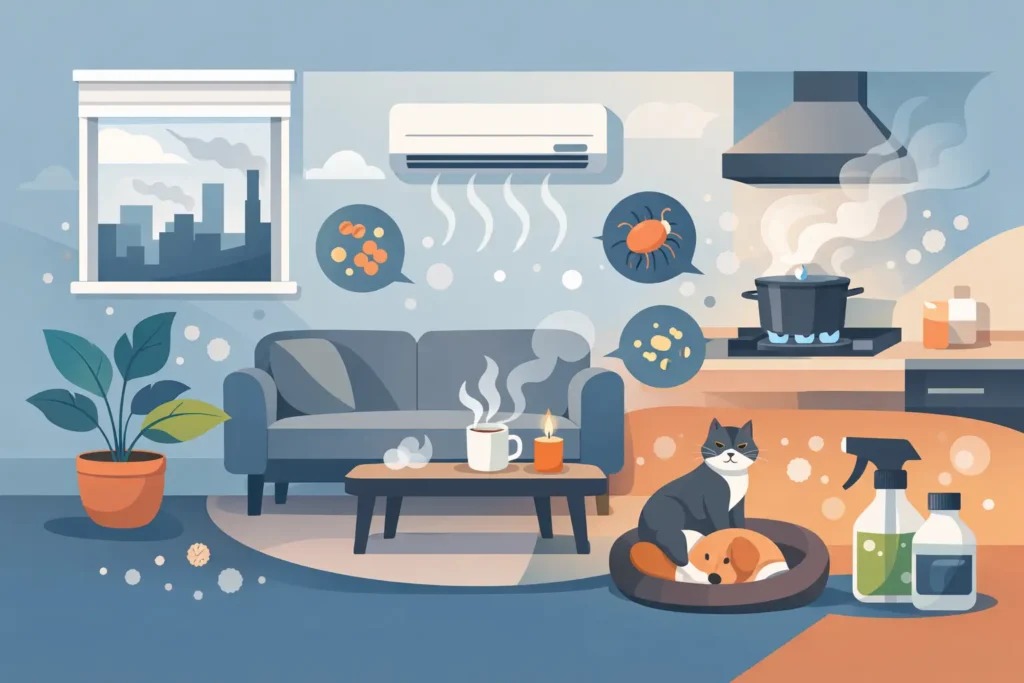
The air in a closed home can hold far more than most people realize. Cooking fumes linger after dinner, dust settles inside supply vents, moisture collects behind bathroom walls, and pet dander moves from room to room every time the HVAC system runs. This guide to indoor air pollutants explains what may be circulating through your home, what actually helps, and when a maintenance issue needs professional attention.
For homeowners, condo residents, landlords, and facility managers, the goal is not to create a sterile building. It is to reduce avoidable contaminants, keep air moving properly, and address the source before a small problem becomes an expensive one.
What Counts as an Indoor Air Pollutant?
Indoor air pollutants are particles, gases, or biological materials that can affect comfort, air quality, or health. Some are obvious, such as smoke or a musty odor. Others are too small to see, including fine dust, pollen, mold spores, and particles produced during cooking.
The effect depends on the pollutant, the amount present, ventilation, and the people in the building. A little dust may be a nuisance for one household and a serious trigger for someone with asthma or allergies. A brief odor from cleaning products is different from repeated exposure to combustion gases or ongoing moisture damage.
That distinction matters. Good air-quality decisions are based on the source and pattern of the problem, not on fear-driven marketing or one-size-fits-all cleaning packages.
Dust, Dander, and Outdoor Particles
Dust is a mix of materials. It can include fabric fibers, skin cells, soil, pollen, pet dander, insect debris, and particles tracked in from outdoors. In the Greater Toronto Area, seasonal pollen, road dust, construction activity, and wintertime closed windows can all add to the load inside a building.
Dust in visible areas does not automatically mean your ducts are contaminated. However, repeated dust buildup shortly after cleaning, dirty vent covers, weak airflow, or allergy symptoms that worsen when the HVAC system runs are worth investigating. Filters, return-air pathways, housekeeping habits, and duct condition can all play a role.
Moisture, Mold, and Mildew
Mold needs moisture to grow. That is why bathrooms, basements, laundry areas, kitchens, and spaces around plumbing leaks deserve close attention. A persistent musty smell, peeling paint, water staining, condensation, or visible spotting should not be covered with fragrance or ignored.
Cleaning a small surface area may be appropriate when the moisture source is fixed. But widespread growth, recurring dampness, or mold associated with a leak calls for a more thorough response. The priority is always moisture control. No air freshener, filter, or duct cleaning service can solve an active water problem on its own.
Cooking Smoke and Chemical Fumes
Gas burners, frying, broiling, candles, incense, fireplaces, and tobacco smoke can release particles and gases into indoor air. Cleaning products, paints, adhesives, new furniture, and air fresheners may also release volatile organic compounds, often called VOCs.
You do not need to eliminate every household product. Start with the highest-impact changes: use a kitchen exhaust fan that vents outdoors, run it during cooking and for a short period afterward, avoid smoking indoors, and choose lower-odor products when possible. If a gas appliance creates a persistent smell, soot, headaches, or unusual symptoms, treat it as a safety concern and arrange qualified inspection.
Carbon Monoxide Is Different
Carbon monoxide is colorless, odorless, and dangerous. It is produced when fuel-burning equipment does not operate or vent properly. Furnaces, water heaters, fireplaces, gas stoves, and attached garages can all be potential sources.
Every home with fuel-burning appliances or an attached garage should have working carbon monoxide alarms in appropriate locations. Test them regularly and replace units according to the manufacturer’s instructions. If an alarm sounds, leave the building, call emergency services if needed, and do not assume opening a window makes the situation safe.
A Guide to Indoor Air Pollutants: Find the Source First
The fastest way to waste money is to treat every air-quality concern as a duct-cleaning problem. Duct cleaning can be valuable when there is significant dust and debris, post-renovation buildup, pest evidence, restricted airflow, or contamination concerns. It is not a cure for humidity, dirty carpets, a clogged kitchen fan, an overloaded air filter, or a hidden plumbing leak.
Start with a practical walkthrough. Notice where odors are strongest, whether certain rooms feel stuffy, and whether symptoms occur at certain times. Check for water damage under sinks, around windows, near laundry equipment, and in basement corners. Look at supply and return vents for visible buildup, but do not push objects into the ductwork.
Then review the building’s basic systems. A filter that is overdue for replacement can reduce airflow and allow more dust to recirculate. A blocked return vent can make rooms feel unevenly heated or cooled. An exhaust fan that barely pulls a tissue against its grille may not be doing enough to remove moisture or cooking byproducts.
For condo residents, some ventilation equipment may be shared or controlled by building management. Report persistent odors, leaks, poor bathroom exhaust, or unusual air pressure issues in writing. Property managers and commercial operators should document complaints by location and timing, which makes it easier to identify a pattern rather than chasing isolated reports.
Practical Steps That Make a Real Difference
Cleaner indoor air is usually the result of several ordinary habits done consistently. Keep floors and soft furnishings clean with methods that capture dust rather than send it back into the room. Use a properly fitted HVAC filter and change it on a schedule that matches your household, pets, renovation activity, and system requirements.
Control humidity, especially in bathrooms and basements. Run exhaust fans during showers, repair leaks quickly, and avoid drying large amounts of laundry indoors without adequate ventilation. If a basement stays damp, a dehumidifier may help, but it should not replace fixing water entry or drainage problems.
Ventilate strategically. Opening windows can help when outdoor conditions are favorable, but it is not always the answer during wildfire smoke, heavy traffic pollution, extreme pollen days, or severe weather. Mechanical ventilation, clean filters, and source control are often more reliable than simply bringing in more outside air.
Portable air cleaners can also help in targeted spaces, particularly bedrooms or rooms used by someone with allergies. Their effectiveness depends on room size, filter type, fan setting, and consistent use. They reduce particles in the air, but they do not remove moisture, repair a venting problem, or clean debris sitting inside a duct system.
When Duct and Vent Maintenance Belong in the Plan
Air ducts are part of a larger system. When they are heavily loaded with dust, renovation debris, pet hair, or other buildup, professional cleaning can improve cleanliness and support better airflow. The work should be clear in scope, performed with appropriate equipment, and paired with an honest assessment of what it can and cannot solve.
Be cautious with unusually cheap cold-call offers or vague promises that claim to fix every health issue in one visit. Ask what areas will be cleaned, whether the quoted price covers the complete system, and whether there are extra charges. A reputable provider should explain the process directly, not pressure you with scare tactics at your door.
Dryer vent maintenance deserves separate attention. Lint is not usually discussed as an air pollutant, but a restricted dryer vent can reduce drying performance, waste energy, and create a fire risk. Warning signs include clothes taking multiple cycles to dry, a dryer that feels unusually hot, a burning smell, or little airflow at the exterior vent. This is a maintenance issue worth addressing promptly.
For homes and buildings in the GTA, Dust Chasers approaches duct and dryer vent work as practical maintenance: cleaner pathways, stronger airflow, and fewer hidden buildup problems. Certified technicians and transparent service matter because the quality of the inspection is as important as the cleaning itself.
When to Call for Help
Get qualified help when you notice a carbon monoxide alarm, suspected gas or combustion issues, visible widespread mold, recurring water damage, pest contamination, major post-construction debris, or severe airflow changes. Persistent respiratory symptoms should also be discussed with a healthcare professional, particularly for children, older adults, and anyone with asthma or other respiratory conditions.
A clean home is helpful, but a healthy indoor environment is built through attention to the systems behind the walls. Follow the clues your building gives you: recurring dust, dampness, odors, weak airflow, and slow-drying laundry are not annoyances to mask. They are useful signals that point toward the next smart maintenance step.