


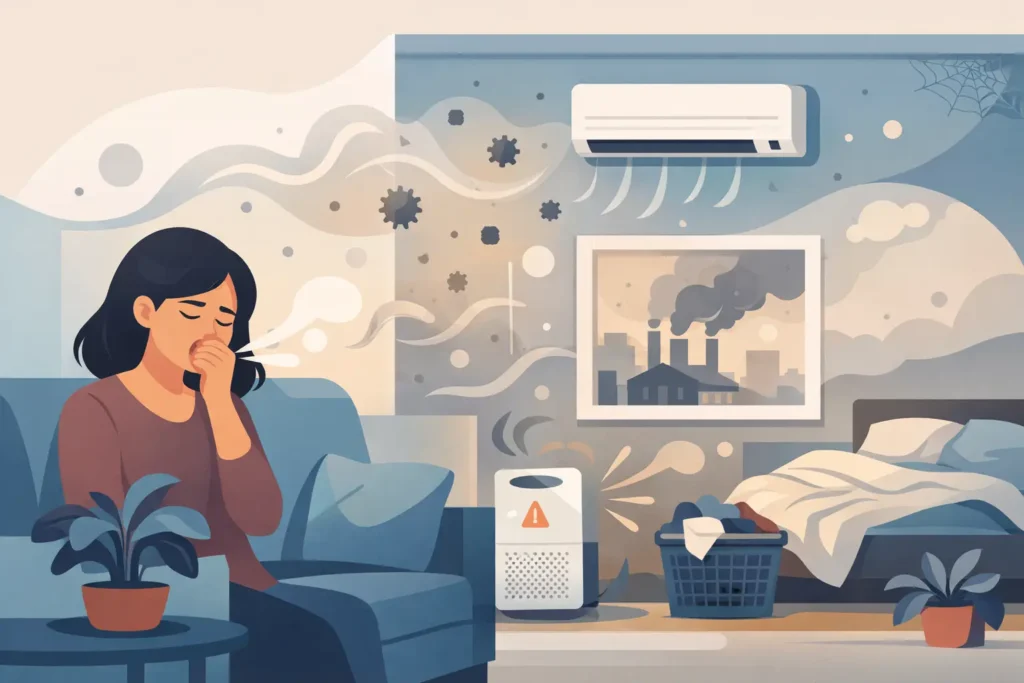
You change the filter, wipe the dust, crack a window, and somehow the air still feels off. Maybe the house smells stale by afternoon, one room is stuffy while another feels drafty, or everyone wakes up congested. If you keep asking, why is my indoor air quality so bad, the answer is usually not one single problem. It is a stack of smaller issues working together – airflow restrictions, dust buildup, excess moisture, dirty vents, and pollutants that get trapped indoors longer than most people realize.
That is the frustrating part of indoor air quality. A home or building can look clean and still circulate contaminated air all day. In condos, houses, and commercial spaces, bad air often shows up first as comfort issues before anyone thinks about ventilation. More dust on furniture. More sneezing. Lingering cooking odors. Rooms that never seem to feel fresh.
Why is my indoor air quality so bad even in a clean space?
Because visible cleanliness and air cleanliness are not the same thing. You can vacuum floors, disinfect counters, and still have a ventilation system pushing around fine dust, allergens, and stale air. A lot of indoor air quality problems start where people do not look often – inside ductwork, inside exhaust lines, around filters, behind vents, and in damp areas where particles and moisture collect over time.
Modern buildings also make the problem worse in a very specific way. They are built to hold heat and improve efficiency, which is great for utility bills but not always great for fresh air exchange. If the building is tightly sealed and ventilation is weak, indoor pollutants stay indoors. That means pet dander, cleaning fumes, cooking grease, smoke residue, dust, and humidity can all linger much longer than they should.
The most common reasons indoor air gets bad
Poor airflow is one of the biggest culprits. When air cannot move properly through the system, dust and contaminants settle, rooms become unevenly heated or cooled, and the whole space starts feeling stagnant. Restricted airflow can come from clogged filters, blocked vents, dirty ducts, or fans that are not performing the way they should.
Dust buildup is another major cause, especially in homes with pets, recent renovations, older carpet, or high foot traffic. Not all dust stays on surfaces. A lot of it gets pulled into the return system, recirculated, and redistributed. If ducts have heavy buildup, every heating or cooling cycle can send some of that back into the living space.
Humidity matters more than most people think. Air that is too damp can support mold growth, musty odors, and that heavy feeling people describe as bad air. Air that is too dry can irritate the throat, nose, and skin, making the indoor environment feel harsh even if there is no obvious smell. The ideal range depends on season and building type, but extremes on either side create problems.
Then there are combustion-related concerns. Gas appliances, fireplaces, attached garages, and poorly vented systems can all affect indoor air. This is where a casual guess is not enough. If there is any concern about gas-burning equipment or venting safety, certified professionals matter.
Bad indoor air is often a ventilation problem
People tend to blame dust first, but ventilation is usually the bigger story. If stale air is not leaving the building properly, contaminants keep cycling back through the space. Bathrooms hold moisture. Kitchens hold grease and odors. Laundry areas release lint and humidity. If those exhaust pathways are weak, blocked, or dirty, the problem builds quietly.
Dryer vents are a good example. Most people think of them only as a fire-risk issue, which they are, but they also affect air quality and airflow. A clogged dryer vent can trap moisture, force lint into places it should not be, and reduce proper exhaust performance. That creates a stuffier indoor environment and adds unnecessary stress to the appliance.
In larger homes, condos, and commercial buildings, the ventilation picture gets even more layered. Shared systems, long duct runs, inconsistent maintenance, and closed interior rooms can create zones where air simply does not circulate well. One tenant complains about dust, another notices odors, and a third says the air feels damp. Those are often connected symptoms, not separate mysteries.
What your house or building may be telling you
Persistent dust is one of the clearest signs. If you clean and the dust comes back almost immediately, the source may be deeper than housekeeping. Excess buildup around supply vents, return grilles, and ceiling corners can point to circulation and filtration issues.
Odors that linger are another clue. Cooking smells, pet odors, mildew, and general staleness should not hang around for hours or days in a properly ventilated space. When they do, it usually means air exchange is too weak or contaminated air is being trapped in the system.
Allergy-like symptoms indoors also matter. If headaches, congestion, throat irritation, or sneezing improve when you leave the building, your indoor environment may be part of the problem. That does not automatically mean dirty ducts are the only cause, but it does mean the air quality deserves a serious look.
Watch for uneven temperatures too. Rooms that are always stuffy, humid, or hard to heat and cool often have airflow restrictions. Comfort problems and air quality problems are closely related.
Why quick fixes sometimes do not work
Air fresheners do not clean air. Opening a window helps temporarily, but it does not solve buildup inside the system. Replacing a filter is important, but if the ductwork is loaded with debris or exhaust vents are blocked, one fresh filter will not undo months or years of accumulation.
Portable purifiers can help in certain rooms, especially for people with allergies, but they are not a substitute for proper mechanical airflow. They treat symptoms in a small area. They do not fix a clogged dryer vent, a dirty return line, or poor building-wide circulation.
This is also where people get burned by low-price cleaning offers. If someone promises whole-system cleaning at a suspiciously cheap rate, there is usually a catch. Either the work is incomplete, the price changes at the door, or the service is not done to a professional standard. Indoor air quality problems need real inspection and real cleaning, not a sales script.
What actually improves indoor air quality
Start with the basics and be honest about what is happening in the space. If filters are overdue, replace them. If vents are blocked by furniture or dust-packed grilles, clear them. If humidity is high, deal with the moisture source instead of masking the smell.
Then look at the systems that move air in and out. Heating and cooling ducts, exhaust pathways, and dryer vents all need to be clean and functioning properly. In many homes and condos, professional duct cleaning makes the biggest difference when there is visible dust release, post-renovation debris, pet hair buildup, or years of neglected maintenance. It is not magic, and it is not needed every month, but in the right situation it restores airflow and removes a major reservoir of contaminants.
Dryer vent cleaning deserves equal attention. A restricted dryer vent reduces efficiency, increases heat and lint accumulation, and can worsen moisture issues. It is one of the simplest maintenance services with one of the clearest safety benefits.
For property managers and commercial operators, the answer is usually consistency. Waiting for complaints means the air problem has already reached occupants. Scheduled maintenance, documented cleaning, and qualified technicians create better results than reacting after tenants start noticing dust and odors.
When to bring in a professional
If the air feels stale all the time, dust returns unusually fast, odors linger, or your airflow has noticeably weakened, it is time for a closer inspection. The same goes for buildings with pets, renovations, high occupancy, or long gaps between duct and vent maintenance.
A professional should be able to explain what they are seeing without gimmicks. Clear scope, transparent pricing, and verifiable credentials matter. In the GTA, that is exactly why many homeowners and property managers choose companies like Dust Chasers over cold-call discount operators. You want real answers, not scare tactics.
The goal is not to make indoor air perfect. Every building has limits, and every fix depends on the source of the problem. But if your indoor air keeps feeling dirty, heavy, dusty, or stale, trust that signal. Buildings do not suddenly develop bad air for no reason, and they rarely fix themselves. Usually, the air has been telling you for a while that it is time to clean, inspect, and restore the way the space breathes.
Better indoor air starts when you stop guessing and start dealing with the actual source.