


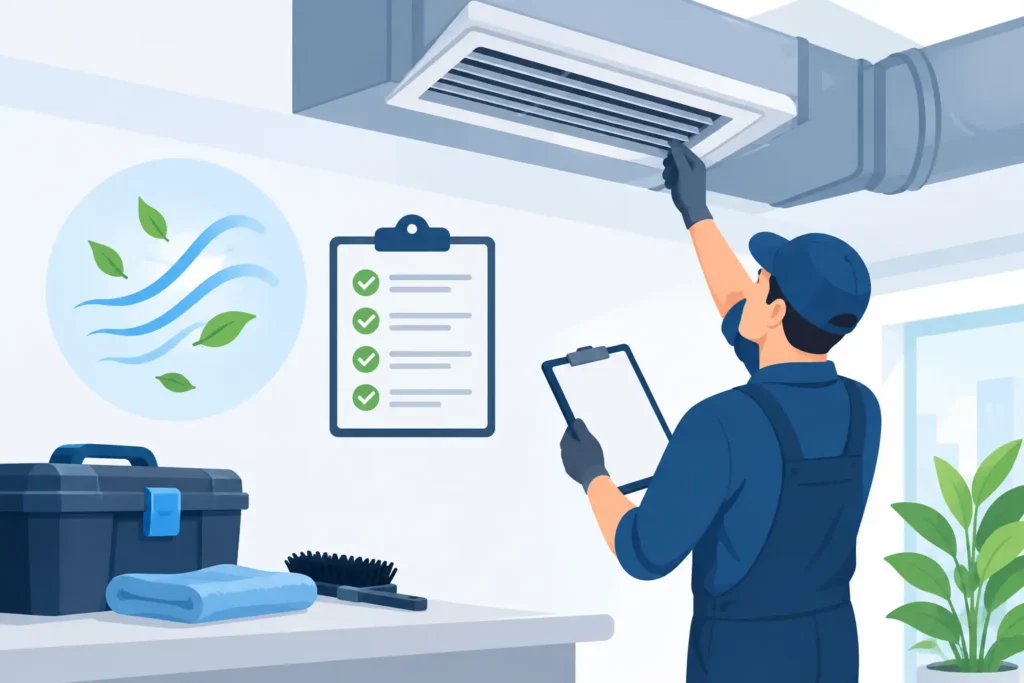
A vent that runs loudly but barely moves air is not doing its job. Neither is a dryer that takes two cycles to finish a normal load. This ventilation maintenance checklist helps homeowners, condo residents, and property managers catch the warning signs before they turn into stale air, excess dust, moisture damage, expensive repairs, or a preventable fire risk.
Ventilation maintenance is not just about making a home feel fresher. It protects how your heating and cooling system performs, helps control indoor humidity, and keeps exhaust systems moving air where it needs to go. In the Greater Toronto Area, where homes are closed up for long stretches through cold weather and humid summers, small airflow problems can become much more noticeable.
Ventilation Maintenance Checklist for Homes and Condos
Start with what you can see, hear, and safely access. A good monthly check takes only a few minutes and gives you a useful baseline. If a room suddenly feels stuffy, dust returns immediately after cleaning, or a vent has changed in sound or airflow, investigate rather than assuming it is normal.
Check these areas first:
- Supply and return vents: Make sure furniture, rugs, curtains, and stored items are not blocking them. Look for heavy dust buildup around grilles, which can signal restricted airflow or a dirty duct system.
- Air filters: Inspect your furnace or air handler filter every month. Replace it according to the manufacturer recommendation and sooner if it looks loaded with dust, pet hair, or construction debris.
- Bathroom exhaust fans: Turn each fan on and hold a square of toilet paper near the grille. It should pull and hold the paper. Weak suction, rattling, or moisture that lingers after showers deserves attention.
- Kitchen exhaust: Clean grease filters regularly and confirm the hood is actually exhausting outdoors if it is designed to do so. A recirculating hood filters some grease and odor, but it does not remove moisture from the home.
- Dryer vent outlet: Check the exterior flap while the dryer is running. It should open freely and release warm, moist air. If it barely moves, lint or a crushed transition hose may be restricting the line.
- Outdoor intake and exhaust covers: Clear leaves, snow, nests, and other debris from exterior terminations. Never block furnace, water-heater, or other combustion appliance vents.
These checks do not replace professional cleaning or repair. They help you identify changes early and provide useful details when you call a qualified technician.
Watch for airflow changes, not just visible dust
Dust at a vent does not automatically mean the entire duct system is dirty. It can also come from a filter that is overdue, gaps around registers, high household activity, pets, or a return-air imbalance. The real concern is a pattern: visible dust combined with weak airflow, uneven room temperatures, musty odors, frequent filter loading, or allergy symptoms that feel worse indoors.
Pay attention to rooms that never seem comfortable. A closed damper, disconnected duct, blocked return, undersized run, or poorly balanced system can all contribute. Cleaning helps when debris is the restriction, but cleaning alone cannot fix a duct design problem. A trustworthy provider should be clear about that distinction instead of promising that every comfort issue has one simple cure.
A Seasonal Ventilation Maintenance Checklist
Your system works differently across the year, so the right maintenance schedule is not one annual task completed and forgotten. Use the change of seasons as a prompt to inspect the areas most likely to affect comfort and safety.
Spring and summer
Before cooling season, replace or inspect the HVAC filter and make sure supply registers are open in rooms you use. Check bathroom fans, especially if windows stay closed during humid periods. Persistent window condensation, peeling paint near bathrooms, or a mildew smell may point to inadequate exhaust rather than a simple cleaning issue.
For properties with central air conditioning, keep the outdoor unit clear of leaves and debris, but do not pressure-wash components or remove panels unless you are qualified to do so. Proper airflow through the indoor system matters just as much as the outdoor equipment.
Fall and winter
Before heating season, confirm that returns are not blocked by furniture moved during the summer. Test carbon monoxide alarms according to their instructions, particularly in homes with gas appliances, fireplaces, or attached garages. Carbon monoxide safety is separate from duct cleaning, but poor ventilation and combustion concerns should never be ignored.
In the GTA, snow can cover low exterior vents and dryer terminations. Check them after significant snowfall. If you notice exhaust odors indoors, a yellow or flickering gas flame where a steady blue flame is expected, headaches, dizziness, or a carbon monoxide alarm, leave the area and contact emergency or qualified gas service support immediately. Do not troubleshoot combustion vents yourself.
Dryer Vent Maintenance Is a Fire-Safety Priority
A dryer vent is a dedicated exhaust system, not an optional household accessory. Every load produces lint, heat, and moisture. The lint screen catches a lot, but not all of it. Over time, lint can collect in the transition hose, wall pipe, elbows, and exterior hood.
Clean the lint screen before every load and wash it periodically if you use dryer sheets or fabric softener. A screen can look clean while carrying a thin residue that reduces airflow. Let it dry completely before putting it back.
Schedule a professional dryer vent inspection and cleaning when drying times increase, clothes feel unusually hot, the laundry room becomes humid, or you smell a hot or burnt odor. You should also act if lint is collecting around the dryer, the exterior flap does not open, or the vent line has not been serviced in years.
Avoid long, flexible plastic or foil-style dryer ducts. They can sag, crush easily, and trap lint. A properly installed rigid or semi-rigid metal transition duct is generally the safer choice, but the full vent route matters too. Long runs with multiple turns may need more frequent service because lint has more places to settle.
For condo owners and property managers, responsibility can be less straightforward. The dryer may be inside the suite while part of the exhaust route runs through common building infrastructure. Confirm who is responsible for inspection, cleaning, access, and repairs before a problem becomes a leak, tenant complaint, or fire concern.
When to Call a Professional Ventilation Company
Some maintenance is simple. Professional service becomes the smart move when there is evidence of a system-level issue, a safety concern, or an area you cannot safely inspect.
Consider booking an assessment or cleaning when you notice several of the following:
- Dust blowing from registers or accumulating quickly around vents
- Weak airflow from multiple rooms or one persistently uncomfortable area
- Musty, stale, or unusual odors when the HVAC system starts
- Recent renovation debris, a new home purchase, or a move into a previously occupied property
- Dryer loads taking longer than usual or an exterior dryer flap that stays closed
- Visible debris, pest evidence, or suspected mold around accessible vent openings
Be cautious with bargain duct-cleaning offers that quote an unusually low price before anyone has assessed the system. This industry has a well-known cold-calling scam problem. A legitimate company should identify itself clearly, explain what is included, provide transparent pricing, and avoid pressure tactics once technicians arrive.
Ask what equipment will be used, whether sanitation is included, how access points are handled, and whether the company is qualified to identify issues beyond cleaning. If a home has gas appliances or a suspected venting concern, make sure the appropriate certified professional is involved. Cleaning crews should not present themselves as gas technicians unless they are properly certified.
Maintenance Records Matter for Multi-Unit and Commercial Properties
For a single-family home, a note in your calendar may be enough. For condo boards, landlords, and commercial operators, maintenance records are part of responsible building management. Track dates, service scope, reported defects, access limitations, and recommended follow-up work.
This is especially useful for shared exhaust systems, high-turnover rental units, laundry facilities, restaurants, salons, and properties with recurring moisture or odor complaints. The goal is not to clean on an arbitrary schedule. It is to make service decisions based on equipment use, building conditions, risk, and documented performance.
Dust Chasers serves GTA properties with professional air duct and dryer vent cleaning built around cleaner airflow, practical safety, and clear service expectations. Whether you manage one home or many units, the right maintenance plan should match the system you actually have.
A ventilation checklist works best when it becomes a habit: check filters, keep vents clear, listen for changes, and treat dryer performance as a safety signal. That small amount of attention can prevent a lot of avoidable problems.