


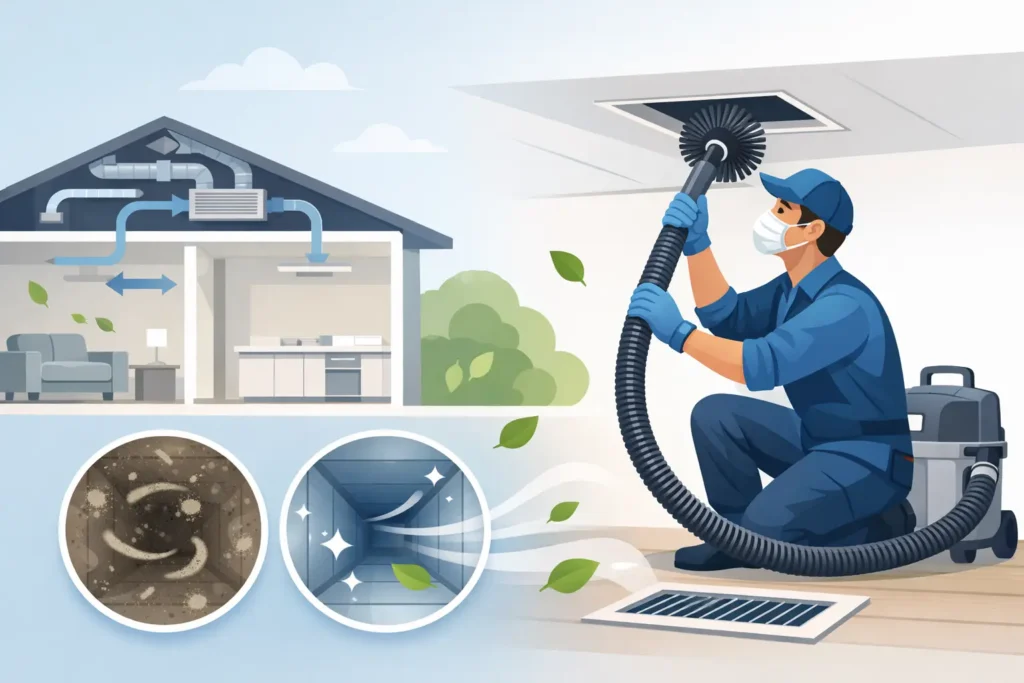
You notice it in the rooms that never feel quite right. One bedroom gets stuffy. The hallway collects dust again two days after cleaning. The vents push air, but the house still feels stale. That is usually when residential duct cleaning moves from a nice-to-have to a real maintenance question.
The truth is simple: not every home needs duct cleaning on the same schedule, and not every company offering it is selling the same service. In the GTA, homeowners deal with a mix of renovation dust, pet hair, seasonal allergies, urban air pollution, and forced-air systems that run hard for long winters and humid summers. When debris builds up inside ductwork, it can affect how your home feels day to day.
What residential duct cleaning is supposed to do
At its best, residential duct cleaning removes accumulated dust, debris, and contaminants from the supply and return duct system, along with key components that move air through the home. That can help reduce loose dust circulating through vents, support steadier airflow, and improve the overall cleanliness of the HVAC system.
It is not magic, and it is not a cure-all for every air quality complaint. If a house has high humidity, a dirty furnace filter, leaky duct connections, poor insulation, or active mold from a moisture problem, duct cleaning alone will not fix those issues. Good companies say that upfront. Bad ones promise instant health transformations for $99 and hope you do not ask what is actually included.
A proper service is about removing buildup where it exists and helping the system breathe more freely. For families dealing with allergies, recent renovations, shedding pets, or visible dust around vents, that can make a noticeable difference. For homes with clean, well-maintained systems and no warning signs, the benefit may be more moderate.
Signs your home may need residential duct cleaning
Some signs are obvious. You remove a vent cover and see dust packed inside. You have just completed a remodel and fine drywall dust seems to reappear no matter how often you clean. You move into an older house and have no record of any previous duct service.
Other signs are more subtle. Certain rooms feel weaker on airflow than others. Dust gathers quickly on furniture near vents. The home smells stale when the system starts. Family members with allergies feel worse indoors than expected. None of these symptoms automatically prove the ducts are the only problem, but they are reasonable signs to investigate.
Homes with pets usually collect more hair and dander in the system. Homes with kids, frequent foot traffic, or nearby construction tend to pull in more particulate matter. Condo owners can face a slightly different issue, especially in buildings where residents assume the unit is sealed tight when it is actually exchanging air through shared mechanical pathways and vent systems.
What a proper duct cleaning should include
This is where the gap between real service and cheap marketing gets wide. A professional residential duct cleaning job should involve more than sticking a shop vacuum near a vent and calling it done.
The system needs negative pressure created with proper equipment so loosened debris is pulled out instead of released back into the house. Supply ducts and return ducts should both be addressed. Registers and grilles should be cleaned. Key HVAC components around the air handler area should be inspected and, where applicable to the service scope, cleaned carefully.
A legitimate crew should also explain what they found. If there is heavy buildup, signs of moisture, disconnected duct sections, or unusual contamination, you should hear about it clearly. Transparent pricing matters too. If the advertised price suddenly doubles once the technicians arrive, that is not transparency. That is a sales trap.
This industry has a scam problem, and homeowners should treat ultra-low cold-call offers with real skepticism. Reliable companies earn trust by showing process, qualifications, and clear scope before work begins.
Why results depend on the house
One reason people have mixed opinions about duct cleaning is that houses are different. A newer home with sealed ductwork, upgraded filtration, and careful housekeeping may see modest improvement. A home after renovation, or one with years of neglected maintenance, can see a much bigger change.
System design matters. So does occupancy. A single resident in a newer townhouse will load a duct system differently than a busy family in a detached home with pets and a finished basement. Even the age of the furnace and the condition of the filter rack can affect how much debris moves through the system.
That is why honest providers avoid one-size-fits-all claims. Residential duct cleaning is most useful when it is matched to actual conditions in the home, not sold as a generic annual ritual.
The indoor air quality connection
People usually book this service because they are tired of dust, but comfort and air quality are part of the same conversation. When air moves through dirty ducts, it can carry fine particles that settle on surfaces and circulate through living spaces. Cleaning the system will not create a sterile home, but it can reduce one source of recirculated buildup.
For households with asthma, allergies, or sensitivity to dust, that matters. It also matters for people who spend most of the day inside, especially in winter when windows stay closed for long stretches. Cleaner airflow can support a fresher-feeling home, even if the improvement shows up as fewer dust streaks on vent covers rather than a dramatic overnight change.
If odor is the main issue, duct cleaning may help when dust and debris are contributing to stale air. But if the smell comes from moisture, pets, cooking habits, or hidden microbial growth, the solution may involve more than the ductwork. That is another place where straight answers matter.
How often should residential duct cleaning be done?
There is no single rule that fits every house. A common range is every three to five years, but that is only a starting point. Some homes should be cleaned sooner, especially after renovations, after moving into a previously occupied property, or when there are pets, heavy dust conditions, or clear airflow concerns.
Other homes can go longer if filtration is good, maintenance is consistent, and there are no visible signs of buildup. The better question is not, “How often does every house need it?” It is, “What is happening in my house and system right now?”
A visual inspection and an honest conversation about symptoms usually tell you more than any blanket timeline.
Choosing a company without getting burned
Homeowners should be careful here. If the offer sounds absurdly cheap, it usually is. Scam operators often use low teaser pricing, then pile on surprise charges once they are inside the home. Others do fast, incomplete work that cleans almost nothing beyond the vent openings.
Look for a company that explains its equipment, its process, and what is included. Ask whether both supply and return lines are cleaned. Ask if the price is based on system size, number of vents, or another clear factor. Ask who is performing the work and whether the technicians are qualified to work safely around HVAC equipment.
This is one reason many homeowners in the Greater Toronto Area prefer specialized providers over general discount cleaners. A focused air quality and ventilation company has more to lose by cutting corners and more expertise to back up the service. Dust Chasers, for example, has built its reputation around transparent pricing, qualified technicians, and a very direct stance against bait-and-switch duct cleaning scams.
The best results come from pairing cleaning with maintenance
Duct cleaning works better when the rest of the system is not neglected. A clogged filter, dirty dryer vent, poorly balanced airflow, or unresolved humidity problem can keep the house feeling dusty or uncomfortable even after the ducts are cleaned.
Think of residential duct cleaning as one part of a larger indoor air quality strategy. Regular filter changes, equipment maintenance, and attention to airflow issues help protect the value of the cleaning. If your home has persistent dust or comfort problems, the right provider should be willing to point out what duct cleaning can solve and what it cannot.
That kind of honesty is worth more than a flashy coupon. Cleaner air starts with clear information, careful work, and a company that treats your home like a system instead of a quick sale. If your vents are telling you something, it is worth listening before another season of dust settles in.