


You change the filter, wipe the furniture, vacuum every week – and somehow the dust still comes back fast. If that sounds familiar, you are probably wondering how to remove dust from air ducts without making a mess or wasting money on a half-fix.
The truth is simple: some duct dust is easy to reach, and some of it is buried deep in the system where household tools cannot do much. Knowing the difference matters. It helps you avoid scammy promises, protect your indoor air, and decide whether a careful DIY cleanup is enough or if it is time to bring in a real duct cleaning team.
How to remove dust from air ducts without causing more problems
Start with the parts you can access safely. In many homes, the visible dust near vent covers and inside the first few feet of ductwork is the main issue. In others, the dust keeps returning because the problem is bigger than the registers – weak filtration, leaky ducts, renovation debris, pet hair, or years of buildup inside the trunk lines.
Before you do anything, turn off your HVAC system at the thermostat. You do not want the fan pulling loose dust through the house while you clean. Remove each supply and return vent cover carefully, especially if the paint has sealed it slightly to the wall or floor. Wash the covers with warm water and mild soap, then let them dry fully.
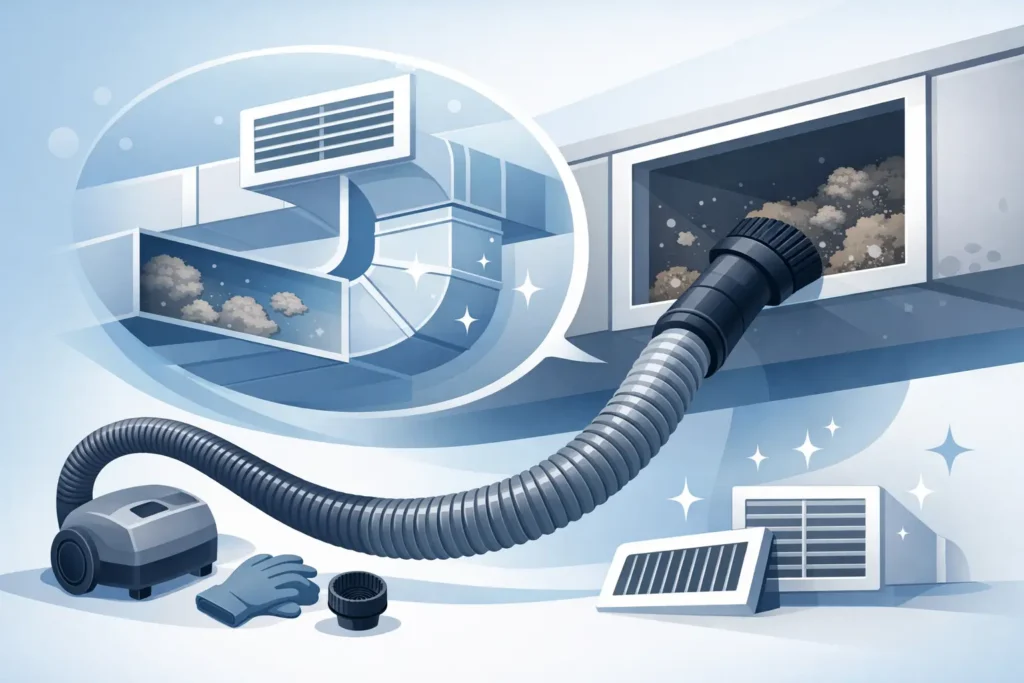
With the cover off, use a vacuum hose to collect loose dust just inside the opening. A shop vacuum works better than a standard upright because it gives you direct reach. If you can, use a soft brush attachment to loosen buildup without scraping flexible duct material or disturbing seals.
A damp microfiber cloth can help with the accessible edges of the duct boot, but keep the moisture light. You are cleaning dust, not soaking metal. Too much water inside any duct system is asking for trouble.
What actually works for light duct dust
If your goal is surface cleanup, a few basic tools do most of the work. A vacuum with hose attachments, a screwdriver, microfiber cloths, a soft cleaning brush, and a fresh HVAC filter are usually enough for a limited job. For floor vents, you may also want a flashlight to check how far the visible dust extends.
What does not work well is trying to improvise with leaf blowers, harsh chemicals, or long rigid tools that can damage duct interiors. Homeowners often push dust farther into the system instead of removing it. That creates the illusion of cleaning while leaving the actual buildup behind.
This is where expectations need to stay realistic. If you can reach it, you can probably improve it. If you cannot reach it, you are not truly cleaning the full duct system.
Clean the vent covers and surrounding areas too
A dusty register can make a clean duct look dirty again within days. Vacuum and wipe around every vent opening, including baseboards, nearby flooring, and wall surfaces. If you skip the surrounding area, loose dust gets pulled right back into the airflow path.
This also helps you spot patterns. Heavy dust near one or two vents may point to room-specific issues like pet hair, remodeling debris, or poor housekeeping in those spaces. Heavy dust across nearly every vent usually points to a system-wide problem.
When dust in air ducts is a sign of a bigger issue
Sometimes the dust is not really about the ducts. It is about what the ducts are carrying. If your home gets dusty again right after cleaning, check the HVAC filter first. A cheap filter, an incorrectly sized filter, or a filter that has not been changed on time can let fine particles keep circulating.
Air leaks are another common cause. If duct joints are leaking, the system can pull dust from attics, basements, wall cavities, or utility spaces and move it into your living areas. In older homes and some condo mechanical systems, this is more common than people think.
Recent construction or renovation also changes the picture. Drywall dust, sawdust, and fine debris can settle deep into vents and continue blowing out long after the project is over. In that case, surface cleaning rarely solves the problem.
If anyone in the home deals with allergies, asthma, or respiratory sensitivity, it is worth taking recurring dust more seriously. Dust inside ducts is not always dangerous on its own, but when it mixes with pollen, dander, and other particles, it can make the air feel stale and irritating.
How to remove dust from air ducts if the buildup is deep
This is the line where DIY usually stops. Professional duct cleaning equipment is built to create strong negative pressure through the system while agitating and removing debris from deeper runs. That is very different from vacuuming a few vent openings.
A proper service targets the whole system, not just the registers you can see. That includes supply ducts, return ducts, and key components tied to airflow. If a company shows up with weak equipment, offers suspiciously cheap prices, or rushes through the job in no time, that is a red flag. Deep cleaning a real system takes process, not gimmicks.
For homeowners, landlords, and property managers, this is where working with a trusted company matters. In the GTA, that is a big deal because the duct cleaning industry has had its share of low-price cold-call scams. A legitimate provider should be transparent about pricing, explain the scope clearly, and never pressure you with bait-and-switch tactics.
Signs you should call a professional
If you remove the vent covers and see thick buildup, clumps of debris, signs of pest activity, musty smells, or dust blowing out when the system starts, a full cleaning may be justified. The same goes for homes with pets, smokers, recent renovations, or long gaps since the last service.
Commercial spaces and multi-unit properties should be even more careful. Dust issues in shared or high-use buildings can affect comfort complaints, maintenance schedules, and system performance. A quick DIY touch-up may help appearances, but it will not replace mechanical cleaning where the ductwork is extensive.
What to avoid when cleaning air ducts
The biggest mistake is over-cleaning with the wrong tools. Flexible ducts can tear. Older seals can loosen. Aggressive brushing can dislodge material without actually extracting it. Once debris gets stirred up deeper in the system, the mess can spread.
Be cautious with sprays and fragrances marketed as duct fresheners. Covering odor is not the same as removing contamination, and adding unnecessary chemicals into the airflow is rarely a smart first move. If there is a musty smell, find the source instead of masking it.
Another mistake is assuming duct dust is always the root problem. Sometimes the real fix is sealing leaks, replacing filters more often, controlling humidity, or cleaning the blower compartment and coils. It depends on what is driving the dust in the first place.
How to keep dust from coming back fast
Once the visible dust is gone, prevention is what makes the effort worth it. Replace your HVAC filter on schedule and use the right size and rating for your system. Keep vent covers clean. Vacuum around returns more often than you think you need to. If you have pets or a busy household, expect to do this more regularly.
It also helps to reduce dust at the source. Use door mats, control indoor humidity, vacuum with a HEPA-equipped machine if possible, and stay on top of post-renovation cleanup. If some rooms are always dustier than others, have the duct layout and airflow checked instead of guessing.
For many properties, the smartest move is not constant DIY cleaning. It is periodic professional maintenance paired with better filtration and honest inspection. That approach saves time and usually delivers better air movement and less recurring dust.
At Dust Chasers, we see this all the time: people blame themselves for a dusty home when the system is the real culprit. A clean-looking vent is nice, but cleaner airflow is the result that actually matters.
If you are trying to figure out how far to take the job, trust what the system is telling you. A little dust at the register is one thing. Dust that keeps coming back, weak airflow, stale air, or debris blowing out of vents is your cue to stop treating the symptom and fix the source.