


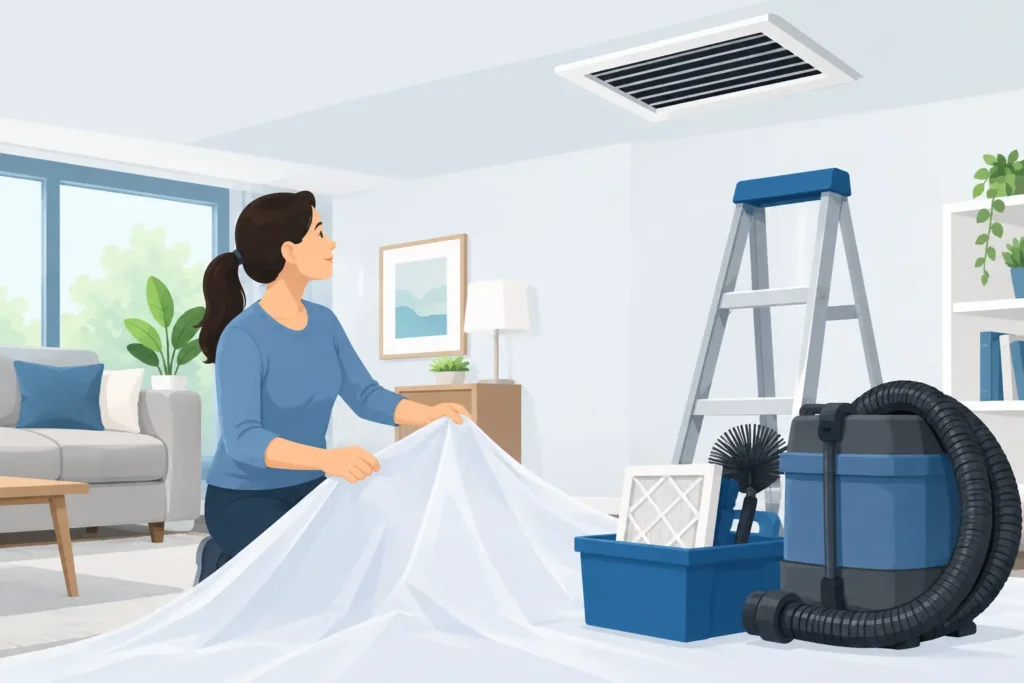
A professional cleaning appointment should not turn your home upside down. When you prepare for air duct cleaning before the technicians arrive, the work moves faster, your belongings stay protected, and every supply and return vent can receive the attention it needs. A little preparation also makes it easier to spot real results: cleaner registers, less loose dust, and airflow that is not blocked by clutter.
For homeowners, condo residents, landlords, and property managers, the goal is simple. Give qualified technicians safe, clear access to the HVAC system without taking on work that belongs to the professionals. You do not need to dismantle ductwork, spray chemicals into vents, or attempt a deep vacuum yourself. You just need a practical plan for service day.
Confirm What Your Air Duct Cleaning Includes
Before moving furniture or clearing rooms, confirm the scope of the appointment. Air duct cleaning can involve supply vents, return vents, trunk lines, the furnace or air handler area, and sometimes the dryer vent as a separate service. The exact work depends on your property and the equipment installed.
Ask the company what areas they will access, how long the appointment is expected to take, and whether they need entry to every room with a register. If you live in a condo, verify any building rules about elevator reservations, loading access, parking, insurance certificates, or service-hour restrictions. Property managers should also confirm how technicians will reach mechanical rooms and tenant spaces.
This step protects you from vague, low-price offers that change once a crew is inside your home. A legitimate provider should explain the work clearly, provide transparent pricing, and avoid pressure tactics. Be cautious with unsolicited cold calls promising an unbelievably cheap whole-home cleaning. Those offers often lead to surprise charges or incomplete service.
Clear Access to Vents, Returns, and Equipment
Technicians need room to work around each vent opening and the main HVAC equipment. You do not have to empty an entire room. Moving items a few feet away is usually enough, provided the path to the vent is safe and unobstructed.
Focus on the areas that matter most:
- Move small furniture, storage bins, pet beds, and floor lamps away from supply and return vents.
- Clear a walking path from the entrance to the furnace, air handler, utility closet, or mechanical room.
- Remove boxes, laundry, and loose items from around the HVAC unit.
- Make sure basement stairs, hallways, and access panels are not blocked.
- Point out vents hidden behind large furniture that cannot be moved safely.
If a heavy sectional, built-in cabinet, or large appliance covers a vent, do not strain yourself trying to shift it alone. Tell the company in advance. In some cases, the technician can work around it. In others, moving it may be necessary for complete access. The best choice depends on the location of the register and the risk of damaging your floor, furniture, or back.
Do Not Forget Return Air Vents
Return vents are often larger than supply registers and may be located in hallways, living rooms, or bedrooms. They pull air back toward the HVAC system, so blocked returns can contribute to weak airflow and excess dust around the grille.
Clear these areas especially well. A technician may need to remove the cover and connect cleaning equipment nearby. If a return vent is behind a bookcase or console table, moving that piece before the appointment can prevent delays.
Protect Fragile Items and Plan for Pets
Professional crews work carefully, but air duct cleaning involves hoses, tools, equipment movement, and access to multiple rooms. Put breakable decor, small electronics, loose rugs, and valuables away from main walkways. If you have a tight entryway or a narrow condo corridor, this is even more useful.
Pets deserve a plan too. The sound of equipment and unfamiliar people moving through the home can be stressful for dogs, cats, and birds. Keep pets in a secure room away from the work area, arrange for them to stay with a neighbor, or use a crate if that is already part of their routine. Let the technicians know about pets before they enter so doors are not accidentally left open.
For households with allergies or respiratory sensitivities, it can be wise to have sensitive family members spend time in another part of the home while work is underway. A reputable cleaning process is designed to control debris, but any maintenance visit can stir up minor dust around vent covers as they are removed.
Make the HVAC System Easy to Access
Your furnace, air handler, or fan coil unit is a central part of the job. In many GTA homes, it is located in a basement utility room, laundry area, garage, closet, or dedicated mechanical space. Make sure technicians can reach it without climbing over stored belongings.
If your system has a filter compartment, know where it is. Ask whether you should provide a replacement filter or whether the company offers one. A clean filter supports airflow after the service, but the right size and type matter. Using an overly restrictive filter can reduce airflow in some systems, while a low-quality filter may not capture enough fine debris.
If you have a gas furnace, do not tamper with gas connections, venting, or combustion components before the appointment. Those areas require trained professionals. Qualified technicians should know when a gas-related concern needs assessment by a properly certified gas technician.
Turn Off the System Only If Instructed
Do not automatically shut down your furnace, air conditioner, or thermostat hours before the visit. Cleaning methods vary, and technicians may need the system in a particular state when they arrive. Follow the instructions provided by your service company. If you have concerns about an unusual sound, burning smell, poor heating, or a system fault, mention it when booking rather than trying to troubleshoot it through the vents.
Prepare for Dryer Vent Cleaning Too
If you booked dryer vent cleaning alongside duct cleaning, clear the laundry area and make sure the dryer can be reached. Remove detergent bottles, baskets, and storage items from behind or beside the appliance. The technician may need access to the transition hose, exterior vent outlet, and the area where lint commonly collects.
Clean the lint screen before the appointment, but do not assume that a clean screen means the vent line is clear. Lint can build up farther down the exhaust path, especially in long runs, multi-story homes, condos, and properties where the dryer takes too long to dry clothes. That buildup can restrict performance and create a preventable fire risk.
If the dryer is gas-powered, tell the company when you book. The appliance may require additional care and proper gas-technical qualifications if it needs to be moved or disconnected. Never pull a gas dryer away from the wall on your own just to make access easier.
Share the Details That Change the Job
A good appointment starts before the crew arrives. Tell the company about recent renovations, water damage, pest activity, visible debris at vents, unusual odors, weak airflow in certain rooms, or construction dust. These details do not automatically mean there is mold or a serious duct problem, but they help technicians assess the situation properly.
For commercial buildings and multi-unit properties, provide access instructions, a site contact, parking details, and any safety procedures. If service will affect tenants, communicate the work window early and identify spaces that need special scheduling, such as medical offices, childcare areas, restaurants, or server rooms.
You should also mention whether your home has high ceilings, hard-to-reach vents, multiple HVAC systems, or a recently installed furnace. The more accurate the information, the less likely you are to face delays or changes in scope on service day.
What Not to Do Before the Crew Arrives
Avoid sealing vents with tape, spraying fragrances or disinfectants into duct openings, or using store-bought fogging products to cover odors. These products can leave residue, mask an issue that needs to be inspected, or create unnecessary irritation for sensitive occupants.
There is also no need to remove every register cover yourself. Covers can be painted in place, stripped screws can create problems, and some locations are awkward to reach. Leave that work to the crew unless you were specifically asked to remove a cover ahead of time.
Most of all, do not choose a provider solely because the advertised price seems too good to be true. Ask who will perform the work, what equipment is used, whether pricing is clear, and whether the company can explain its process without evasive answers. Your HVAC system is not the place for a bait-and-switch experiment.
Be Available for the Walk-Through
Plan to be available when the technicians arrive, even if only for the opening walk-through and final review. Show them the HVAC equipment, point out hard-to-find vents, mention rooms with airflow concerns, and identify anything fragile or off-limits. At the end, ask what they found and whether they recommend any next steps, such as a filter change, dryer vent maintenance, or HVAC service.
Dust Chasers helps GTA homes and properties approach this work with clear expectations, qualified service, and no mystery pricing. The best preparation is not complicated: clear the path, protect what matters, share useful details, and choose a team that treats your indoor air and safety like real priorities.