


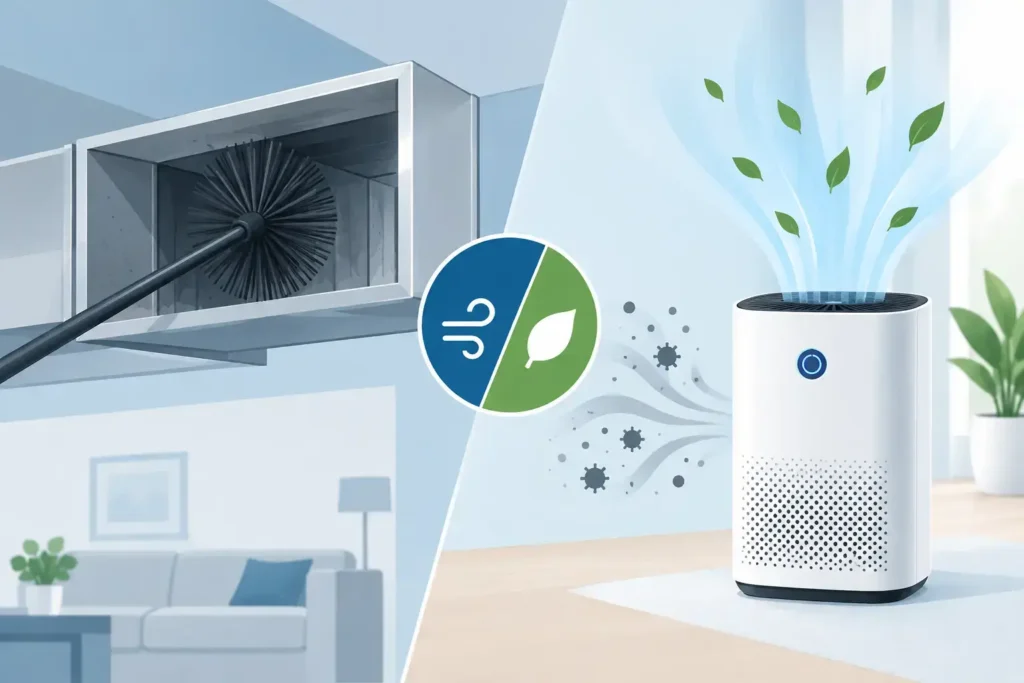
A new air purifier can make a bedroom feel fresher within hours. But if every time your heating or cooling system starts, dust blows from the vents or certain rooms smell stale, the purifier is treating the air in the room, not the source inside the system. That is the real distinction in duct cleaning versus air purification.
Both can support cleaner indoor air, but they do entirely different jobs. Choosing the wrong one can leave homeowners and building managers frustrated: the purifier runs constantly while airflow stays weak, or ducts are cleaned while an ongoing allergy issue still needs room-level filtration. The right answer depends on what is happening in your home, condo, or facility.
Duct Cleaning Versus Air Purification: The Core Difference
Professional air duct cleaning removes accumulated debris from the forced-air system. That can include dust, construction residue, pet hair, lint, and other particles that settle in supply and return ducts, vents, and accessible HVAC components. The goal is to improve the cleanliness of the system that moves conditioned air through the building.
Air purification filters or treats the air already circulating in a room or through an HVAC system. Portable units commonly use mechanical filters, such as HEPA filters, to capture airborne particles. Some whole-home options are installed as part of the HVAC system. Their role is ongoing air filtration, especially for fine particles that are currently floating in the air.
Put simply: duct cleaning addresses buildup inside the delivery pathway. Air purification addresses particles in the air you are breathing now. One does not automatically replace the other.
When Duct Cleaning Is the Better First Move
Duct cleaning makes the most sense when there are clear signs the ventilation system itself needs attention. A layer of dust around registers is not always proof that the entire duct system is dirty, but repeated dust release, visible debris, or poor airflow deserves a closer look.
Homeowners often call after a renovation, move-in, or major repair. Drywall dust, sawdust, and other construction debris can travel farther than expected, particularly when contractors run the heating or cooling system during the work. A quality cleaning can help remove that residue before it continues circulating through occupied spaces.
It is also worth considering when a property has had heavy pet activity, a smoking history, water concerns that require proper inspection, or long periods without maintenance. For landlords and property managers, duct cleaning can be a practical reset between tenants when there is evidence of debris or odor trapped in the system.
Airflow is another important clue. If certain rooms are consistently stuffy, vents appear blocked by dust, or the system seems to work harder than it should, cleaning may help restore more open pathways. It is not a cure for every HVAC performance problem. Damaged ductwork, undersized equipment, closed dampers, or mechanical issues need their own solutions. Still, removing significant buildup is a sensible maintenance step.
When Air Purification Makes More Sense
An air purifier is useful when the problem is ongoing airborne particles, not just debris sitting in ducts. Allergy sufferers may benefit during high-pollen periods. Homes with pets can use purification to reduce airborne dander. Portable units can also help in specific spaces where people sleep, work, or spend extended time.
This is especially practical when one person in the household is more sensitive than others. A bedroom purifier lets that person improve filtration in the room that matters most without changing the entire home system. For condo residents, it can be a straightforward option when access to central HVAC components is limited or when odors and particles enter from shared corridors or neighboring units.
Purifiers have trade-offs. Their effectiveness depends on room size, filter quality, fan speed, and whether doors and windows are open. They also need regular filter changes. A unit with a clogged filter is not doing its best work, and a small purifier placed in a large open-concept space may not make a meaningful difference.
Be cautious with devices that make broad claims about eliminating every odor, contaminant, or health concern. Filtration is proven and practical when properly sized and maintained. Big promises without clear information about how a device works deserve scrutiny.
Why a Purifier Cannot Replace Duct Cleaning
A portable purifier does not pull dust, lint, or debris out of supply and return ducts. It filters air passing through its own unit. If contaminants are settled inside the ductwork, they remain there until they are removed through proper mechanical cleaning.
The reverse is also true. Cleaning ducts does not create a permanent filtration barrier against pollen, pet dander, outdoor pollution, or particles generated every day through cooking and normal household activity. Once a duct system is clean, the air can still pick up particles immediately afterward.
That is why the most effective approach is often sequential rather than either-or. Deal with a dirty system first when there is a clear reason to do so. Then use appropriate filtration to help manage the particles that continue entering the indoor environment.
A Practical Decision for Homes, Condos, and Buildings
Start by identifying the pattern. If dust appears mainly when the HVAC system runs, if there is visible debris in vents, or if the property has recently been renovated, duct cleaning should be high on the list. If symptoms are strongest in a particular room, during allergy season, or around pets, an air purifier may offer faster targeted relief.
For larger residential properties and commercial facilities, inspect the whole system instead of guessing. Facility managers should consider occupancy levels, maintenance records, renovations, tenant complaints, and equipment condition. A restaurant, office, clinic, or multi-unit property may have very different air-quality needs than a single-family home.
Dryer vent cleaning belongs in this conversation for a different reason: safety. A dryer vent is not part of the home’s air purification strategy, but lint buildup can restrict exhaust airflow and increase fire risk. If clothes take longer to dry, the dryer feels unusually hot, or lint is collecting around the exterior vent hood, do not treat it as a minor inconvenience.
What Good Duct Cleaning Should Look Like
A legitimate service provider should explain what is being cleaned, how the work is performed, and what pricing includes before the appointment begins. Be wary of vague, ultra-low teaser prices followed by aggressive upselling once technicians arrive. This industry has a real cold-calling scam problem, and homeowners should not feel pressured into a service they did not understand or request.
Professional work should focus on the actual duct system, not a quick vacuum around visible registers. Ask clear questions about the equipment used, the areas included, and whether sanitation is appropriate for the situation. If your property has gas equipment, certified technicians and safe work practices matter.
For Greater Toronto Area homeowners and property managers, Dust Chasers takes a direct approach: transparent service, trained technicians, and cleaning built around the property type rather than a one-size-fits-all package. That matters because a condo unit, detached home, and commercial space do not have the same ventilation layout or maintenance needs.
Use Both When the Problem Calls for It
There is no prize for choosing only one solution. A family with pets, allergies, and post-renovation dust may get the best results from professional duct cleaning followed by a properly sized purifier in bedrooms or main living areas. A building manager dealing with tenant dust complaints may need to inspect duct cleanliness, replace HVAC filters, and address specific rooms with additional filtration.
The goal is not to buy the most equipment. It is to remove the source of avoidable buildup and then maintain cleaner air as daily life continues. Pay attention to the evidence in your space – airflow, dust patterns, odors, maintenance history, and how occupants feel. Those details will point you toward the solution that actually earns its place in the building.