


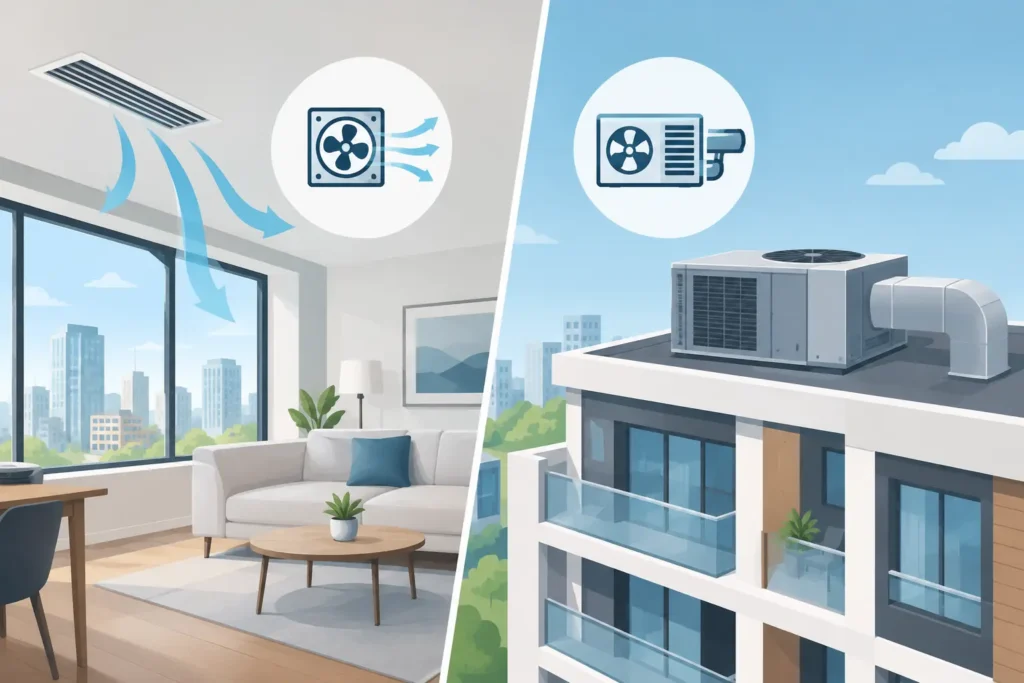
A condo can feel stuffy even when the thermostat says everything is working. That is because condo ventilation versus central HVAC is not a simple choice between two versions of the same system. One system may heat or cool your suite, while another removes humid, stale air from bathrooms and kitchens. In many buildings, a third system brings fresh air into common areas or individual units.
Knowing which system does what helps residents avoid wasted service calls, identify real airflow problems, and ask property management the right questions.
Condo Ventilation Versus Central HVAC: The Core Difference
Ventilation is about air exchange. It removes indoor air that carries moisture, odors, cooking particles, and everyday pollutants, then replaces it with outdoor or conditioned air. In a condo, ventilation often involves bathroom exhaust fans, kitchen exhaust systems, corridor pressurization, fresh-air make-up units, or dedicated outdoor-air equipment.
Central HVAC is about heating, cooling, and circulating conditioned air. A central system may serve the entire building, several floors, or each suite through fan coils, heat pumps, packaged terminal units, or shared ductwork. It controls temperature first. It does not automatically guarantee adequate fresh-air exchange.
That distinction matters. A perfectly functioning air conditioner can still leave a suite smelling stale if bathroom exhaust is weak. On the other hand, strong ventilation will not fix a fan coil that cannot cool a sun-facing living room in July.
How Most Condo Systems Are Set Up
There is no single condo setup. Older high-rises, newer towers, and converted buildings can have very different equipment behind the walls. Still, most systems fall into a few familiar arrangements.
In-Suite Fan Coil or Heat Pump
Many condos use a fan coil unit or heat pump inside the suite, often located in a closet, hallway ceiling, or utility room. It pulls air from the suite through a return grille, runs that air across a heating or cooling coil, and sends it back through supply vents.
This is HVAC circulation, not necessarily fresh ventilation. If its filter is dirty, the unit may run longer, move less air, and spread more dust through the suite. The filter and accessible equipment may be the resident’s responsibility, while the building controls the central heating or cooling source. The exact split should be confirmed with the condominium corporation.
Central Building Heating and Cooling
Some buildings have a central boiler, chiller, or rooftop equipment that provides heating or cooling to fan coils in individual suites. Residents may have a thermostat, but they do not control the building’s seasonal changeover schedule. That is why a unit may feel warm during a spring cold snap or cool during an early fall heat wave, even when the thermostat is set correctly.
Bathroom and Kitchen Exhaust
Bathroom exhaust typically pulls humid air into a shared vertical exhaust shaft, often called a riser. Kitchen ventilation may exhaust outdoors, connect to a central system, or in some condos use a recirculating range hood with a filter. These are not interchangeable.
A recirculating hood can capture some grease, but it does not remove moisture and cooking odors outdoors. If a bathroom fan becomes noisy, weak, or stops pulling air, the problem could be the grille, duct connection, backdraft damper, shared riser, roof fan, or building controls. It is not always a simple fan replacement inside the unit.
Fresh-Air and Corridor Systems
Some newer buildings supply treated outdoor air to suites or maintain positive pressure in corridors. This helps limit odors and contaminants moving between units. Doors that slam, strong drafts beneath the entry door, or persistent hallway odors can point to a pressure imbalance worth reporting to management.
What Residents Can Maintain and What Belongs to the Building
Condo living adds a critical layer: ownership boundaries. Residents can often replace accessible fan coil filters, keep supply and return grilles clear, clean the visible bathroom fan grille, and report changes in airflow quickly. They should not disconnect shared ducts, modify fire dampers, or open sealed mechanical components.
Property management or the condominium corporation typically handles shared exhaust risers, roof fans, make-up air units, central boilers and chillers, corridor pressure, and many vertical ducts. The declaration, rules, and maintenance agreement determine the exact responsibility, so assumptions can get expensive.
Dryer vents deserve special attention. If a condo has an in-suite dryer with a vented connection, lint can restrict airflow and create a serious fire concern. Some buildings use shared dryer exhaust routes, which makes professional service and coordination especially important. Never treat dryer vent cleaning as cosmetic housekeeping.
Signs You Have a Ventilation Problem, Not Just an HVAC Problem
Comfort complaints can look alike, but the clues are different. HVAC issues tend to show up as rooms that are too hot or too cold, weak supply airflow, frequent cycling, or unusual noises from a fan coil. Ventilation issues are more likely to involve humidity, lingering odors, bathroom condensation, and air that feels stale even at the right temperature.
Watch for these patterns:
- Mirrors that stay fogged long after a shower, peeling bathroom paint, or recurring mildew around caulking.
- Cooking odors that remain for hours or travel into nearby rooms.
- A bathroom tissue test that shows little or no pull at the exhaust grille.
- Excess dust around supply vents, a musty smell when HVAC starts, or reduced airflow after a long period without filter changes.
- Dryer cycles that take too long, a hot laundry area, or lint appearing around the dryer connection.
One warning: a tissue test is only a basic observation, not a diagnosis. Do not block a grille or push anything into a vent. Shared systems can fluctuate, and qualified technicians may need to measure airflow and inspect accessible components.
Why Cleaning Is Not a Substitute for Mechanical Repair
Duct and vent cleaning can remove accumulated dust, debris, and lint from appropriate accessible sections of a system. It can improve cleanliness and airflow when buildup is the problem. But cleaning cannot repair a failed blower motor, correct an undersized system, restore a blocked roof exhaust fan, or resolve building-wide pressure problems.
That is where clear diagnosis matters. Be skeptical of anyone who promises to fix every odor, allergy concern, or airflow complaint with one low-price cleaning offer. In a condo, the source may be inside the suite, inside a shared riser, or in building equipment far from your door.
A professional service provider should explain what is being cleaned, what is not accessible, and whether the symptoms point to a building maintenance issue. Transparent scope is safer than a vague bargain. Dust Chasers takes that approach because indoor air work should solve a real problem, not create uncertainty for residents or property managers.
A Better Response When Your Condo Air Feels Wrong
Start by recording what you notice and when it happens. Is the issue limited to showering, cooking, laundry, or the moment the HVAC turns on? Does it affect one room or the entire suite? Is it worse during a particular season? These details help distinguish in-suite equipment issues from building-system issues.
Next, check the basics you are allowed to handle: replace the correct filter if your unit has one, clear furniture away from returns and supply vents, and clean visible dust from grilles without removing equipment. If the issue persists, submit a specific request to property management rather than simply reporting “bad air.” Mention weak bathroom exhaust, ongoing condensation, odors entering from the hallway, or a dryer taking multiple cycles.
For property managers, recurring complaints from multiple units should be treated as a pattern, not isolated resident preferences. Affected stacks may share the same riser, roof fan, or pressure condition. Coordinating inspections can protect tenant comfort, reduce moisture-related damage, and prevent a small maintenance issue from becoming a larger building concern.
The Bottom Line for Condo Air Quality
Central HVAC keeps a condo livable through Toronto’s hot summers and cold winters. Ventilation helps keep the air inside that comfortable space from becoming humid, stale, dusty, or odor-filled. Both need attention, but they require different maintenance decisions and often different parties to take responsibility.
If your suite has persistent dust, weak airflow, a musty smell, or a dryer that is no longer venting properly, do not wait for the problem to become part of daily life. Document the signs, involve management when shared systems may be involved, and use qualified service when accessible ducts or dryer vents need professional care. Clean air is not a luxury feature in a condo – it is part of a safe, comfortable home.