


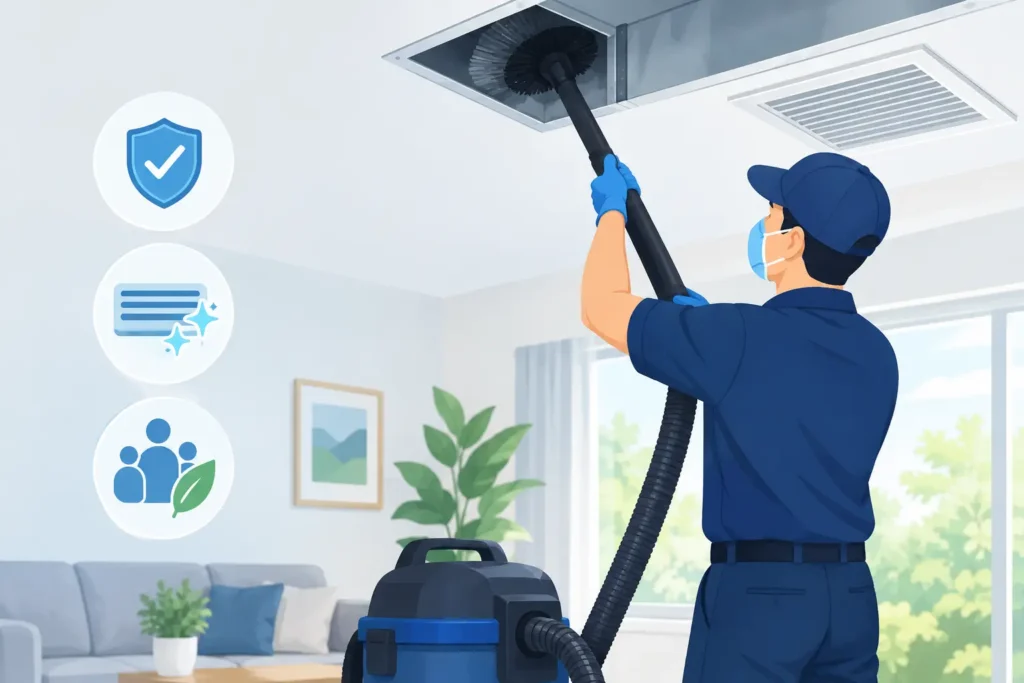
A technician puts a high-powered vacuum hose into your ductwork, stirs up years of dust, and works around your furnace or air handler. That is why homeowners reasonably ask, are ducts cleaned safely? The answer is yes – when the job is done with the right equipment, proper containment, and trained professionals who respect the HVAC system they are working on. Done carelessly, though, duct cleaning can create a mess, damage components, or leave you with little more than a suspiciously cheap invoice.
For homes, condos, and commercial spaces across the Greater Toronto Area, safe duct cleaning is not about chasing the lowest advertised price. It is about protecting the equipment that heats and cools your building while removing debris in a controlled, verifiable way.
Are Ducts Cleaned Safely When Professionals Do the Work?
A professional duct cleaning process should remove loose dust, construction debris, pet hair, and other buildup without blowing it back into the living space. The key is negative pressure. A powerful vacuum collection system is connected to the duct system so loosened debris is pulled out and contained, rather than simply pushed from one vent to another.
Technicians then use brushes, whips, or compressed-air tools sized for the ductwork to dislodge material along branch lines and main trunks. The tools matter, but technique matters just as much. Aggressive brushing in older, fragile, or poorly installed ductwork can cause damage. A knowledgeable crew assesses the system first and adjusts the approach where needed.
Safe service also includes protecting the home. Floor coverings, careful hose routing, sealed access points, and cleanup are not extras. They are part of doing the job properly. If a contractor treats your furnace room, vents, walls, and furnishings as an afterthought, that should raise concern.
What a Safe Duct Cleaning Appointment Should Include
Before cleaning begins, a reputable provider should inspect the accessible HVAC components and explain what will be cleaned. The exact process varies by property. A detached home with a basement furnace is different from a condo fan coil system, and a commercial unit may have larger ducts, rooftop equipment, or tenant-access restrictions.
In a typical residential appointment, the crew should identify supply and return vents, establish vacuum collection, clean the duct runs, and address the accessible components connected to the airflow path. They should be especially careful around the blower compartment, evaporator coil area, wiring, dampers, and furnace controls. These parts are not places for guesswork.
If your heating system includes gas equipment, technician qualifications become even more relevant. A TSSA G2 Gas Technician understands the safety considerations around gas-fired appliances and can recognize when an issue needs attention rather than working blindly around it. That does not mean every duct cleaning requires furnace repair. It means the people near your equipment should understand what they are seeing.
Sanitation can also be appropriate in certain situations, particularly after renovation dust, pest activity, or a confirmed contamination concern. But it should not be used as a scare tactic. Spraying a chemical product into every duct without explaining why, what it is, and whether it is suitable for your system is not a safety-first practice. Cleaning and source control come first.
The HVAC filter should not be ignored
A dirty filter can restrict airflow and make a clean duct system feel ineffective. During service, the technician may point out a filter that needs replacement or show you the correct size and direction of installation. This is a simple but valuable part of maintaining better airflow.
A filter cannot remove heavy debris already sitting in the ducts, but it helps prevent new dust from circulating through the system. For homes with pets, allergies, active renovations, or frequent furnace use, filter checks should happen more often.
When Duct Cleaning Can Be Unsafe or Unnecessary
Duct cleaning is not automatically the right answer for every dust complaint. If dust returns quickly, the source may be leaky ductwork, an oversized or undersized filter, construction activity, pet dander, poor housekeeping, or an HVAC issue. A good company does not promise to solve every indoor air concern with one service.
There are also cases where extra care is required. Older ducts may have loose insulation, deteriorated flexible connections, or inaccessible sections. Suspected mold should be evaluated thoughtfully, because surface staining, moisture problems, and actual mold growth are not the same thing. Cleaning visible material without addressing the moisture source only delays the problem.
If asbestos-containing material is suspected in older insulation, tape, or building components, stop and get qualified advice before disturbing it. Standard duct cleaning should never be used to handle hazardous materials.
The biggest avoidable risk is hiring a company that relies on pressure, vague promises, or bait pricing. The duct-cleaning industry has a well-earned reputation for fraudulent cold calls and extremely low offers that turn into aggressive upsells at the door. A price that sounds too good to cover trained labor, professional equipment, travel, and proper debris collection usually comes with a catch.
How to Spot a Safer Duct Cleaning Company
You do not need to become an HVAC expert before booking service. You do need to ask direct questions and expect direct answers. A trustworthy provider can explain how debris is collected, what areas are included, how access holes are sealed, and what conditions could change the scope or price.
Look for clear pricing before the appointment, not a mysterious starting price that excludes the work your system actually needs. Confirm whether the company serves your type of property, especially if you live in a condo or manage a multi-unit building. Condo mechanical rooms, fan coils, shared systems, and booking rules can all affect the service plan.
It also helps to ask who will be performing the work. Experienced technicians should be able to identify obvious airflow restrictions, damaged vent covers, disconnected ducts, and furnace-area concerns without inventing problems. They should document legitimate findings clearly and leave you in control of any additional work.
For property managers and commercial operators, safety includes coordination. Technicians should respect tenant schedules, secure work areas, communicate shutoff requirements when necessary, and avoid disrupting building operations more than the job requires.
What You Can Do Before and After Cleaning
Make the appointment easier and safer by clearing access to vents, the furnace or air handler, and mechanical closets. Keep pets in a separate room, and tell the crew about fragile flooring, recent renovations, known HVAC issues, or any areas that are off-limits. If someone in the home has respiratory sensitivities, ask how the work area will be contained and whether the system will be temporarily shut down during portions of the cleaning.
Afterward, inspect the visible vent covers and surrounding areas. Your home should not be left dusty, damaged, or full of loose debris. Ask what was found, whether any ducts appeared damaged or disconnected, and when to replace or check the filter. A credible company welcomes those questions.
Do not expect miracle claims. Duct cleaning may reduce accumulated dust and allergens and can improve airflow when debris is a contributing factor, but it cannot fix a failing furnace, a dirty evaporator coil, water intrusion, or an improperly designed HVAC system. Honest expectations are part of safe service.
A Separate Safety Issue: Dryer Vents
Air ducts and dryer vents are often discussed together, but they serve different purposes and carry different risks. Your dryer vent moves hot, moist air and lint outside. When lint collects in the vent line, airflow drops, drying times increase, and fire risk rises.
Dryer vent cleaning should be handled with the same care as duct cleaning. The technician should clean the full route where accessible, check the exterior termination, and avoid crushing or disconnecting the vent behind the dryer. If the vent is excessively long, improperly routed, or made of unsuitable material, cleaning alone may not solve the underlying safety issue.
A safe cleaning company does not create fear to win a booking. It gives you a clear picture of the condition of your system, performs the work carefully, and tells you when another qualified trade should be involved. That is the standard homeowners and property managers should expect. When you choose a provider such as Dust Chasers, choose one that is transparent about the process, equipped for the property type, and focused on cleaner air and safer airflow rather than a fast, flashy sale.