


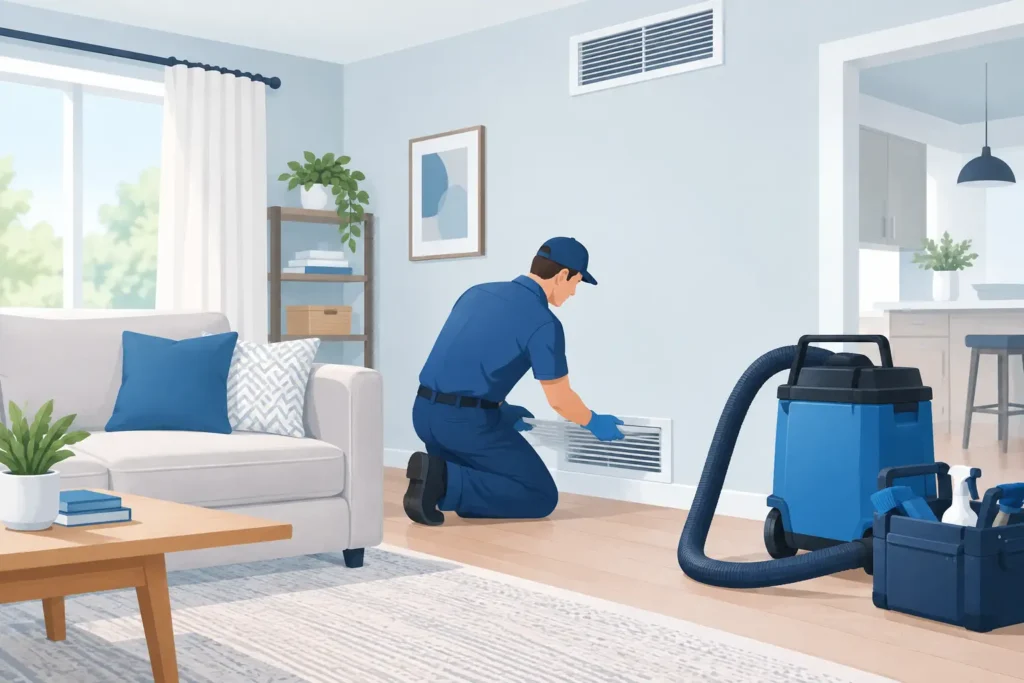
A professional duct cleaning appointment should not turn into a day of moving furniture, chasing pets, or wondering whether the technician can reach the vents. When homeowners search for ways to prepare home for duct cleaning, they usually want the same thing: a clean, efficient visit that gets real results without disrupting the whole household.
The good news is that preparation is straightforward. You do not need to empty every room or scrub your vents before the crew arrives. You do need to make the HVAC system, supply vents, return vents, and mechanical area reasonably accessible. A little planning helps technicians spend their time cleaning your ductwork instead of clearing a path to it.
Why preparation makes duct cleaning more effective
Professional duct cleaning involves more than vacuuming a few visible grilles. Technicians need to access supply and return registers throughout the home, connect equipment safely, and reach the furnace or air handler where the duct system begins. In some homes, that also means working around basements, utility rooms, finished storage spaces, or tight condo mechanical closets.
Clear access matters because blocked vents can limit what the crew can inspect and clean. It also protects your belongings from accidental bumps, dust disturbance, and equipment traffic. The goal is not a perfectly empty house. The goal is a safe working route and enough room around key access points.
For families dealing with persistent dust, uneven airflow, allergies, pet hair, or stale smells, preparation also helps ensure every planned vent is included in the service. If a room is locked, blocked by a heavy bookcase, or filled with stored items, it may need to be skipped or rescheduled.
How to prepare your home for duct cleaning
Start with the furnace or air handler. This is the central point of the job and should be accessible before the appointment begins. Clear a working area around the unit, including the front panel, nearby duct connections, and electrical access. Move boxes, seasonal decorations, laundry baskets, cleaning supplies, and stored household items out of the way.
If your HVAC equipment is in a basement utility room, make sure there is a safe path from the entrance to that room. If it is in a closet, remove anything leaning against the door or stacked directly in front of it. Technicians should not have to move heavy storage shelves, appliances, or personal belongings to reach essential equipment.
Next, walk through the home and locate your supply and return vents. Supply vents push conditioned air into rooms, while return vents pull air back to the system. Both are part of the airflow cycle, and both need attention during a proper duct cleaning.
Move lightweight furniture, rugs, pet beds, baskets, and floor decor away from vent covers when possible. You do not need to rearrange an entire living room for a vent that has a few inches of clearance. But if a large sofa, cabinet, or bed completely covers a register, it is worth shifting it before the crew arrives. This is especially helpful in bedrooms where vents are often hidden beneath beds or behind dressers.
Give technicians a clear path through the house
Duct cleaning equipment is designed for the job, but it still needs room to move. Clear hallways, stairways, and entry routes of shoes, toys, small tables, loose cords, and other tripping hazards. This is a practical safety step, particularly in homes with children, pets, or narrow basement stairs.
You do not need to cover all furniture or remove wall art. Reputable technicians use care when moving through a property and should explain their setup before work begins. Still, if you have a fragile lamp, heirloom furniture, an exposed electronics setup, or a prized area rug near a work zone, move it or mention it before service starts.
For condo residents, access can take a little more coordination. Confirm elevator rules, loading procedures, parking instructions, and any building requirements ahead of time. If the mechanical closet is inside a bedroom or hallway closet, remove stored items early so the appointment does not begin with a last-minute cleanup.
Secure pets and plan around children
The sound of professional vacuum equipment can be unsettling for dogs, cats, and young children. Pets may also try to slip outside when technicians enter and exit the home. Keeping them in a quiet, secure room or arranging for them to stay elsewhere during the service is usually the safest choice.
If pets must remain home, let the crew know before work begins. A technician can then avoid opening certain doors or can coordinate access around the pet’s location. This small conversation prevents stress for everyone.
Children should be kept away from hoses, tools, stairways, and open utility areas. Duct cleaning is not typically disruptive for an entire day, but it is active work. Planning a walk, playdate, errand, or quiet activity can make the visit easier for your family and the technicians.
Do not clean the vents yourself before the appointment
Many homeowners feel compelled to vacuum every register before a cleaning crew arrives. There is no need. Removing surface dust from a grille is fine, but it does not replace professional source-removal equipment that reaches into the duct system.
Avoid spraying fragrances, disinfectants, or store-bought chemicals into vents before the appointment. These products can leave residue, mask odors that could help identify an issue, or introduce substances you do not want circulating through the system. If you have noticed a musty smell, visible debris, signs of moisture, or a particular vent with weak airflow, leave it as is and point it out to the technician.
The same rule applies to damaged vent covers. Do not force a rusted grille open or attempt to reach deep into ductwork with household tools. Mention the condition during the walkthrough. A professional can assess the safest next step.
Make note of concerns before the crew arrives
The best duct cleaning visits begin with a short, specific conversation. You know your home better than anyone. Write down any rooms that feel stuffy, vents that blow weakly, dust that returns unusually quickly, or odors that appear when the heat or air conditioning runs.
It also helps to mention recent renovations, drywall work, water damage, pest concerns, a new baby, severe allergies, or a recent move. These details can shape what the crew inspects and what recommendations make sense afterward. Duct cleaning can remove accumulated dust and debris, but it will not solve every air-quality issue on its own. A clogged filter, leaking duct, moisture problem, or malfunctioning HVAC component may require a separate repair.
Be direct about access limitations too. If a vent is behind a built-in cabinet or a storage room cannot be cleared, say so before the service begins. Good companies explain the trade-off clearly rather than promising a complete cleaning of areas they cannot physically reach.
Check your furnace filter and dryer vent plans
Your furnace filter plays a major role in keeping newly cleaned ductwork from collecting debris quickly. Ask whether your technician recommends replacing it after service, then have the correct size available if needed. The right filter depends on your system and household needs. A very high-rated filter may capture more particles, but some systems need adequate airflow and are not suited to every filter type.
If you are booking dryer vent cleaning at the same time, clear access to the laundry area and the dryer. Remove laundry piles, baskets, and supplies from behind or beside the appliance. Tell the crew if the dryer has been taking longer to dry, feels unusually hot, or has a flexible vent connection that looks crushed or damaged. Dryer vent maintenance is a safety service, not just a convenience, because lint buildup can restrict airflow and raise fire risk.
Be careful with unusually cheap duct-cleaning offers
A legitimate service provider should be clear about what is included, how pricing is determined, and whether there are extra charges for additional vents, sanitation, or access challenges. Be cautious with unsolicited calls, vague packages, and prices that sound too low to cover trained labor, professional equipment, and a thorough job.
Before your appointment, confirm the scope of work, payment expectations, arrival window, and whether the company is properly qualified for any HVAC or gas-related work it may perform. You should never feel pressured into surprise add-ons at your own front door.
For GTA homeowners, Dust Chasers approaches duct and dryer vent cleaning with transparent service expectations, trained technicians, and a focus on the airflow and safety issues that matter inside a real home.
A simple final check before the appointment
On the morning of service, make sure an adult can provide access, pets are secure, the furnace area is open, and vents are not blocked by furniture or storage. Keep notes about problem rooms handy. Then let the technicians do the work they were called in to do.
A prepared home gives your duct cleaning team the access to work carefully, answer your questions, and focus on cleaner airflow rather than obstacles. That is how a routine maintenance appointment becomes a practical step toward a fresher, safer home.