


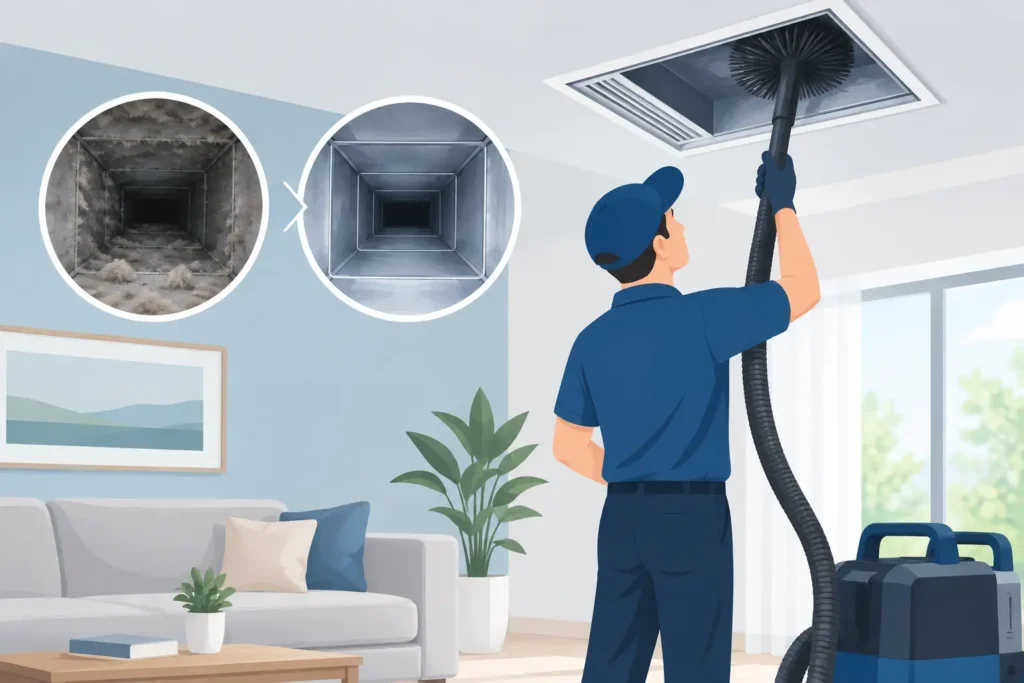
A dusty coffee table one day after cleaning is frustrating. A bedroom that feels stuffy, rooms that heat unevenly, or a vent that barely pushes air are bigger clues. Duct cleaning is not a cure-all for every indoor air problem, but when your HVAC system is carrying years of dust, debris, and allergens through the home, professional service can make a real difference.
For homeowners, condo residents, and property managers, the goal is practical: cleaner living spaces, more consistent airflow, and fewer concerns about what is circulating when the furnace or air conditioner turns on.
What Duct Cleaning Actually Does
Your forced-air system moves heated or cooled air through supply ducts and pulls air back through return ducts. Along the way, it can collect ordinary household dust, pet hair, construction debris, pollen, and other particles. Filters capture some of that material, but not all of it – especially if filters are overdue for replacement, do not fit properly, or the system has been through renovations.
Professional duct cleaning uses specialized equipment to loosen and remove buildup from the accessible ductwork, registers, returns, and key HVAC components. A proper service is more than placing a vacuum hose near a vent. The technician should create controlled suction, work through the system methodically, and show clear attention to both supply and return sides.
The expected result is not a laboratory-grade, dust-free home. Every occupied home creates dust. The value is reducing accumulated debris inside the ventilation path so your system can move air more freely and your household has less material being recirculated.
Signs It Is Time for Duct Cleaning
There is no universal calendar that applies to every property. A quiet one-bedroom condo with no pets has different needs than a busy family home with two dogs, renovations, and a frequently running furnace. Still, several signs deserve attention.
Visible dust blowing from registers is an obvious one. So are dark deposits around vents, recurring dust shortly after cleaning, and a musty or stale smell that appears when the HVAC system starts. If you remove a register cover and see heavy buildup just inside the duct, that is another useful signal.
Airflow issues also matter. A blocked duct is only one possible cause of weak airflow – a damaged damper, undersized equipment, dirty filter, or mechanical issue may be responsible instead. But if airflow has declined and the ductwork has never been cleaned, an inspection is sensible.
Recent construction is one of the strongest reasons to schedule service. Drywall dust, sawdust, insulation fragments, and renovation debris travel farther than most people expect. Even careful contractors cannot fully prevent fine particles from entering returns and vents during a major project.
Households with pets, smokers, allergies, or high dust loads may benefit from more frequent maintenance. For buildings and rental properties, turnover periods are also a practical opportunity to address duct and dryer vent conditions before new occupants move in.
Duct Cleaning and Allergy Concerns
Many GTA households call after a family member starts sneezing more often, wakes up congested, or notices respiratory irritation at home. Duct cleaning may help reduce one source of airborne dust and allergens, but it should be viewed as part of a larger indoor air plan.
A high-quality filter changed on schedule, regular vacuuming with a sealed vacuum, humidity control, and prompt repair of leaks all matter. If there is active mold growth, standing water, rodent activity, or a strong unexplained odor, those conditions need to be investigated and corrected at the source. Cleaning alone cannot solve a moisture problem or replace proper remediation.
That honest distinction protects homeowners from exaggerated promises. A professional should explain what cleaning can address, what needs further diagnosis, and whether the condition of your system justifies the service.
What a Professional Duct Cleaning Visit Should Include
The best service starts before equipment comes through the door. A technician should ask about your property type, HVAC setup, concerns, and any recent work in the home. Condo units, detached homes, townhouses, restaurants, and commercial facilities all have different layouts and access considerations.
During the appointment, expect technicians to protect work areas, inspect accessible components, and use purpose-built vacuum and agitation equipment rather than household vacuums. Registers and return grilles should be addressed, and the team should take care not to damage finishes or leave debris behind.
For gas-fired equipment, qualified handling matters. Dust Chasers uses TSSA G2 Gas Technicians, providing an added level of confidence when work is performed around heating equipment. Complimentary sanitation can also be appropriate after debris removal, depending on the system and service scope.
Before booking, ask what is included in the quoted price. A clear answer should cover the number of vents or zones, main duct lines, returns, furnace or air-handler access, and whether dryer vent service is separate. Transparent scope protects you from surprise charges and makes it easier to compare providers fairly.
Watch for Low-Price Duct Cleaning Scams
The duct cleaning industry has a well-earned scam problem. Homeowners across Toronto and the GTA regularly receive unsolicited calls promising impossibly cheap whole-home cleaning, only to face aggressive upselling or unqualified workers at the door.
A low advertised price is not automatically fraudulent, but it should prompt questions. Be cautious if the caller cannot identify the company clearly, pressures you to book immediately, refuses to provide a real service scope, or claims your ducts are dangerously contaminated without inspecting them. Be equally wary of any company that wants payment before explaining the work.
Choose a provider with a verifiable local presence, straightforward pricing, trained technicians, and a process they can explain without vague sales language. The right company will not need scare tactics to earn the job.
Do Not Forget the Dryer Vent
Your dryer vent is separate from your HVAC ducts, and it deserves its own maintenance plan. Lint buildup restricts exhaust, makes drying cycles longer, and can create a serious fire risk. If clothes need multiple cycles, the laundry room feels unusually humid, the dryer runs hot, or you notice little airflow outdoors at the exterior vent, schedule an inspection.
For condo residents, dryer vent access and routing can be more complex than in a detached home. Property managers should confirm responsibilities between the unit owner, condominium corporation, and service provider before work begins. The important point is simple: dryer vent cleaning is a safety service, not an optional cosmetic add-on.
How Often Should You Schedule Duct Cleaning?
Most homes do not need annual duct cleaning. A reasonable starting point is every three to five years, then adjust based on what is happening in the property. A home with shedding pets, young children, frequent allergies, a recent renovation, or visible debris may need attention sooner. A lightly occupied, well-filtered home may go longer.
Commercial and multi-unit properties need a more tailored schedule. Usage levels, tenant turnover, kitchen exhaust, construction activity, and maintenance records should guide the decision. Property managers benefit from treating ventilation maintenance as a documented part of building care rather than a last-minute response to complaints.
Start with the evidence in your own space. Check your filter, look at your registers, pay attention to airflow, and do not ignore a dryer that is taking longer to do its job. When the signs point to buildup, choose a qualified team that will explain the work clearly and leave your home or building cleaner, safer, and easier to breathe in.