


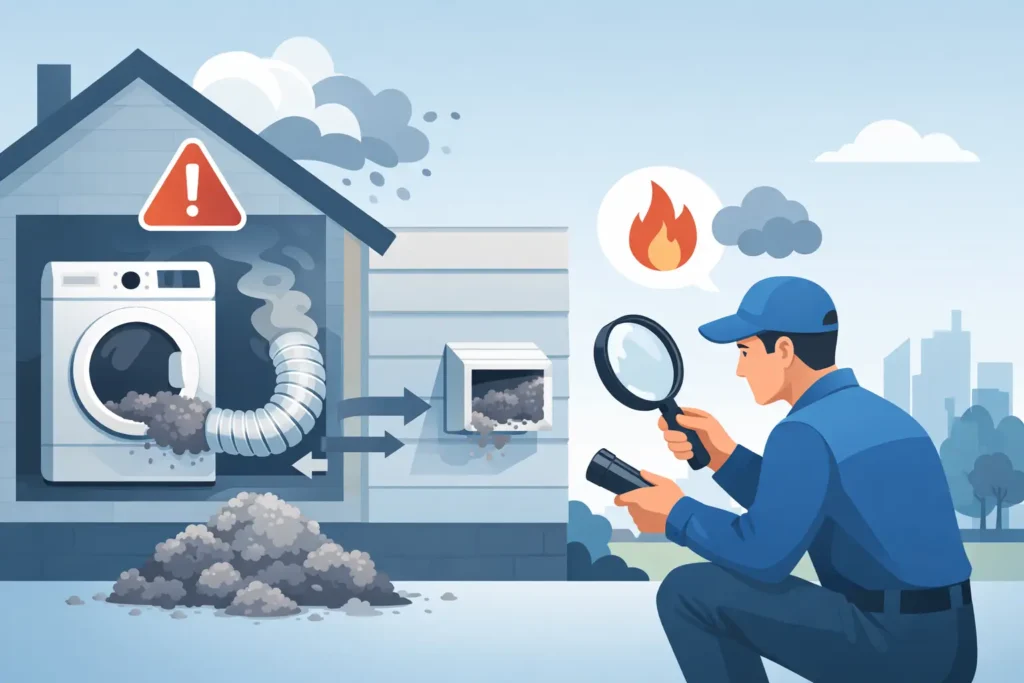
A dryer that needs two or three cycles to finish a normal load is not just frustrating. It is often pushing against a blocked or restricted exhaust path. A professional Brampton dryer vent inspection finds the reason before excess heat, wasted energy, or lint accumulation turns a routine laundry problem into a serious fire concern.
For homeowners, landlords, condo residents, and property managers, dryer vent problems can stay hidden for months. The dryer still runs, clothes eventually dry, and the exterior vent may be out of sight. Meanwhile, lint can collect in the transition hose, behind the dryer, inside long duct runs, and around the exterior termination. The result is reduced airflow, longer drying times, unnecessary wear on the appliance, and a preventable safety risk.
What a Brampton Dryer Vent Inspection Checks
A proper inspection is more than looking at the lint screen. The lint screen catches only part of the debris created during each load. Fine lint can pass through it and settle throughout the vent system, especially where the duct bends, sags, narrows, or travels a long distance to an outside wall or roof outlet.
A technician should assess the full route from the dryer connection to the exterior termination. That includes the flexible connector behind the appliance, the condition and material of the ductwork, airflow at the outdoor outlet, visible lint buildup, damaged joints, crushed sections, and improper vent covers. The goal is to identify restrictions and conditions that make future buildup more likely.
The dryer itself also tells part of the story. Excessive heat in the laundry area, a burning smell, an unusually hot dryer cabinet, or moisture on nearby surfaces can all point to poor exhaust performance. These signs do not automatically mean the dryer vent is the only issue. A failing appliance component can produce similar symptoms. But checking the vent path is a practical first step because blocked airflow puts added strain on the entire system.
Warning Signs You Should Not Ignore
Dryer vent restrictions tend to get worse gradually. That makes small changes easy to dismiss until the dryer stops performing well or a tenant raises a complaint. Pay attention when a normal load takes longer than it used to dry, even after cleaning the lint screen.
You should also schedule an inspection if clothes feel unusually hot at the end of a cycle, the laundry room feels humid, or there is a musty or scorched smell during operation. Lint visible around the dryer connection or outside vent hood is another clear warning. So is an exterior flap that does not open while the dryer is running, which may indicate weak airflow or a stuck termination cover.
For condo and multi-unit properties, recurring dryer performance complaints deserve a closer look. Long shared building layouts, concealed duct runs, and restricted access can make these systems more complicated than a standard detached-home installation. A quick guess is not enough when resident safety and building maintenance are involved.
Why Long Drying Times Cost More Than You Think
Most people notice dryer vent trouble because of the utility bill or the extra time spent doing laundry. Those are real costs. When airflow is restricted, the dryer must run longer to remove moisture from clothing. More runtime means more energy use and more wear on heating elements, motors, belts, and other appliance components.
The larger concern is heat. Dryers generate heat by design, but that heat needs a clear route out of the home. Lint is highly combustible, and a vent system that cannot exhaust efficiently can allow heat and lint to build up where they do not belong. Cleaning and inspection are not a replacement for safe dryer use, but they are a key part of reducing avoidable fire hazards.
There is also a moisture issue. If humid exhaust is not properly discharged outdoors, it can contribute to condensation and stale conditions around the laundry area. In tightly built homes and condos, small ventilation problems can be felt more quickly, particularly in closets, utility rooms, and interior laundry spaces.
Common Problems Found During an Inspection
Lint buildup is the familiar problem, but it is not the only one. A dryer vent may be poorly designed, damaged during a renovation, or fitted with materials that trap lint. Flexible plastic or foil-style ducts can sag and tear more easily than properly installed metal ducting. Their ridges can also collect debris and reduce airflow.
Crushed transition hoses are common behind dryers that have been pushed too close to the wall. Even a new dryer can develop an airflow problem if the connector is compressed during installation. Excessive bends, loose joints, disconnected sections, and ducts that vent into an attic, garage, crawlspace, or other indoor area should also be addressed. Dryer exhaust belongs outside.
Exterior vent covers can create trouble too. Some styles collect lint easily, while screens may become blocked. Bird nests, insect activity, snow, debris, and damaged flaps can restrict the outlet. A good inspection looks at both ends of the system because strong airflow at the dryer means little if the exterior exit is obstructed.
Inspection and Cleaning Are Related, but Not Identical
An inspection identifies the condition of the system and helps determine what service is needed. In some cases, the vent simply needs professional cleaning to remove compacted lint and restore airflow. In others, cleaning alone will not solve the problem because the duct is damaged, improperly routed, or unsafe.
That distinction matters. A low-price offer that promises to clean every duct in every situation without assessing the setup can leave the real issue untouched. Homeowners should be wary of unsolicited calls, vague pricing, pressure tactics, or technicians who refuse to explain what they found. Dryer vent service should be clear: what was inspected, what was cleaned, what remains a concern, and what action is recommended.
For gas dryers, the work deserves extra care. The vent system and gas connection are different components, but moving an appliance can affect both. If a gas dryer connection needs attention, use a qualified technician who is authorized to handle it safely. Do not try to disconnect or reconnect a gas appliance just to reach the vent.
How Often Should You Schedule Service?
For many households, an annual dryer vent inspection is a sensible baseline. Families doing frequent laundry, homes with pets, or households that routinely dry towels, bedding, and heavy fabrics may need attention sooner. The same applies when the dryer has a long vent route with several turns.
There is no perfect calendar rule for every property. A lightly used dryer with a short, straight metal vent may remain in good condition longer than a high-use unit with a concealed run. Performance should guide the decision. If drying times change, heat increases, or exterior airflow weakens, do not wait for the annual date.
Property managers should build dryer vent checks into planned maintenance rather than waiting for complaints. It is easier to schedule access, document findings, and correct small issues before they affect tenants or create emergency service calls. For landlords, this also provides a useful record of responsible property upkeep.
What to Do Before the Technician Arrives
You do not need to dismantle anything. Clear a reasonable path to the dryer, remove laundry from the top of the appliance, and let the technician know about recent symptoms such as hot clothes, unusual odors, or repeated cycle failures. If the exterior vent is accessible from a yard, balcony, or side passage, make that access available as well.
Continue cleaning the lint screen before every load, but do not assume that routine task replaces vent maintenance. Avoid running the dryer when you smell burning or when heat appears excessive. If the appliance is clearly overheating, stop using it until the cause has been assessed.
A dryer vent is easy to forget because it works behind walls and appliances. That is exactly why it deserves attention. When airflow is checked early, you protect the dryer, reduce wasted energy, and give lint and heat far fewer places to become a problem.