


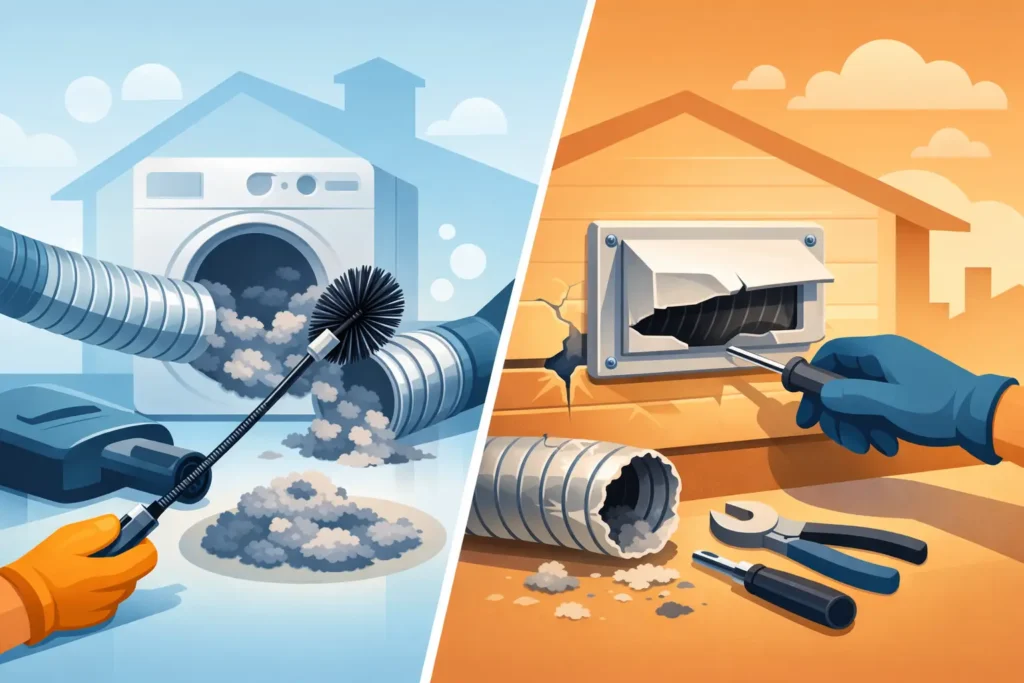
A dryer that suddenly takes two or three cycles to dry a normal load is not just wasting your time. It may be pushing heat, moisture, and lint into a blocked or damaged exhaust path. When homeowners compare dryer vent cleaning vs repair, the real question is simple: Is lint restricting a sound vent system, or is the vent itself no longer safe or able to move air outside?
The answer matters. Cleaning restores airflow by removing buildup. Repair corrects physical problems such as crushed ducting, loose connections, disconnected sections, damaged exterior hoods, and unsafe vent materials. Many GTA homes need one service or the other. Some need both.
Dryer Vent Cleaning vs Repair: What Each Service Does
Dryer vent cleaning is a maintenance service. A technician removes lint, dust, pet hair, and debris from the vent line running from the dryer to the outdoor exhaust point. The goal is to restore a clear path for hot, humid air to leave the home.
Even dryers with lint screens can develop serious buildup in the duct. The screen catches some lint, not all of it. Over time, lint can collect in elbows, long vent runs, wall cavities, rooftop exits, and exterior flaps. Condo units are especially prone to restricted airflow because their dryer vents may travel a long distance before reaching the outside.
Repair is different. It addresses a vent system that is damaged, poorly installed, or structurally unsafe. Cleaning cannot fix a duct that has separated behind the dryer, a crushed transition hose, a missing exterior vent cover, or a line made from flimsy plastic or foil material.
Think of cleaning as clearing a blocked road. Repair is fixing the broken road itself.
Signs You Probably Need Dryer Vent Cleaning
A cleaning is often the right starting point when the dryer and vent system are intact but airflow has gradually worsened. The problem usually builds over months rather than appearing overnight.
Common warning signs include clothes taking longer to dry, laundry coming out unusually hot, a musty smell on damp clothing, or visible lint around the dryer connection or exterior vent outlet. You may also notice that the outdoor vent flap barely opens while the dryer is running. That can mean air is not moving freely through the line.
A dryer that feels hot to the touch should never be ignored. Restricted airflow causes the appliance to work harder and retain more heat. It can also leave moisture in the laundry area, which is not ideal for indoor air quality or for preventing mildew around the machine.
For most households, professional cleaning should be part of regular home maintenance. The right interval depends on how often the dryer runs, the length and layout of the vent, the number of pets in the home, and whether the unit serves a busy family, tenant turnover, or a commercial laundry area. A household doing several loads per week may benefit from annual inspection and cleaning. High-use buildings may need more frequent service.
Signs the Vent Needs Repair Instead
Repair becomes necessary when the duct cannot safely carry exhaust outdoors, even after all lint is removed. This is where a quick low-price cleaning offer can become a problem. A technician should identify obvious defects rather than simply clean what is accessible and leave a safety issue behind.
A disconnected vent is one of the clearest repair concerns. If the duct has come loose behind the dryer or inside a concealed space, hot moist air and lint may be venting into the laundry room, wall, ceiling, or utility area instead of outside. That can contribute to excess humidity and allow lint to accumulate where you cannot see it.
Crushed, kinked, or sharply bent ducting also needs correction. Every tight turn slows airflow, and flexible duct material can sag or collapse behind a dryer when the machine is pushed back. The dryer may still run, but it will be working against unnecessary resistance.
Damaged exterior terminations are another common issue. A vent hood that is blocked, broken, missing its flap, or allowing pests into the duct should be repaired or replaced. In colder weather, exterior vent problems can also lead to moisture and condensation concerns.
Some older installations use materials that are not suitable for dryer exhaust. Plastic or thin foil-style connectors are more likely to tear, trap lint, or degrade under heat. A proper assessment can determine whether a safer metal transition duct or a more extensive vent correction is needed.
When Cleaning and Repair Are Both Necessary
In real homes, this is rarely an either-or decision. A damaged vent often collects lint faster, while lint buildup can make a minor installation defect more noticeable. For example, a long vent line may be packed with lint and also have a crushed section behind the dryer. Cleaning the line restores much of the airflow, but the crushed section still needs repair to prevent the problem from returning.
Another example is a vent that has detached at one joint. The accessible portion may contain lint, while the detached section has been releasing damp exhaust into a hidden area. The safest solution is to reconnect and secure the duct, then clean the full route so the system is functioning as one continuous exhaust path.
This is why the service should begin with an honest inspection. You should know whether you are paying for routine maintenance, a necessary repair, or both. Clear recommendations and transparent pricing are far more valuable than a suspiciously cheap quote that turns into pressure at the door.
Why Ignoring the Difference Can Cost More
When homeowners treat every dryer issue as a cleaning issue, physical defects can remain hidden. The dryer may appear to improve temporarily, but the underlying airflow problem continues. That can mean repeat service calls, higher energy use, premature wear on the dryer, and continuing heat buildup.
On the other hand, replacing or rebuilding ductwork when the only issue is normal lint accumulation is unnecessary. The right service is based on the condition of the entire system, not a one-size-fits-all package.
For property managers and landlords, the distinction has an operational impact as well. A dryer that underperforms creates tenant complaints, longer laundry cycles, and avoidable maintenance requests. In multi-unit properties, long shared runs and concealed duct paths make professional assessment especially useful. Documented maintenance also gives building decision-makers a clearer picture of where repairs should be prioritized.
What a Professional Dryer Vent Visit Should Include
A proper visit should look beyond the lint screen and the short section visible behind the dryer. The technician should evaluate the accessible vent connection, the condition of the ducting, airflow at the exterior outlet, and signs of blockage or damage along the route.
If cleaning is appropriate, the vent should be cleared using equipment designed to remove buildup without damaging the line. If a repair is needed, the issue should be explained in plain language: what is wrong, why it affects performance or safety, and what work is recommended. Photos can be helpful where access is limited or damage is concealed.
Be cautious with unsolicited calls offering bargain basement duct or dryer vent cleaning. Reputable companies do not need scare tactics, vague pricing, or rushed upsells to explain a real issue. Ask what is included, whether the price covers the full vent route, and whether repairs are quoted separately before work begins.
If your dryer is gas-powered, treat vent concerns with extra care. Dryer vent cleaning does not replace service for a gas connection, burner, or appliance fault. If you smell gas, shut off the appliance if it is safe to do so, leave the area, and contact the appropriate emergency or qualified gas service professional.
Make the Next Load Safer and Easier
If drying times are creeping up, do not keep adding extra cycles and hoping the problem disappears. Have the vent assessed before a small airflow issue becomes a bigger repair or fire-risk concern. Dust Chasers helps homeowners, condo residents, and property teams across the GTA identify whether they need cleaning, repair, or a practical combination of both – so the next load can dry properly and the exhaust has a safe path outside.