


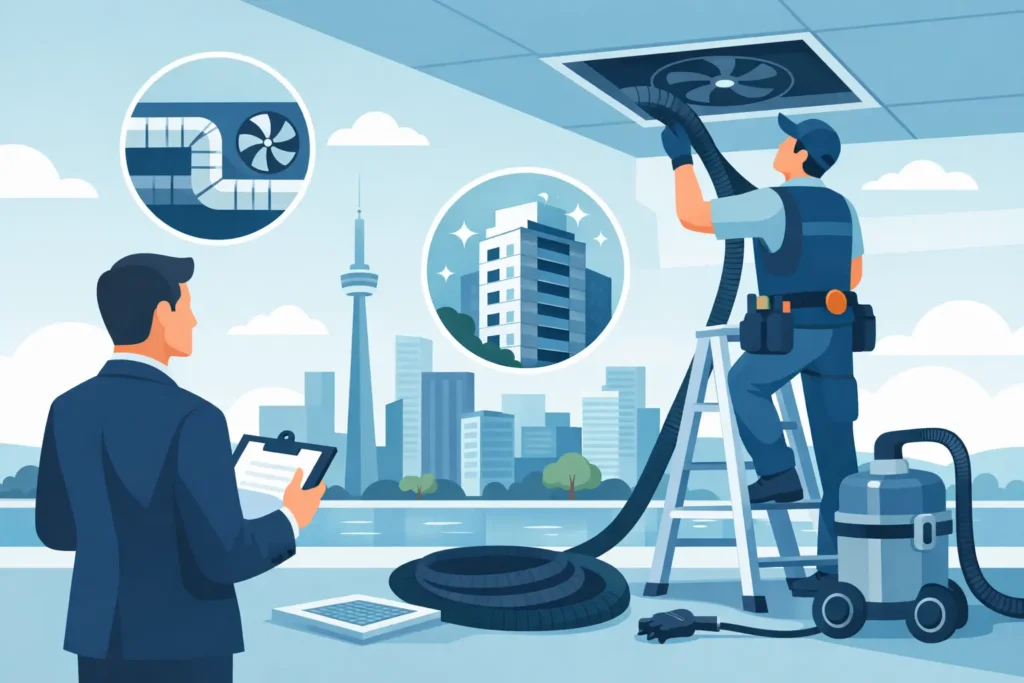
A tenant says their unit feels dusty again two days after cleaning. Another reports weak airflow from a bedroom vent. Meanwhile, a dryer room exhaust is working harder than it should. A practical property manager duct cleaning guide starts here: these are not cosmetic complaints. They can point to ventilation maintenance gaps that affect comfort, equipment performance, fire risk, and your ability to respond confidently when residents ask questions.
For GTA property managers, duct cleaning is not a blanket task to schedule blindly every year. The right timing depends on the building, its occupants, recent work, and the condition of the ventilation system. What matters is having a clear process, choosing qualified providers, and documenting what was done.
Know What Duct Cleaning Can Solve
Professional air duct cleaning removes accumulated dust, construction debris, loose contaminants, and buildup from accessible supply and return ductwork. In managed properties, the most noticeable outcomes are often reduced dust circulating through occupied spaces, cleaner registers, and improved airflow where debris is restricting the system.
It is not a cure-all. Duct cleaning will not fix undersized equipment, a failing blower motor, damaged ductwork, persistent humidity, or an active mold issue caused by a leak. Those problems need diagnosis and repair. A reliable contractor should say so plainly instead of promising that one cleaning will solve every indoor-air complaint.
Dryer vent cleaning deserves its own line item. Lint is combustible, and a restricted vent can increase drying times, strain equipment, and create a preventable fire hazard. In multi-unit buildings, shared laundry facilities, and rental homes, this service is a safety decision as much as a maintenance decision.
When a Property Manager Should Schedule Service
A fixed calendar interval is useful for budgeting, but condition-based triggers are more useful for deciding when to act. Schedule an assessment after a major renovation, turnover involving heavy cleaning or repairs, water damage remediation, or a construction project that created visible dust. These events can load ductwork with material that regular janitorial work cannot reach.
You should also investigate when residents report repeated dust buildup, musty or stale odors, hot and cold rooms, visibly dirty supply vents, or reduced airflow. One complaint may be unit-specific. Similar complaints across several suites may signal a larger ventilation issue.
For dryer vents, do not wait for a complaint. Longer drying cycles, heat around laundry equipment, burning odors, and lint visible near exterior termination points all justify prompt service. The exact schedule depends on usage, vent length, turns in the run, and whether the system serves individual suites or common laundry areas. Higher-use equipment generally needs more frequent attention.
Consider the Property Type
Detached rental homes usually have straightforward duct routes and a single HVAC system, but they can still accumulate pet hair, renovation dust, and lint. Condominiums require more coordination. Managers need to confirm which components belong to the unit owner, which are common elements, and whether access or elevator booking rules apply.
Commercial and mixed-use properties can have more complex systems, larger air handlers, and operating-hour limits. Cleaning may need to be phased so tenants, staff, or customers are not disrupted. The scope should match the system – not a generic package built for a small house.
Build the Scope Before You Request Quotes
The fastest way to get vague pricing is to request “duct cleaning” with no property details. Before contacting a contractor, gather the building address, property type, number of units or systems, approximate square footage, known airflow concerns, and whether dryer vents are included. Mention recent renovations, access restrictions, parking limitations, and required insurance or contractor documentation.
Ask the provider to explain what is included: supply ducts, return ducts, main trunks, registers, furnace or air-handler compartments where appropriate, and dryer vent runs if requested. Clarify whether sanitation is included and when it is suitable. Sanitation can be a useful added step after cleaning, but it should never be used to mask dirt that has not been physically removed.
For condos and commercial sites, request a site review when the layout is unclear. A written scope protects both sides. It gives your board, owner, or operations team a defensible record of what was authorized and makes it easier to compare proposals fairly.
How to Choose a Contractor Without Getting Burned
This is where many managers lose time. Low-price duct cleaning offers can look attractive until the technician arrives and the price changes, the scope shrinks, or aggressive upselling begins. Cold calls that create urgency, refuse to identify the company clearly, or quote an implausibly low flat rate deserve caution.
A legitimate provider should be able to describe its process, provide transparent pricing or a clear basis for it, and confirm the qualifications relevant to your building. If gas equipment is involved, ask whether properly certified technicians are available. For Ontario properties, TSSA G2 Gas Technician credentials matter when work requires qualified handling around gas-fired equipment.
Look for straightforward answers to practical questions. Will the crew use contained negative-air equipment? How will they protect floors and common areas? Can they work within your booking windows? Will they provide before-and-after documentation or a service record? Do they carry appropriate insurance? A professional company welcomes these questions because they show you are managing the property responsibly.
Dust Chasers approaches ventilation maintenance with that standard in mind: clear scopes, professional equipment, certified gas technicians where required, and seven-day scheduling designed for real property operations.
Prepare Tenants and Building Staff
Good communication prevents missed appointments and access problems. Give residents enough notice, explain which areas technicians need to reach, and tell them whether pets should be secured. In a suite, crews may need access to vents, the furnace or fan-coil area, and the dryer connection. Asking tenants to move belongings away from those areas saves time and reduces the chance of damage.
For common-area work, coordinate with concierge staff, maintenance teams, and security. Reserve loading access or parking if needed. Confirm elevator procedures and provide a contact who can make decisions if site conditions differ from the original scope.
Set expectations honestly. Proper cleaning can produce temporary noise from equipment and requires technicians to work methodically through the system. It should not leave a cloud of dust in the suite. Containment, protection, and cleanup are part of professional service, not optional extras.
Document the Work and Follow Up
After service, keep the invoice, scope, date, units or systems serviced, and any findings in the property maintenance file. If the technician identifies damaged ducting, disconnected runs, signs of moisture, or equipment concerns, record the recommendation and assign responsibility for the next step. Cleaning debris out of a system is valuable; ignoring the reason debris or moisture is entering it is not.
A short follow-up with residents can be useful after a larger project. Ask whether airflow or odor concerns improved, especially if those complaints triggered the service call. If they did not, investigate the underlying mechanical or building-envelope issue rather than repeatedly cleaning the ducts.
Make Ventilation Maintenance Part of Risk Management
The strongest property managers do not treat duct and dryer vent cleaning as a reaction to a bad review. They treat it as part of a broader maintenance plan alongside filter changes, HVAC inspections, moisture control, and turnover checks. That approach protects equipment, supports tenant comfort, and creates a clear paper trail when questions arise.
Start with the buildings or units showing real warning signs, define the scope before anyone arrives, and insist on transparent service. Clean air and safer dryer exhaust are not vague promises – they are practical outcomes of maintenance that is planned, verified, and done properly.