


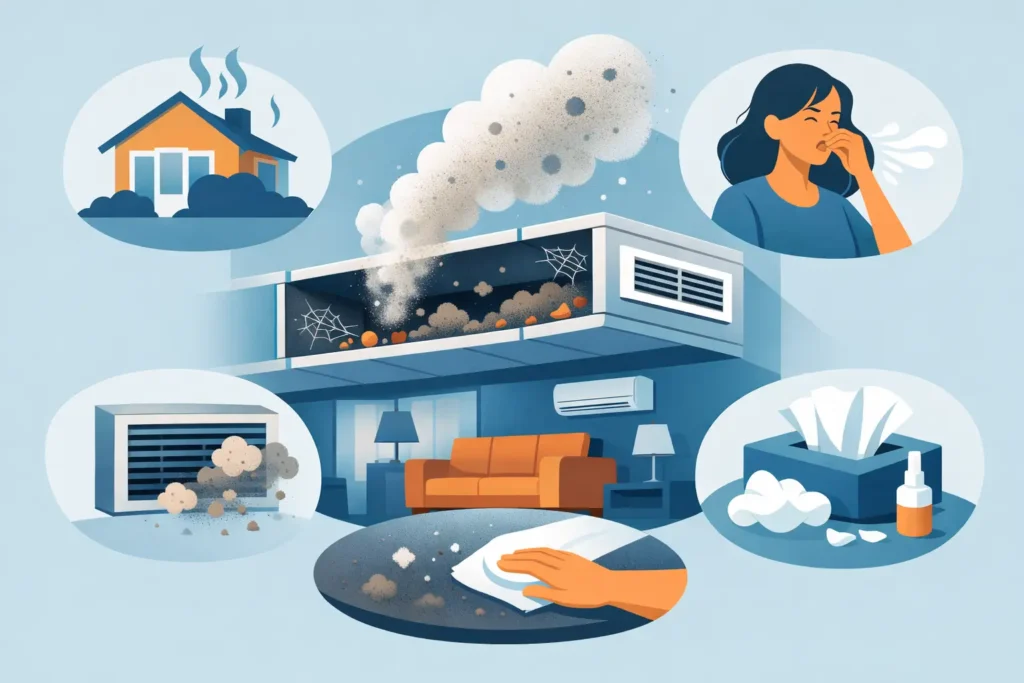
Your furnace or air conditioner can be running exactly as it should, yet every room still feels dusty, stuffy, or unevenly heated. That is when homeowners should look for the best signs of dirty ductwork. Hidden ductwork collects more than ordinary household dust over time. It can hold pet dander, renovation debris, insulation fibers, and other particles that keep circulating whenever your HVAC system turns on.
Dirty ducts are not the automatic explanation for every indoor-air problem. A clogged filter, an aging furnace, a humidity issue, or leaky duct connections can create similar symptoms. But when several warning signs show up together, a professional inspection is the smart next step.
The Best Signs of Dirty Ductwork
1. Dust returns right after you clean
A light layer of dust on furniture is normal. Dust that reappears on shelves, floors, and electronics a day or two after cleaning is not something to ignore. If you are constantly wiping surfaces but cannot keep ahead of the mess, particles moving through the return and supply ducts may be contributing.
This is especially common after construction, basement finishing, drywall work, or a move into a previously occupied home. Renovation dust is fine, stubborn, and easily pulled into the HVAC system. Changing the filter is still essential, but it may not remove debris already sitting farther inside the duct runs.
2. Airflow feels weak in one or more rooms
A bedroom that never gets enough warm air in winter or cool air in summer deserves attention. Restricted airflow can happen when dust and debris build up around vents, return openings, or accessible duct sections. It can also point to crushed ductwork, closed dampers, undersized ducts, or an HVAC equipment issue.
That distinction matters. Duct cleaning is not a cure-all for poor airflow, and a trustworthy provider should not pretend otherwise. A proper assessment looks at the full picture before recommending service, rather than selling a cheap, one-price package over the phone.
3. Vents release visible dust or debris
Look closely at supply registers while the system is running. A small amount of dust around a vent cover can be cleaned easily. But visible particles blowing into the room, dark buildup just inside the register, or debris that appears when you remove the cover suggests the system needs closer inspection.
Do not push a household vacuum hose deep into the duct to solve the problem. Flexible ductwork and internal components can be damaged by aggressive DIY cleaning. Clean the vent cover and the area you can safely reach, then let trained technicians handle the system beyond that point.
4. Your home smells stale when the HVAC starts
A stale, dusty, or musty odor that appears when heating or cooling begins may indicate buildup in the air path. Moisture combined with organic material can create odors, particularly in basements, bathrooms, or homes with past water issues. Pet hair and accumulated dust can also hold odors long after the source seems gone.
Odor alone does not confirm mold. If you see visible growth, have had a water event, or smell a strong persistent musty odor, identify and correct the moisture source first. Cleaning ducts without addressing a leak, drainage issue, or humidity problem only creates a short-term improvement.
5. Allergy or respiratory symptoms worsen indoors
Sneezing, itchy eyes, congestion, coughing, or a dry throat can have many causes, from outdoor pollen to pets and cleaning products. Still, if symptoms ease when you leave home and return when the HVAC system is running, your indoor air deserves attention.
Families with allergy sufferers, young children, older adults, or people with respiratory sensitivities often notice the difference first. Start with practical basics: use the correct filter for your system, replace it on schedule, vacuum with good filtration, and control humidity. If symptoms persist alongside dust and airflow concerns, duct cleaning may be part of a broader indoor-air-quality plan.
6. You have pets that shed heavily
Pet hair does not stay politely on the couch. It gathers around return vents, mixes with dust, and can travel through the system. In homes with multiple dogs or cats, buildup can happen faster than many owners expect, especially when filters are not changed frequently enough.
This does not mean every pet owner needs annual duct cleaning. The right schedule depends on shedding, household size, filter maintenance, recent renovations, and how the system is used. The key is to watch for the combined signs: recurring dust, noticeable odors, and reduced airflow.
7. You recently completed a renovation or moved in
New flooring, drywall sanding, demolition, painting, and remodeling can leave behind fine particles that spread far beyond the work area. Even careful contractors cannot eliminate every trace of airborne dust. If the HVAC system ran during the project, some material may have entered returns and ductwork.
A newly purchased home can bring a different unknown: years of maintenance habits you cannot verify. Before settling into a home in Toronto or elsewhere in the GTA, many buyers choose to inspect and clean air ducts as part of getting the property ready for their family. It is a practical reset, particularly if there are pets, smokers, or visible dust concerns in the home’s history.
8. Your furnace filter gets dirty unusually fast
Filters are meant to collect airborne particles, so a dirty filter is not automatically a red flag. But if a properly sized filter becomes heavily loaded much faster than expected, it may signal high dust levels in the home or a return-side issue that needs investigation.
Check that the filter is installed in the correct direction and that it fits snugly. A filter with gaps around the edges lets unfiltered air bypass it. Also avoid choosing an overly restrictive filter without confirming that your HVAC system can handle it. More filtration is not always better if it chokes airflow.
9. Dryer clothes take longer to dry
This is not an air-duct issue, but it is a warning sign that belongs in the same maintenance conversation. A dryer that needs multiple cycles, feels excessively hot, or leaves clothes damp may have restricted venting. Lint buildup in the dryer vent reduces efficiency and can increase fire risk.
Clean the lint screen after every load, but do not assume that is enough. The vent line behind the dryer and the exterior termination need periodic professional attention, especially in condos, long vent runs, and households that do frequent laundry.
When Dirty Ductwork Needs Professional Attention
One sign by itself may have a simple explanation. Several signs together – recurring dust, visible debris, stale odors, uneven airflow, and a filter that loads up quickly – make a stronger case for professional service. The goal should be a cleaner air path and a clear understanding of any related HVAC issues, not a dramatic promise that duct cleaning will solve every health or comfort problem overnight.
Ask what the service includes, whether sanitation is included, how technicians protect your home, and whether they can explain what they find. Be cautious with unsolicited cold calls, vague offers, or rock-bottom prices that jump once a crew arrives. Reputable companies provide clear pricing and answer direct questions before work begins.
Dust Chasers approaches duct and dryer vent cleaning with that practical standard: trained technicians, transparent recommendations, and no pressure to buy work your home does not need.
Keep Your Air System Cleaner Between Visits
The best results come from regular habits, not a one-time appointment. Replace filters according to the manufacturer guidance and your household conditions. Keep supply and return vents clear of furniture, rugs, and storage. Vacuum around registers, manage humidity, and use exhaust fans when cooking or showering.
If your home keeps producing dust faster than it should, do not just clean harder. Pay attention to what happens when the system starts, how each room feels, and whether the problem changes after a filter replacement. Those details make it much easier to choose the right next step and keep the air in your home working for you, not against you.