


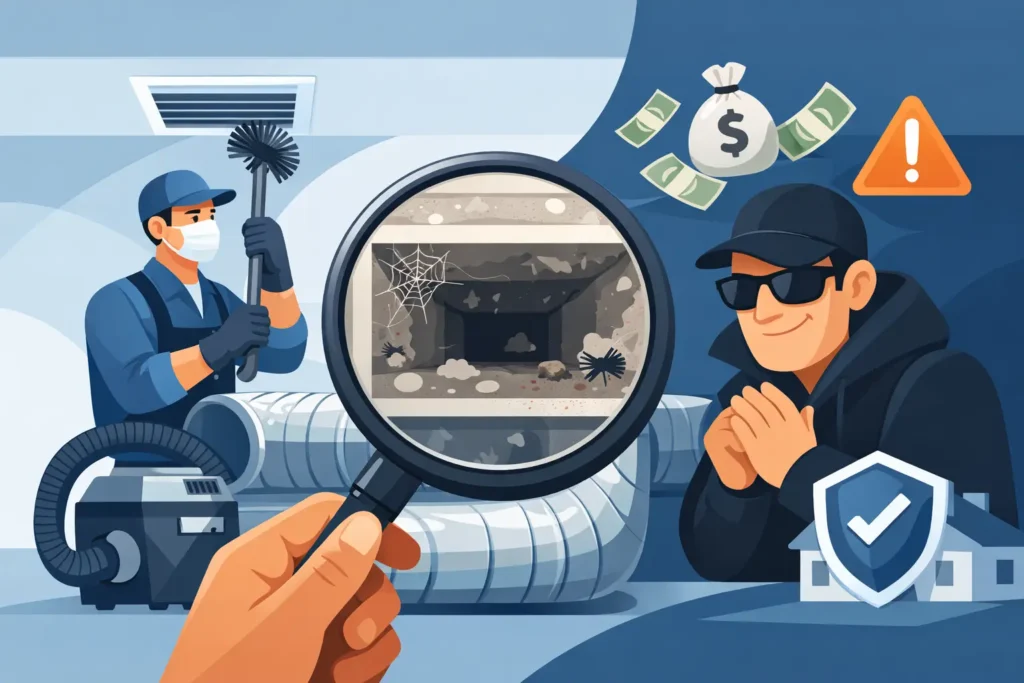
A $99 “whole-home special” can sound tempting when dust is collecting near vents or your home feels stuffy. But this air duct cleaning scam warning is worth taking seriously: many fraudulent operators use a low price to get through the door, then pressure homeowners into paying far more for work that may be incomplete, unnecessary, or never performed.
The Greater Toronto Area has seen its share of duct-cleaning robocalls, vague cold calls, and contractors who cannot clearly explain who they are or what their service includes. Professional duct cleaning is a real maintenance service. The scam is the sales tactic – not the service itself. Knowing the difference protects your home, your budget, and your indoor air.
The most common duct cleaning scam starts with a cheap offer
The typical pitch is simple: a caller claims to be “in your area,” offers a full-home cleaning for an unusually low flat rate, and wants to schedule immediately. The company name may be hard to catch, the caller may not know your address, and the number may be difficult to call back.
A low advertised price is not automatically a scam. Some legitimate businesses run seasonal promotions or package services efficiently. The concern begins when the price is disconnected from the scope of work. A proper quote depends on factors such as the number of systems, supply and return vents, access to the equipment, home size, contamination concerns, and whether dryer vent service is also needed.
Once the technician arrives, the low offer can turn into a bait-and-switch. Suddenly, the advertised package allegedly excludes returns, the main trunk line, the furnace compartment, sanitation, extra vents, or nearly every part of the job that matters. The customer is then pushed to approve a much larger bill on the spot.
Air duct cleaning scam warning signs to watch for
Scammers rely on urgency, confusion, and the fact that most people cannot see inside their ductwork. Be cautious when a company uses several of these tactics at once:
- An unsolicited robocall, repeated cold call, or message that cannot identify the business clearly.
- A price that seems too low to cover trained labor, specialized equipment, travel, and a complete cleaning.
- No written scope of work, no clear explanation of what is included, and no final price before work begins.
- High-pressure claims that your ducts contain dangerous mold, bacteria, or fire hazards without a proper inspection or evidence.
- A demand for immediate payment, cash only, or a large deposit before the service is completed.
- Technicians who arrive in an unmarked vehicle, cannot provide business details, or refuse to show identification.
- Vague answers about cleaning methods, equipment, insurance, technician qualifications, or what areas of the HVAC system will be serviced.
One red flag alone does not prove misconduct. A small local company may have a basic vehicle or a limited-time offer. What matters is whether the business can verify who it is, explain the work plainly, and give you time to make an informed decision.
The “mold in your ducts” pressure tactic
Mold concerns deserve a careful response, not a dramatic sales pitch. Dust, staining, and ordinary debris are often mistaken for mold. If a technician announces a serious contamination issue the moment they enter your home, then insists you must pay for expensive chemical treatment immediately, pause the appointment.
Ask what they found, where they found it, and how they confirmed it. A legitimate provider should be able to explain the concern without fear-based language. In some situations, visible growth, persistent moisture, or a musty odor may call for further assessment and correction of the moisture source. Cleaning alone will not solve a moisture problem that keeps coming back.
What professional duct cleaning should look like
A credible service starts before the appointment. You should be able to reach a real business, receive a clear quote or pricing framework, and understand what is included. There should be no mystery around basic details like the company name, service area, scheduling window, and payment expectations.
At the home or building, the technician should assess the system and explain the recommended work. Proper cleaning generally involves accessing the duct system, using professional negative-air or vacuum equipment to contain loosened debris, and agitating dust buildup with suitable tools. The exact method depends on the HVAC layout and access conditions, but the goal is the same: remove debris from the system rather than simply vacuuming around vent covers.
You should also expect reasonable care around your property. Technicians should protect work areas, explain any access limitations, and avoid making promises that duct cleaning cannot support. No reputable company can guarantee that duct cleaning will cure every allergy symptom, eliminate every odor, or fix a mechanical HVAC issue.
For homes with gas appliances, ask who is handling any work that involves the furnace or gas components. Qualified, properly credentialed technicians matter when service goes beyond basic vent access. Dust Chasers, for example, emphasizes transparent pricing and TSSA G2 Gas Technician credentials as part of its safety-focused approach.
How to verify a company before you book
Do a quick check before agreeing to an appointment, especially if the company contacted you first. Search the business name independently rather than relying only on the phone number or link in a text message. Look for a consistent local presence, clear contact information, genuine customer feedback, and service details that match what the caller promised.
Then call the company directly and ask a few practical questions. What does the quoted price include? Are supply ducts, return ducts, the main lines, and the air handler or furnace area included? Is sanitation optional, included, or recommended only under certain conditions? Are there additional charges for extra systems, difficult access, condos, or commercial properties?
The answers should be specific and calm. A reputable company will not punish you for asking. In fact, good questions help prevent misunderstandings on both sides.
It is also smart to request confirmation in writing. The document does not need to be complicated, but it should state the service, price or price range, potential additional charges, and the business contact information. If a provider refuses to put anything in writing, move on.
Why condos and commercial buildings need extra caution
For condo residents, duct cleaning can involve shared-building rules, fan coil units, access requirements, and coordination with property management. A random caller may not understand any of this. Before booking, confirm whether your building has approved contractor procedures, elevator booking requirements, insurance requirements, or restrictions on equipment and parking.
Property managers and commercial operators should be even more disciplined. A questionable low-cost vendor can create tenant complaints, disrupt operations, or leave a building with incomplete documentation. Ask for a defined scope, scheduling plan, insurance information, technician credentials where applicable, and service records after the work is done.
The cheapest quote can be the most expensive choice if the provider does not have the equipment or process to service a larger system properly. Compare scope, not just price.
If you think you have already been targeted
If a caller is pressuring you, do not provide payment details and do not confirm more personal information than necessary. End the call, block the number, and contact a company you have researched yourself. If someone is already at your door, you can refuse service before work begins. A legitimate contractor will respect that decision.
If you paid for work that was misrepresented, save all paperwork, texts, call logs, photos, and payment records. Document what was promised and what was actually done. These details can help when reporting the issue to your payment provider, consumer protection office, or local authorities.
Protect your air and your home with clear expectations
Duct cleaning should never feel like a sales ambush. The right provider will explain the service, identify realistic benefits such as reduced dust buildup and improved airflow, and tell you when a concern falls outside the scope of cleaning. That honesty is what separates maintenance from a scam.
When the offer is unusually cheap, the caller is unusually pushy, or the details remain unusually vague, trust your instincts. A few minutes spent verifying a company can spare you a frustrating visit and help ensure the people working in your home are there to do the job properly.