


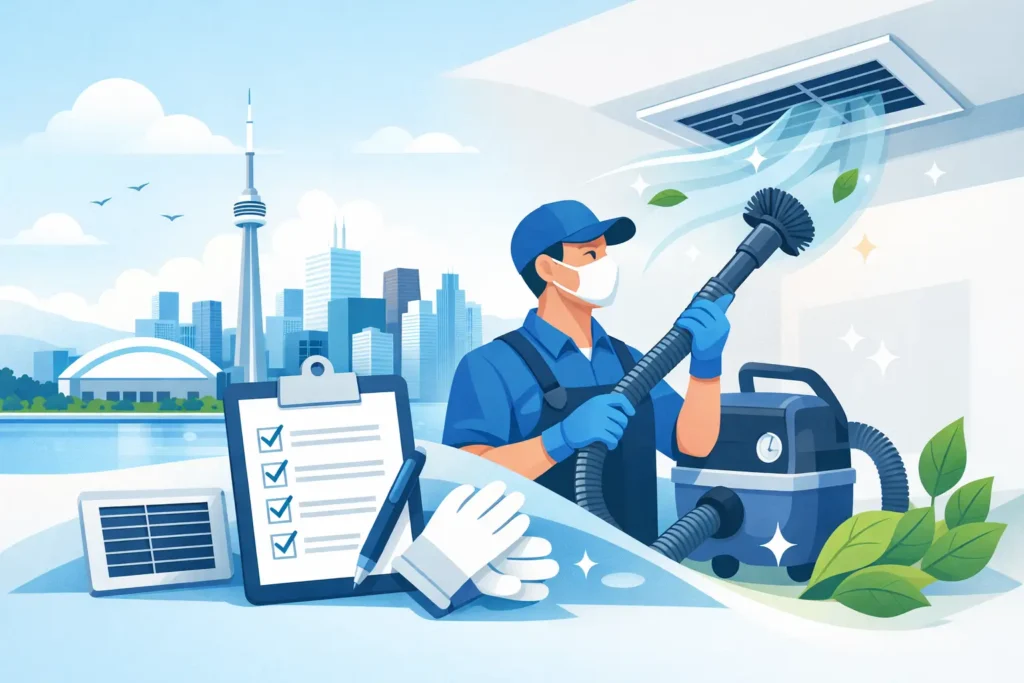
A dusty vent cover is easy to see. What is harder to see is the buildup deeper in the ductwork, the lint packed into a dryer exhaust line, or the service provider who plans to charge more than the advertised price once they arrive. This Toronto duct cleaning checklist helps homeowners, condo residents, landlords, and building managers make a clear decision before booking.
Duct cleaning is not a magic fix for every air-quality concern. It will not repair a failing furnace, solve a moisture problem, or replace routine filter changes. But when dust, renovation debris, pet hair, and other particles have accumulated in a ventilation system, a professional cleaning can improve airflow, reduce recirculating debris, and help restore a cleaner-feeling home or workplace.
Toronto Duct Cleaning Checklist: Start With the Right Signs
The first question is not, “How cheap is the offer?” It is whether your system is giving you a reason to investigate. Toronto homes and condos deal with long heating seasons, closed windows, construction dust, pets, and busy households. Those conditions can add up inside supply and return ducts.
Look for a pattern rather than one isolated clue. You may notice more dust on furniture soon after cleaning, weak airflow from certain registers, a stale smell when the HVAC system starts, or visible debris around vents. Families with pets, allergies, or recent renovations often notice these signs sooner. A filter that becomes dirty unusually fast can also point to a system moving more airborne debris than it should.
For a house, pay attention to rooms that are consistently stuffy or dusty compared with the rest of the property. In a condo, determine what equipment actually serves your suite before scheduling work. Some buildings have fan coil units, shared ventilation components, or rules that limit access to shafts and mechanical areas. A qualified provider should ask these questions upfront instead of promising the same package to every customer.
Check What Actually Needs Cleaning
A credible assessment separates duct cleaning from other maintenance needs. Your checklist should include the supply ducts, return ducts, registers, furnace or air-handler compartment, blower area when accessible, and the dryer vent as a separate safety service.
Dryer vent cleaning deserves special attention. Unlike general duct cleaning, a blocked dryer vent has a direct fire-risk and performance concern. Lint can collect in the transition hose, behind the dryer, and throughout the vent run to the exterior. Warning signs include clothes taking more than one cycle to dry, a dryer that feels excessively hot, a burning smell, or little air coming from the exterior vent flap.
If your dryer is gas-fired, disconnection and reconnection should be handled properly. Ask whether the technician is qualified to work around the appliance and whether the final setup will be checked for safe operation. This is not a place to gamble on a bargain appointment.
For commercial facilities and multi-unit properties, the scope may be wider. A property manager may need service for multiple rooftop units, makeup air systems, common-area ventilation, dryer banks, or tenant spaces. The right plan depends on the building layout, usage, access windows, and maintenance history. A single flat-rate promise without those details should raise questions.
Inspect the Service Scope Before You Book
A good quote should make the work understandable. You do not need a lecture on every piece of HVAC equipment, but you should know what areas are included, how many vents or systems are covered, whether sanitation is included, and what could create an additional charge.
Before you book, confirm these five points:
- The quoted price and what it covers, including the number of systems, vents, or units.
- The cleaning method, including whether the provider uses professional negative-air equipment and agitation tools designed for ductwork.
- Access requirements, such as furnace-room clearance, parking, elevator booking, or approval from condo management.
- Whether dryer vent cleaning is included, optional, or priced separately.
- Any legitimate add-ons that may apply, with the circumstances explained before the technician begins.
Transparent pricing matters because duct-cleaning scams are common across the GTA. A suspiciously low cold-call offer can turn into high-pressure upselling at your door. Some operators advertise a price that cannot realistically cover equipment, labor, travel, and a thorough cleaning, then claim that every home has an urgent contamination problem.
Be cautious if a caller pushes for immediate payment, refuses to explain the process, will not provide a business identity, or insists on cleaning before discussing the scope. Real professionals earn the job by being clear, not by creating panic.
Verify the People Entering Your Home or Building
Your ventilation system is part of your property infrastructure. Treat the appointment accordingly. Ask who will perform the work, how the team protects floors and nearby furnishings, and whether they can explain the process in plain language.
For work involving gas appliances, qualified personnel are especially important. In Ontario, TSSA G2 Gas Technician credentials are relevant when a technician needs to disconnect or reconnect certain gas-fired equipment. Not every duct-cleaning appointment involves gas work, but if yours does, ask directly rather than assuming.
For condo boards, landlords, and commercial operators, documentation is also valuable. Confirm insurance, scheduling requirements, after-hours availability if needed, and whether the company can work within your building’s access and safety procedures. The lowest quote can become the expensive option if it causes tenant disruption, missed elevator bookings, or incomplete work.
Prepare the Space for a Thorough Cleaning
A little preparation helps technicians spend more time cleaning and less time moving obstacles. Clear a path to the furnace, air handler, utility room, and dryer. Move fragile items away from registers that need to be opened. If pets are sensitive to noise or strangers, secure them in a comfortable room.
For a condo appointment, reserve the elevator if your building requires it and confirm visitor parking or loading access. For a commercial site, identify a point person who can authorize access to mechanical rooms and tenant areas. These small details prevent rushed work and avoidable rescheduling.
You should also replace or plan to replace your HVAC filter after the cleaning, unless the provider advises otherwise based on the system. A clean filter supports airflow and helps capture new airborne particles after the service. Choose the filter type recommended for your equipment. A very high-efficiency filter is not always the best choice if your system is not designed to handle the added resistance.
Know What a Professional Visit Should Look Like
A thorough appointment begins with a walkthrough and a review of the agreed scope. The team should identify the HVAC system, locate supply and return vents, and explain what access points are needed. The process may involve connecting a powerful collection system to create negative pressure while tools dislodge debris from inside the duct runs.
The exact approach depends on the property. Older Toronto homes may have tight mechanical rooms or unusual duct layouts. Condos may have limited accessible ductwork. Commercial systems can require scheduled shutdowns or segmented cleaning. The key is that the technician adapts the process to the system, not that they force every building into a generic script.
Expect reasonable care around your home. Floors and work areas should be protected where necessary, vent covers should be handled carefully, and the crew should answer questions about what they found. If a serious issue appears, such as damaged ductwork, moisture evidence, or an unsafe dryer connection, the provider should show you the concern and explain the next practical step. They should not use it as an excuse for a surprise bill.
Sanitation can be useful when it is included as part of a clear, appropriate service process. It should not be sold as a fear-based cure-all. If mold is suspected, the source of moisture needs attention. Cleaning a duct without addressing ongoing moisture will not solve the underlying problem.
Finish With a Maintenance Plan That Fits Your Property
After the work is complete, ask what was cleaned and whether any areas need follow-up. Then focus on the habits that keep the system working well: change filters on schedule, keep return vents unblocked, vacuum around registers, and have dryer vents checked regularly based on use and vent length.
There is no single calendar rule for every property. A family with shedding pets, frequent renovation work, or allergy concerns may benefit from more frequent attention than a lightly occupied home. A busy rental property or commercial facility may need a planned maintenance schedule rather than waiting for complaints.
When you are ready to book, choose a company that can explain the scope, price, safety steps, and limitations without pressure. Dust Chasers serves GTA properties with professional duct and dryer vent cleaning built around cleaner airflow, practical safety, and straight answers. The best time to address a neglected system is before weak airflow, excess dust, or dryer trouble becomes the issue everyone notices.