


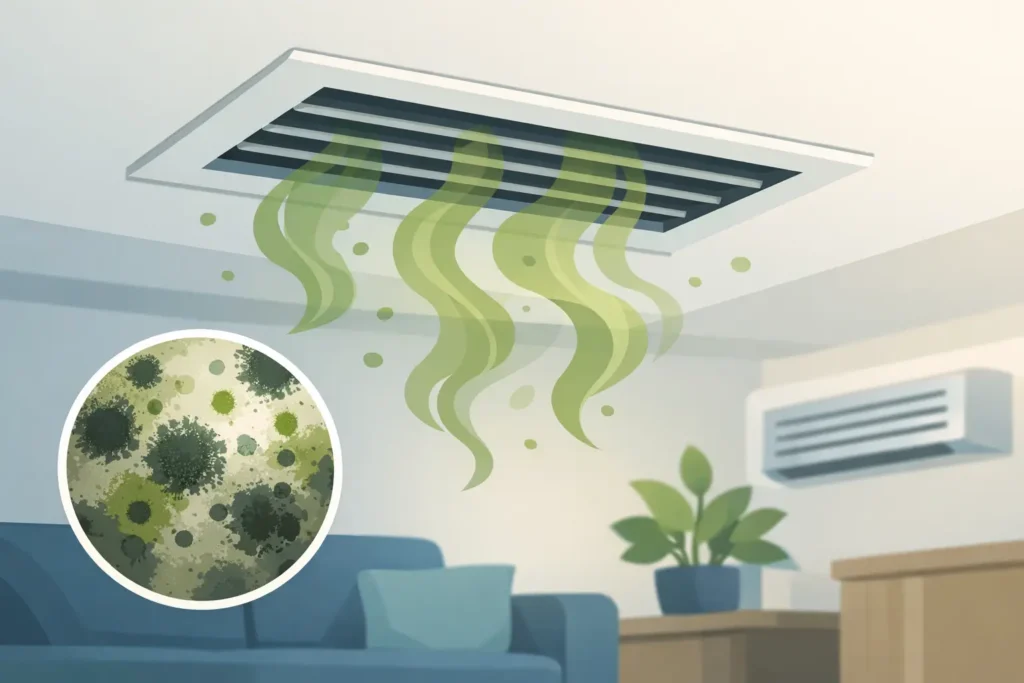
That damp, musty blast when the heat or AC kicks on is not something to ignore. If you notice a mold smell from air vents, your system is telling you that moisture, buildup, or microbial growth may be hiding somewhere you cannot see. Sometimes the source is minor and easy to correct. Sometimes it points to a bigger HVAC or ductwork problem that can keep circulating stale air through the whole property.
The tricky part is that “mold smell” is often used as a catch-all. Homeowners, condo residents, and property managers may be smelling actual mold, mildew, bacteria on damp dust, standing water near the HVAC system, or contamination inside duct runs. The smell matters either way because clean ventilation should not send out a wet-basement odor every time the fan starts.
Why mold smell from air vents happens
Air vents do not create odors on their own. They carry air from the system, which means the smell is usually coming from somewhere in the HVAC pathway. In many cases, moisture is the real starting point. Once moisture meets dust, insulation particles, or organic debris, odor follows.
One common cause is condensation around evaporator coils. During cooling season, AC systems naturally pull humidity from the air. If the coil area stays wet because of poor drainage, restricted airflow, or neglected maintenance, mold and mildew can begin growing nearby. When the blower turns on, that smell gets pushed into living areas.
Dirty ductwork can also contribute. Ducts collect dust over time, and if any section has been exposed to humidity, leaks, or past water intrusion, that debris can hold odor. In basements, crawlspaces, and older buildings, duct sections may run through damp areas where musty smells get picked up and redistributed.
Another possibility is a clogged or contaminated drain pan. If water is not draining properly, it can sit inside the HVAC system long enough to smell foul. In some properties, the odor is strongest right when the system starts and then fades, which can suggest growth near the air handler or coil rather than throughout the entire duct system.
It can also be a filter issue. A neglected filter will not usually cause a strong mold smell by itself, but a damp, overloaded filter can add stale odor and reduce airflow, which makes moisture problems worse elsewhere in the system.
Where the smell is usually coming from
The AC coil and drain area
This is one of the most common culprits. The evaporator coil removes humidity, and the drain system is supposed to carry that water away. If the pan is dirty, the drain is blocked, or the coil stays wet too long, microbial growth can start developing in that section.
Inside ductwork
If dust, debris, or insulation inside the ducts has been exposed to moisture, the smell can linger and spread. Flex ducts, older lined ducts, and poorly sealed joints are more vulnerable because they can trap contamination or pull in humid air from surrounding spaces.
Around vents and registers
Sometimes the smell seems like it is coming from the vents, but the real issue is localized buildup around the register, inside the boot, or on nearby ceiling or wall material. This is more common in bathrooms, kitchens, and lower-level rooms with humidity problems.
The air handler closet or mechanical room
If that area has poor ventilation, a drain leak, or general dampness, your system can pick up the smell and distribute it. In condos and commercial spaces, this is worth checking early because the issue may not be inside the visible living area at all.
Is it always mold?
No, and that is where people get tripped up. A musty smell does not automatically confirm active mold growth inside the ducts. It could be mildew, stagnant water, dirty insulation, pest contamination, or general HVAC grime mixed with moisture. The odor still needs attention, but the fix depends on the source.
This is also why guessing can get expensive. Spraying fragrance into vents, swapping filters repeatedly, or booking a bargain cleaning without inspection can waste time and leave the real moisture problem untouched. If the source is a blocked condensate line or leaking duct section, the smell will come right back.
Signs the problem may be more serious
A brief odor after months of no system use is one thing. A repeating smell that gets stronger is another. If the mold smell from air vents is persistent, there is a reason.
Watch for signs like worsening allergy symptoms, visible dust blowing from vents, damp spots near ceilings or walls, uneven airflow, or odors that intensify in one zone of the property. In commercial buildings and multi-unit properties, complaints from several rooms often suggest a shared system issue rather than an isolated vent problem.
If you also see water around the indoor unit, hear dripping, or notice the AC struggling to keep up, the issue may go beyond air quality and point to HVAC performance trouble. That matters because moisture and airflow problems tend to feed each other.
What you can check yourself first
There are a few sensible first steps before assuming the worst. Check the air filter and replace it if it is dirty. Look at the vent covers for visible dust, discoloration, or moisture marks. If your indoor unit is accessible, inspect the area around it for water, musty smells, or obvious drainage problems.
You can also pay attention to timing. If the smell appears only when the AC runs, the source may be near the cooling components. If it happens with both heating and cooling, dirty ductwork, contamination near the blower, or a moisture issue in the duct system becomes more likely.
That said, there is a limit to what surface checks can tell you. Most odor sources are hidden behind covers, above ceilings, or inside duct runs. If the smell keeps returning, a professional inspection is the faster path.
When professional cleaning helps and when it is not enough
Professional duct cleaning can be the right move when dust, debris, and odor-holding contamination are present inside the ventilation system. It is especially useful after renovation dust, long-term neglect, pest issues, or moisture exposure that has left the ducts smelling stale. Cleaning removes the material that traps odor and helps restore airflow.
But cleaning is not magic. If there is an active leak, a blocked drain, damaged insulation, or ongoing humidity issue, the smell can return. That is why the best service approach is not just cleaning for the sake of cleaning. It is identifying the source, correcting the moisture problem, and then cleaning contaminated components as needed.
That is also where homeowners and property managers need to be careful with low-price operators. A rushed vacuum pass and a scary sales pitch do not solve hidden moisture problems. Real HVAC and duct professionals will explain what they found, what cleaning can fix, and what requires repair or further remediation.
Mold smell from air vents in condos and commercial properties
In condos, the challenge is often access and system design. The odor may be tied to a fan coil unit, a shared ventilation path, or moisture around mechanical components tucked into tight utility closets. Residents may assume the vent is the issue when the real source sits inside the unit cabinet or drain assembly.
In commercial spaces, odors can affect more than comfort. Staff complaints, customer perception, and tenant satisfaction all take a hit when stale air keeps cycling through the building. Larger systems also mean small moisture issues can go unnoticed longer, especially if maintenance is reactive instead of scheduled.
For both property types, documentation and proper diagnosis matter. You do not want guesswork when multiple occupants are affected.
How to reduce the chances of it coming back
The long-term fix usually comes down to moisture control and maintenance. Keep filters changed on schedule. Have the HVAC system inspected if drainage, condensation, or airflow seems off. Address leaks quickly. If ducts are due for cleaning, use a company that actually inspects the system instead of selling a one-price-fits-all package.
In humid months, indoor humidity levels matter too. If the property tends to feel damp, that extra moisture can keep feeding odor issues even after cleaning. Better ventilation, proper HVAC performance, and targeted maintenance work together. One without the others only gets you halfway.
For homes and buildings in the GTA, where cooling season humidity and tightly sealed interiors often collide, musty vent odors are common enough to recognize but never normal enough to ignore. Dust Chasers sees this pattern often: the smell starts small, people mask it, and the underlying moisture issue keeps building.
If your vents smell musty, trust the signal. Clean air should smell like nothing at all, and getting back to that baseline is usually less about quick cover-ups and more about finding the source before it spreads.