


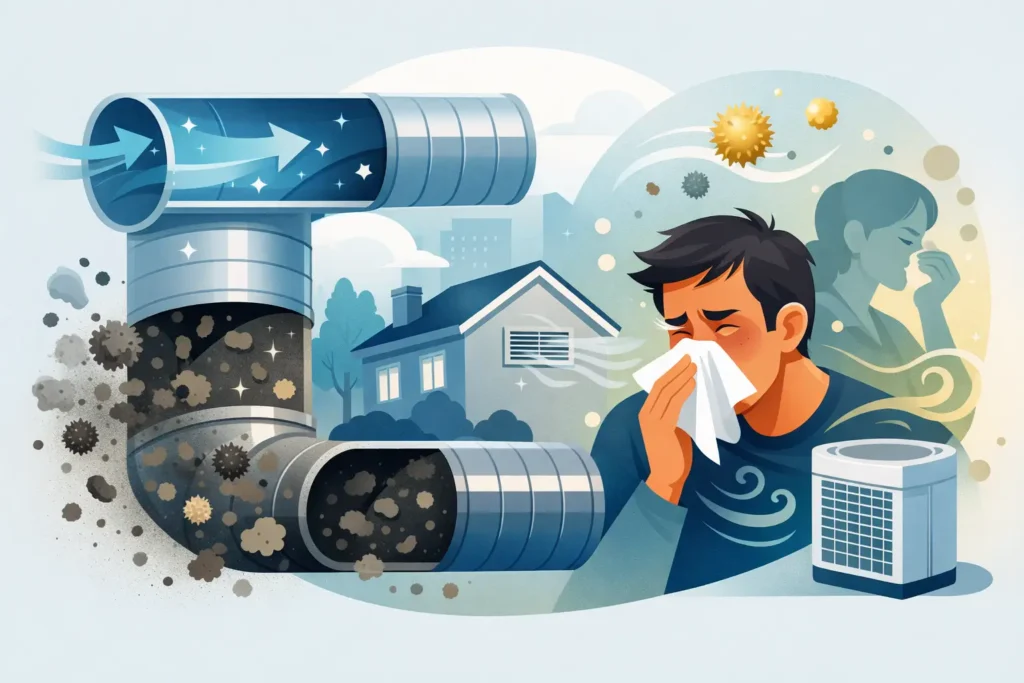
You change the furnace filter, dust the shelves, vacuum the floors – and somehow the sneezing keeps coming back. If you have been asking, can dirty air ducts cause allergies, the honest answer is yes, they can contribute to the problem. But they are not always the main cause, and that distinction matters if you want to fix the issue instead of wasting money chasing the wrong thing.
Air ducts do not create allergies out of nowhere. What they can do is collect and circulate irritants that make sensitive people feel worse. Dust, pet dander, pollen, fine debris, and in some cases mold-related contamination can build up inside a ventilation system over time. Once the system kicks on, some of that material may move back into the air you breathe. For households with kids, seniors, asthma sufferers, or anyone already dealing with respiratory sensitivity, that can be enough to keep symptoms going.
Can dirty air ducts cause allergies or just make them worse?
Usually, dirty ductwork does not cause a brand-new allergy. What it often does is aggravate existing sensitivities. If someone in the home is allergic to dust mites, pollen, pet dander, or mold spores, a contaminated HVAC system can act like a delivery path for those triggers.
That said, it depends on what is actually inside the system. A light layer of settled dust in ductwork is not the same as heavy buildup, construction debris, pest contamination, or moisture-related growth. Some homes have duct systems that stay relatively clean for years, especially with good filtration and no major renovation work. Others collect a surprising amount of debris because of pets, frequent occupancy, older equipment, poor sealing, or neglected maintenance.
The key point is simple. Dirty ducts are often part of a bigger indoor air quality picture. They may not be the only reason you feel stuffed up, itchy, or congested, but they can absolutely keep the cycle going.
What in air ducts can trigger allergy symptoms?
When people hear “dust,” they tend to imagine harmless lint. In reality, the material sitting in ductwork can be a mix of skin flakes, fabric fibers, pet hair, dander, pollen, and fine particles pulled in from outdoors. If filters are low quality, installed incorrectly, or not replaced on time, more of that debris can move through the system.
Moisture changes the story. If condensation, leaks, or humidity problems affect the HVAC system, biological growth becomes a more serious concern. That does not mean every dark spot is mold, and it does not mean every system with dust needs sanitizing. But if moisture is present, you are no longer dealing with simple housekeeping debris. You are dealing with a condition that may directly affect air quality.
In commercial buildings, condos, and larger multi-unit properties, the issue can be more complex. Shared systems, maintenance delays, and higher occupancy can all increase particulate buildup. Residents may blame seasonal allergies when the building itself is helping recirculate irritants.
Signs your duct system may be affecting allergies
If symptoms are worse indoors than outdoors, your HVAC system deserves a closer look. The same goes for symptoms that spike when the heat or air conditioning turns on. Sneezing, dry throat, itchy eyes, sinus pressure, and more dust settling on furniture shortly after cleaning are all common clues.
You might also notice uneven airflow, musty odors from vents, or visible dust blowing from registers. None of these signs prove the ducts are the only issue, but they are enough to justify inspection. In homes that recently had renovations, moved in new pets, or went years without service, the chances of hidden buildup are higher.
Another red flag is replacing filters constantly while the house still feels dusty. If the system is struggling with deeper contamination in the ducts, filter changes alone may not solve it.
When air duct cleaning actually helps
This is where a lot of homeowners get burned by bad advice and cheap offers. Not every house needs duct cleaning on a fixed schedule, and anyone telling you otherwise is selling a package before diagnosing the problem. Professional duct cleaning is worth it when there is clear buildup, airflow issues, post-construction debris, odor concerns, suspected contamination, or persistent dust and allergy complaints with no better explanation.
If you have never had the system cleaned and the home is older, occupied by pets, or recently renovated, the service can make a noticeable difference. The same goes for rental turnovers, condo units with unknown maintenance history, and commercial properties where multiple occupants report air quality complaints.
On the other hand, if your ducts are clean, your filter setup is solid, and your main issue is high indoor humidity or outdoor pollen entering through windows and doors, duct cleaning may only provide limited improvement. That is not a reason to skip maintenance. It is a reason to solve the right problem.
Why allergy relief is not just about the ducts
A lot of indoor air complaints come from a combination of issues. Dirty ducts might be one piece, but filters, return air leaks, neglected blower components, dirty coils, poor humidity control, and general housekeeping all play a role. If the HVAC system is pulling dust from unsealed areas, cleaning the ducts without fixing the leak is like mopping the floor while the faucet is still running.
This is also why scam-style pricing creates trouble. A company that shows up promising whole-home duct cleaning for an unrealistically low price is often not doing a real assessment. They are counting on upsells, rushed work, or fear-based tactics. If allergy symptoms are involved, you need a real inspection and clear explanation, not a sales pitch.
A trustworthy provider should be direct about what cleaning can and cannot do. It can remove buildup from the system. It can improve airflow in some cases. It can reduce the amount of dust and debris being circulated. What it cannot do is cure medical conditions or replace good filtration and routine HVAC maintenance.
Can dirty air ducts cause allergies in condos and commercial spaces?
Yes, and in shared or high-traffic buildings, the effect can be harder to trace. Condo residents often assume their symptoms come from the unit itself, but the ventilation path may be part of the issue, especially if filters are neglected or prior occupants left behind heavy dust, pet dander, or smoke residue.
For property managers and commercial operators, complaints about stale air, recurring dust, and occupant discomfort should not be brushed off as minor. Even when the source is not exclusively the ducts, ventilation cleanliness affects perception, comfort, and trust. People notice when air feels heavy. Tenants notice when vents smell off. Staff notice when dust returns immediately after cleaning.
In busy parts of the GTA, where buildings run year-round heating and cooling systems and outdoor pollutants are part of daily life, ventilation maintenance is not cosmetic. It is operational.
What to do if you suspect your ducts are part of the problem
Start with the basics. Check whether filters are being replaced properly and whether they fit the system correctly. Look at supply and return vents for visible dust, staining, or debris. Pay attention to timing. If symptoms worsen when the system runs, that pattern is useful.
Next, consider the home or building history. Have there been renovations, water issues, pest problems, long gaps in maintenance, or prior occupants with pets or smoking habits? Those details matter more than most people realize.
Then get the system evaluated by a company that focuses on air quality and ventilation maintenance, not one that relies on vague promises. A proper service should be transparent about pricing, clear about findings, and realistic about results. That is exactly why many homeowners and property managers choose specialists like Dust Chasers when they want answers instead of gimmicks.
The real answer most people need
So, can dirty air ducts cause allergies? They can contribute, and for some households that contribution is significant. But the smarter question is whether your duct system is actively circulating the kind of debris that keeps symptoms alive. If it is, cleaning and correcting the underlying issues can help create a healthier indoor environment. If it is not, the right contractor should tell you that too.
Cleaner air is not about fear. It is about facts, proper inspection, and fixing what is actually affecting the space you live or work in. If your home still feels dusty no matter how much you clean, your vents smell stale, or your allergies seem worse every time the system turns on, that is your cue to stop guessing and start looking where the air travels.