


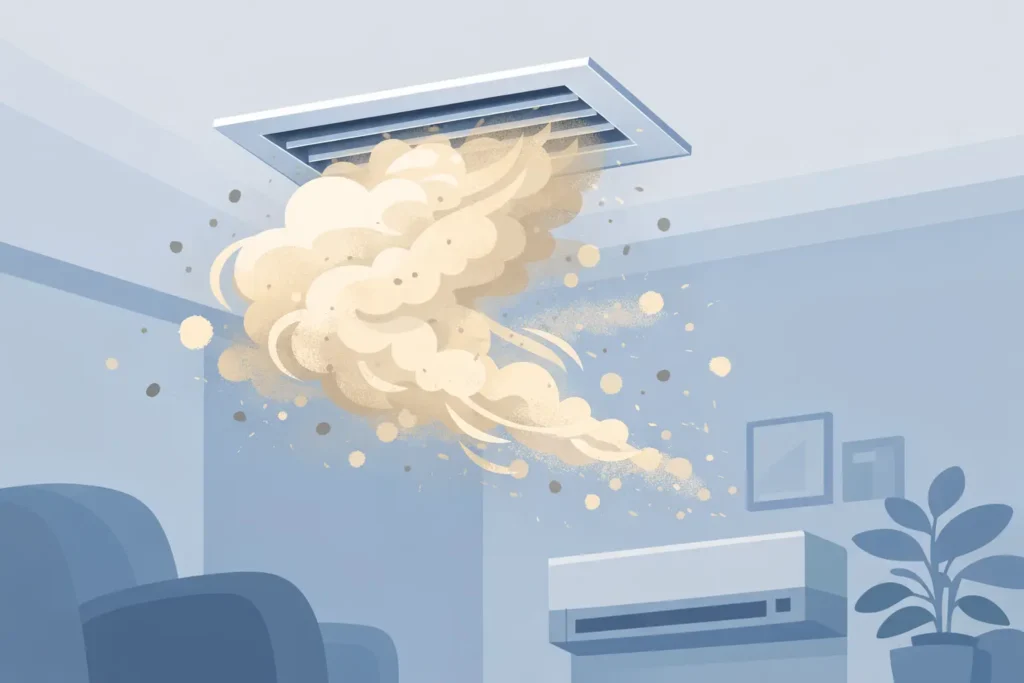
You turn on the heat or AC, and a faint puff blows out of the register. A few minutes later, there is fresh dust on the floor, the furniture, or your desk again. If you are dealing with dust coming from vents, the problem is not always the ductwork alone – but it is always a sign that your air system deserves a closer look.
For homeowners, condo residents, and property managers, this issue usually shows up as a daily nuisance first. Then it starts raising bigger questions. Is the system dirty? Is airflow too strong? Is something getting pulled into the return vents and recirculated through the building? And just as important, is this normal dust or a warning sign that maintenance has been ignored for too long?
What dust coming from vents actually means
A little dust movement at startup can happen in almost any forced-air system. If the HVAC system has been off for a while, some settled particles inside the duct lines or near the vent cover may get pushed out when air pressure returns. That alone does not automatically mean your ducts are severely contaminated.
The problem is frequency. If dust coming from vents happens often, or if you notice heavy buildup around supply registers, black streaks on vent covers, or constant dust settling shortly after cleaning, the system may be contributing to the mess inside your home or building instead of just moving conditioned air.
That matters for comfort, cleaning workload, and indoor air quality. In some cases, it also points to filter problems, duct leaks, poor return air design, renovation debris, or neglected maintenance.
The most common causes of dust coming from vents
The simplest cause is accumulated dust inside the duct system. Over time, ordinary household particles settle in the runs, especially when filters are low quality, changed too late, or bypassing air around the edges. When the blower kicks on, some of that loose material can get disturbed and blown into occupied rooms.
Another common issue is a clogged or poorly fitted HVAC filter. If the filter is overloaded, damaged, or the wrong size, particles that should be captured can keep circulating. In that situation, the vent is not creating the dust. It is distributing what the system failed to trap.
Leaky ducts are another major culprit. If there are gaps in return ducts, the system can pull in dust from wall cavities, unfinished basements, mechanical rooms, attics, or other hidden spaces. That dust then travels through the system and exits through supply vents. This is one reason some properties stay dusty no matter how often the visible surfaces are cleaned.
Renovation residue is also a big one. Drywall dust, sawdust, insulation particles, and construction debris can settle into ducts during remodeling. Even a small project can affect the system if vents were left uncovered during the work. That type of dust tends to be finer, more persistent, and more frustrating than normal household dust.
In condos and commercial units, shared building conditions can add another layer. Pressure imbalances, maintenance gaps, or dirty common mechanical systems can affect how dust behaves from one area to another. A unit may look clean on the surface while still receiving contaminated airflow through the vent network.
When the problem is not just the ducts
Not every complaint about dust coming from vents ends with duct cleaning. Sometimes the real issue is around the vents, not deep inside them.
If supply registers are dirty, if furniture blocks airflow, or if return vents are coated in dust because no one has vacuumed them regularly, those surfaces can release particles whenever the system starts. If humidity levels are off, airborne particles may also stay suspended longer and settle more visibly.
There is also the housekeeping factor. Pet dander, fabric fibers, lint, and outdoor dust tracked into the property all feed the cycle. A forced-air system moves air constantly, so anything loose in the environment can appear to be vent-related even when the source is spread across the entire space.
That is why real diagnosis matters. A trustworthy technician should look at the full system, not just point at the vents and sell a generic package.
Signs you may need professional help
If dust appears occasionally and lightly, a filter change and routine cleaning around the vents may solve it. But some patterns should not be brushed off.
If you are cleaning surfaces every day and still seeing fresh dust, if one room gets hit harder than the others, or if there is visible debris blowing out when the system starts, the system needs attention. The same goes for recently purchased homes, post-renovation properties, rental turnovers, or buildings with long gaps in HVAC maintenance history.
For families dealing with allergies, asthma, or respiratory sensitivity, persistent dust deserves faster action. Even when the particles are ordinary household debris, constant recirculation can make indoor comfort worse.
Property managers should be especially alert when multiple tenants report dust, stale air, or uneven airflow. That usually means the issue is operational, not cosmetic.
How professionals approach dust coming from vents
A proper service visit should start with inspection, not guesswork. The goal is to figure out whether the dust is coming from dirty ducts, poor filtration, duct leakage, a neglected air handler, or a combination of issues.
Professional duct cleaning, when it is actually needed, removes built-up debris from the duct network using specialized agitation and vacuum equipment designed to capture contaminants rather than spread them around the property. A real service should address supply and return lines and pay attention to accessible components that affect airflow and cleanliness.
But cleaning alone is not always enough. If the filter rack is loose, if the ducts are pulling in dust from hidden cavities, or if the blower compartment is dirty, the problem can return quickly. Good service means identifying what will keep causing the issue after the cleaning is done.
This is also where homeowners and building operators need to be careful. Dust-related concerns attract plenty of low-price promises, rushed jobs, and scare tactics. If someone offers a suspiciously cheap special before they have seen the system, that is a red flag. You want transparent pricing, a clear scope of work, and technicians who explain what they found in plain language.
What you can do right away
Before booking service, there are a few smart checks you can make. Replace the HVAC filter if it is overdue, and make sure it fits properly. Vacuum vent covers and the area around them. If you recently completed renovations, think back to whether vents were sealed during the work. Also pay attention to where the dust appears most – near one vent, throughout the whole home, or only when heat or cooling starts.
If you manage a building, compare complaints by unit or floor. Patterns matter. A single dusty register may be localized. Widespread complaints often point to a broader ventilation issue.
Still, do not overdiagnose from the surface. Dust color, texture, and timing can offer clues, but they do not replace a proper inspection.
Why this issue should not be ignored
Dust coming from vents is easy to dismiss because it rarely feels urgent. It is not as dramatic as a system failure, and it does not always come with obvious warning alarms. But small air-quality problems have a way of becoming big comfort problems.
The buildup can keep circulating, filters can clog faster, airflow can suffer, and occupants end up living or working in a space that never feels fully clean. In commercial settings, that can lead to more complaints and more maintenance calls. In homes, it often shows up as constant cleaning, stale air, and that frustrating feeling that the system is working against you.
There is also a trust issue. If you are paying to heat or cool a property, you should not have to wonder what else the vents are pushing into the air.
For many properties across the GTA, the fix is straightforward once the real source is identified. Sometimes that means duct cleaning. Sometimes it means filter correction, vent cleaning, airflow adjustments, or better maintenance habits. The key is dealing with the actual cause instead of settling for a quick cosmetic answer.
Dust Chasers sees this problem for what it is – not just a mess, but a signal. When vents start sending dust back into your space, your system is telling you it needs attention. Catch it early, get it checked properly, and your air has a much better chance of feeling the way it should: clean, steady, and out of the way.