


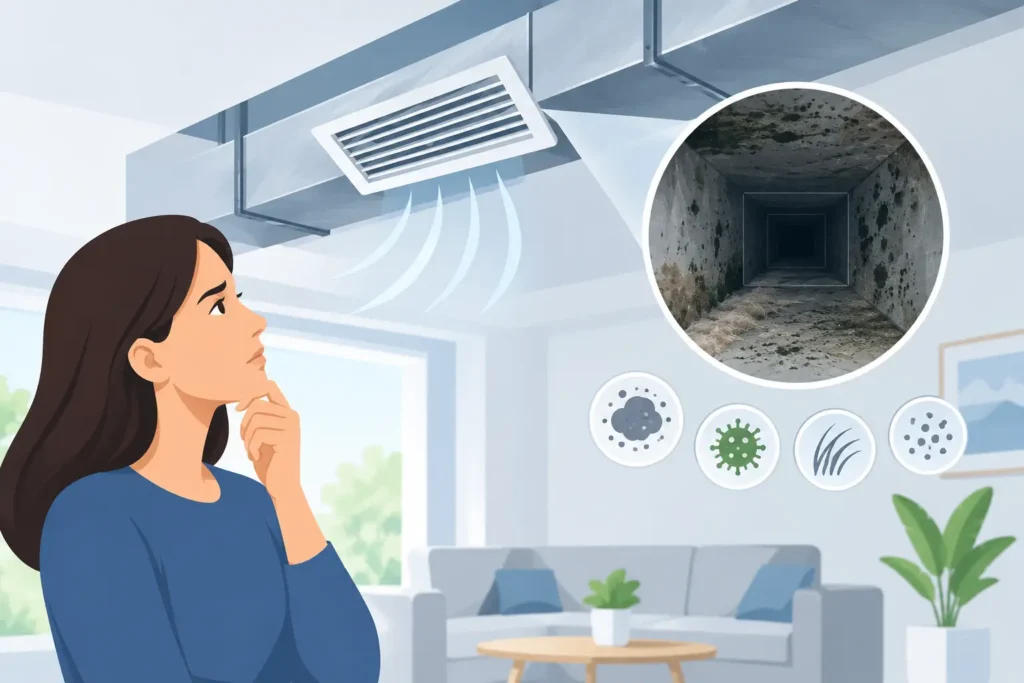
A thick layer of dust on furniture two days after cleaning is frustrating. A bedroom that feels stuffy while the rest of the house is comfortable is worse. If you are asking, are ducts contaminated, those everyday clues may be worth investigating – but they are not proof on their own.
Air ducts are out of sight, which makes them easy to forget until airflow drops, odors appear, or allergy symptoms seem harder to manage indoors. The right question is not whether every duct system needs routine cleaning on a fixed schedule. It is whether your system shows clear signs of buildup, moisture, pests, construction debris, or restricted airflow that call for professional attention.
What contaminated ducts actually means
Contamination is more than a little household dust inside a vent. Every forced-air system moves some dust, fibers, pet dander, and outdoor particles through its return and supply ducts. A modest amount is normal, particularly in an older home.
A duct system becomes a practical air-quality concern when debris is excessive, when moisture supports microbial growth, or when another issue is affecting the air moving through the building. That may include renovation dust, pet hair, pest material, accumulated lint, visible mold-like growth, or residue from a past water event.
The source matters. Cleaning ducts without addressing a leaking humidifier, a wet basement, a damaged filter rack, or a pest entry point only treats the symptom. A trustworthy inspection should focus on what is in the ducts, why it is there, and whether cleaning will solve a real problem.
Signs your ducts may be contaminated
No single sign confirms duct contamination. Several signs together create a stronger case, especially when they began after construction, water damage, a move, or a change in how the HVAC system performs.
Dust returns quickly after cleaning
Some dust is unavoidable. But if surfaces become visibly dusty soon after you clean, or if dust blows from supply registers when the system starts, the ductwork and return side deserve a closer look. A poorly fitting filter, the wrong filter size, or gaps around the filter cabinet can also allow unfiltered air to bypass the filter entirely.
Airflow is weak or uneven
One room that never heats or cools properly may have a duct design issue, a closed damper, or a blocked register. When weak airflow affects multiple areas, debris buildup may be part of the problem. It can also point to blower trouble, crushed flexible ductwork, or an undersized system.
That distinction is why duct cleaning should never be sold as a miracle cure for every comfort complaint. It can remove obstructions and loose debris, but it cannot repair damaged ducts or correct faulty equipment.
Odors return when the HVAC runs
A stale, musty, smoky, or pet-related smell that appears when heating or air conditioning starts can be a warning sign. The odor may be coming from ducts, but it can also originate in the evaporator coil, drain pan, furnace area, insulation, carpeting, or a crawlspace.
If a musty odor follows a water leak or flooding event, do not ignore it. Moisture is the condition that turns ordinary dust buildup into a larger indoor air concern.
You can see debris, pest evidence, or suspicious growth
Look through a register with a flashlight. Loose dust near the opening is not unusual. Heavy debris, insect remains, rodent droppings, nesting material, or visible dark or fuzzy growth are different. These conditions call for an inspection and, where pests or moisture are involved, correction of the underlying cause.
Avoid scraping or spraying household chemicals deep into the ductwork. Disturbing material without proper containment can spread particles into occupied spaces.
Recent construction left dust everywhere
Drywall dust, sawdust, insulation fibers, and renovation debris can find their way into return vents quickly. This is especially common when contractors run the HVAC system while sanding or cutting materials. A post-renovation duct inspection is a sensible step before relying on the system to circulate air through the home again.
Are ducts contaminated if someone has allergies?
Allergy or respiratory symptoms are a reason to look at the whole indoor environment, not to assume ducts are automatically the cause. Dust mites, pet dander, pollen tracked indoors, damp materials, carpets, bedding, and inadequate ventilation can all contribute.
Still, ducts can hold and redistribute particles when the system is dirty or poorly filtered. Families with pets, young children, frequent allergies, or asthma often notice the difference a clean HVAC system can make when cleaning is paired with regular filter changes and source control.
For a condo resident, the answer can be more complicated. Your suite may have its own fan coil and ducts, or it may be connected to a shared building system with maintenance handled by the property manager. Know which components belong to the suite before authorizing work. Cleaning a suite vent does not replace needed maintenance in a central building system.
When professional duct cleaning makes sense
Professional air duct cleaning is most useful when there is a clear reason for it. It is a practical service after major renovations, a pest issue, a moisture event, visible debris, or a long period without maintenance in a high-use system.
It can also help when an inspection confirms dust and debris are restricting returns or supply runs. In commercial spaces, this matters beyond comfort. Restaurants, offices, retail spaces, and multi-unit properties rely on predictable airflow for occupant comfort and day-to-day operations.
A proper service should include more than vacuuming a few vent openings. Technicians should access the main duct runs, use negative-pressure equipment to capture dislodged debris, clean supply and return components as appropriate, and explain what they found. If sanitation is recommended, ask why and what product or method will be used.
For homes with gas equipment, safety matters as much as cleanliness. A qualified technician should recognize when furnace or venting concerns require further evaluation rather than treating every issue as a duct-cleaning job.
Watch for duct-cleaning red flags
The GTA has seen its share of aggressive, low-price duct-cleaning calls that turn into surprise charges at the door. Be cautious when a company offers an unrealistically cheap whole-home price without asking about the number of vents, home size, system type, or access conditions.
Be equally cautious of companies that insist every home has dangerous mold without evidence, pressure you to decide immediately, or refuse to provide clear pricing before work begins. Duct cleaning is a legitimate maintenance service. It should not depend on fear, vague claims, or a hard sell.
Before booking, confirm what the service includes, whether return ducts and main trunks are part of the scope, how technicians protect the home, and what factors could change the quoted price. Transparent answers are a basic sign of a professional operation.
Reduce future buildup after cleaning
A cleaned system stays cleaner when the rest of the home supports it. Use the correct filter size and replace it based on its condition and your system’s needs. A busy household with pets may need more frequent changes than a lightly occupied home.
Keep return grilles clear of furniture and avoid running the HVAC system during dusty projects unless returns are properly protected. Address water leaks quickly, maintain humidity at reasonable levels, and have dryer vents cleaned when lint accumulation or long vent runs create a fire-risk concern.
For property managers, consistent maintenance records make a difference. Document water incidents, renovation work, filter schedules, tenant reports of odors, and service findings. Patterns are easier to spot when maintenance is proactive rather than reactive.
Get an answer based on evidence
The most useful response to concerns about contaminated ducts is an honest assessment, not a scripted sales pitch. Some systems need cleaning now. Others need a new filter, a moisture repair, a coil cleaning, pest control, or an HVAC service call instead.
If your Toronto-area home, condo, or facility has persistent dust, odors, poor airflow, or post-renovation debris, ask for a clear inspection and scope of work. Dust Chasers approaches duct and dryer vent maintenance with transparent pricing, trained technicians, and a focus on the results that matter: cleaner air movement, less buildup, and a safer building. The goal is not to sell a cleaning at any cost. It is to help you make a confident decision about the air moving through your space.