


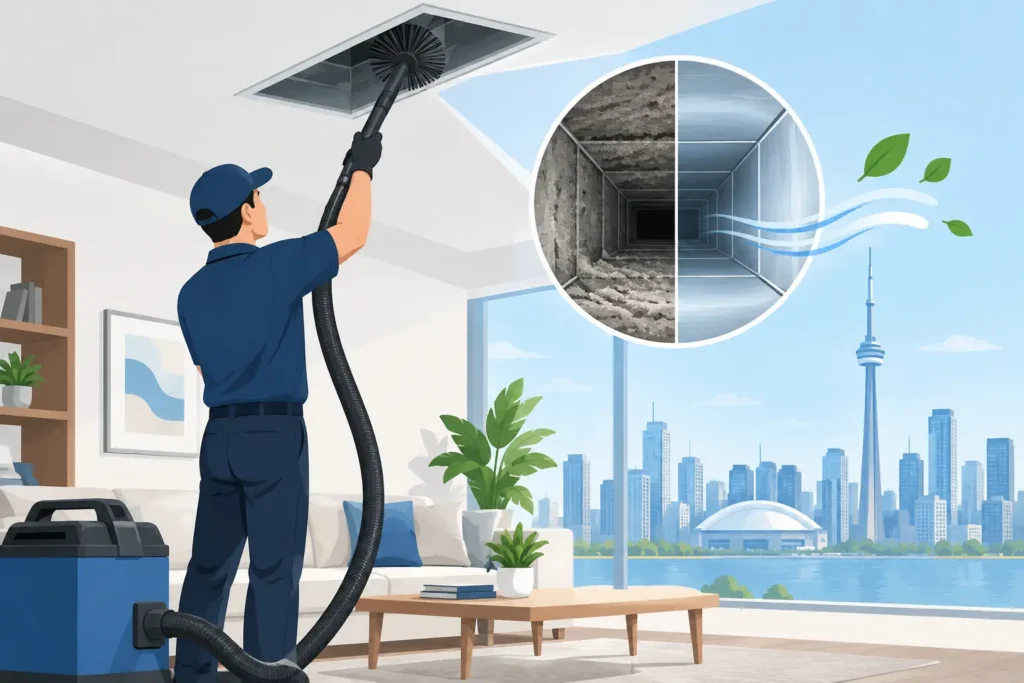
Most HVAC systems do not need cleaning every year. The right duct cleaning frequency depends on what is happening inside the property: who lives there, how the system is used, how much dust enters the home, and whether airflow has changed. A realistic schedule protects indoor air quality without paying for unnecessary service.
For many Greater Toronto Area homes, a professional duct cleaning every three to five years is a sensible baseline. But a calendar is only part of the picture. A busy household with pets, renovations, allergies, or a recent move may need attention sooner. A low-traffic condo with good filtration may be fine for longer.
Duct Cleaning Frequency Is Not One-Size-Fits-All
Air ducts collect the evidence of everyday life. Dust, pet hair, construction debris, lint, and airborne particles can settle in supply and return ducts over time. Your filter catches a portion of that material, but it cannot catch everything, especially when filters are overdue for replacement or do not fit properly.
The goal is not to chase a perfectly dust-free duct system. That is not realistic, and any company promising a miracle should raise questions. The goal is to remove meaningful buildup when it is affecting cleanliness, airflow, comfort, or the operation of the HVAC system.
For a typical single-family home, three to five years is often appropriate. For condos, the timing can vary widely. Some units have compact fan coil systems and shorter duct runs, while others deal with constant nearby construction, high-density living, or pet dander. Building management may also have maintenance requirements that affect scheduling.
Commercial properties need a more tailored plan. A quiet office with controlled access has different needs than a daycare, restaurant, retail store, clinic, warehouse, or multi-unit residential building. Occupancy, operating hours, ventilation design, and the type of work performed in the space all matter.
When to Clean Ducts Sooner Than Scheduled
Your HVAC system will often tell you when waiting is no longer the smart choice. Persistent dust on furniture shortly after cleaning is one clue, particularly when it is paired with dirty vents or visible buildup around registers.
Book an inspection sooner if you notice weak airflow in rooms that used to feel comfortable, hot or cold spots that are getting worse, or vents releasing a musty smell when heating or cooling starts. Those symptoms do not automatically mean the ducts are the only issue. They can also point to filter problems, blocked registers, equipment trouble, or duct leaks. A professional assessment should identify the actual cause instead of selling a generic package.
There are a few situations where cleaning is especially worth considering:
- You have completed renovations, drywall work, flooring replacement, or other dusty construction.
- You have moved into a previously owned home and do not know its maintenance history.
- Pets shed heavily, or household members are sensitive to dust and allergens.
- You see debris coming from vents or notice an unusual amount of buildup inside accessible registers.
- There has been water damage, a pest issue, or a mold concern that requires proper investigation.
- The home has been vacant for a long period and is being put back into regular use.
Renovations deserve special attention. Fine drywall dust and construction debris can travel farther than homeowners expect, especially if the HVAC system was running during the work. Covering vents helps, but it is not always enough. Cleaning the ducts after major work can prevent that material from circulating through the home long after the contractor has left.
Pets, Allergies, and High-Use Homes
A family of five, two dogs, and an active furnace or air conditioner will create a different maintenance cycle than a couple living in a small condo. More people and pets mean more fibers, hair, skin cells, and tracked-in particles. That does not mean annual duct cleaning is mandatory, but it can move a home closer to the three-year end of the recommended range.
For households managing allergies or respiratory sensitivity, duct cleaning can be one useful part of a broader indoor air plan. It works best alongside regular filter changes, vacuuming with effective filtration, controlled humidity, and fixing moisture issues promptly. Cleaning ducts alone cannot solve an allergy problem caused by pets, outdoor pollen, dampness, or poor filtration.
That distinction matters. Honest service starts with realistic expectations. If someone guarantees that duct cleaning will cure health conditions or eliminate every airborne particle, walk away.
Dryer Vent Cleaning Runs on a Different Schedule
Do not confuse air duct maintenance with dryer vent maintenance. Dryer vents are a safety issue as well as an airflow issue because lint is highly combustible. The longer the vent run, the more elbows it has, and the more frequently the dryer is used, the faster lint can build up.
Most households should have their dryer vent professionally cleaned about once a year. Larger families, shared laundry rooms, landlords, and commercial facilities may need more frequent service. A dryer that takes two or three cycles to dry a normal load, feels unusually hot, or leaves a burning smell in the laundry area needs attention quickly.
This is not a place to wait for a convenient reminder. Restricted dryer airflow wastes energy, adds wear to the appliance, and increases fire risk. Keeping the lint screen clean after every load is essential, but it does not replace cleaning the full vent path to the exterior.
A Practical Schedule for Homes, Condos, and Businesses
Rather than automatically booking the same service every year, set a maintenance rhythm that fits the property. Homeowners can start with a three-to-five-year duct cleaning interval and shorten it after major renovations, a pest event, visible contamination, or persistent airflow concerns. Dryer vents should usually be checked annually.
Condo residents should consider the unit’s HVAC setup, pet ownership, dust levels, and any requirements from the property manager. If the unit has been renovated or you are moving in after another occupant, cleaning can offer a clean starting point. Property managers should keep service records so maintenance decisions are based on the building’s actual history rather than guesswork.
For commercial operators, scheduled inspections are often more valuable than a fixed blanket interval. A technician can evaluate vent condition, airflow concerns, occupancy patterns, and high-risk areas. This supports better budgeting and helps prevent avoidable tenant complaints, equipment strain, and laundry-related hazards.
How to Avoid the Wrong Duct Cleaning Company
The lowest advertised price is rarely the final price. Scam-style duct cleaning offers often use vague promises, cold calls, or unrealistically cheap rates to get through the door, then pressure customers with unexpected add-ons. A legitimate provider should explain what is included, how the system will be cleaned, and what the final price covers before work begins.
Ask whether the technicians are trained for the equipment they may encounter, especially where gas appliances are involved. Confirm that the company will clean the relevant parts of the system rather than spending a few minutes at the vents. You should also expect clear answers about sanitation, access requirements, service time, and any conditions that could affect pricing.
Dust Chasers serves GTA homes, condos, and commercial properties with transparent service options designed around the actual system and the problem at hand. That matters because a detached home, condo fan coil unit, and commercial ventilation system should not be treated as identical jobs.
Keep the System Cleaner Between Appointments
Duct cleaning works best when routine maintenance supports it. Replace HVAC filters on schedule, using the filter type recommended for your equipment. Keep supply and return vents clear of furniture, rugs, and stored items. During renovations, protect vents and avoid running the system when heavy dust is being created whenever possible.
Also pay attention to changes instead of waiting for a set date. A sudden dust problem, weaker airflow, unusual odor, or longer dryer cycles gives you more useful information than a reminder on the calendar. The best time to arrange service is when the condition of the system calls for it – before a small maintenance issue becomes a comfort, efficiency, or safety problem.