


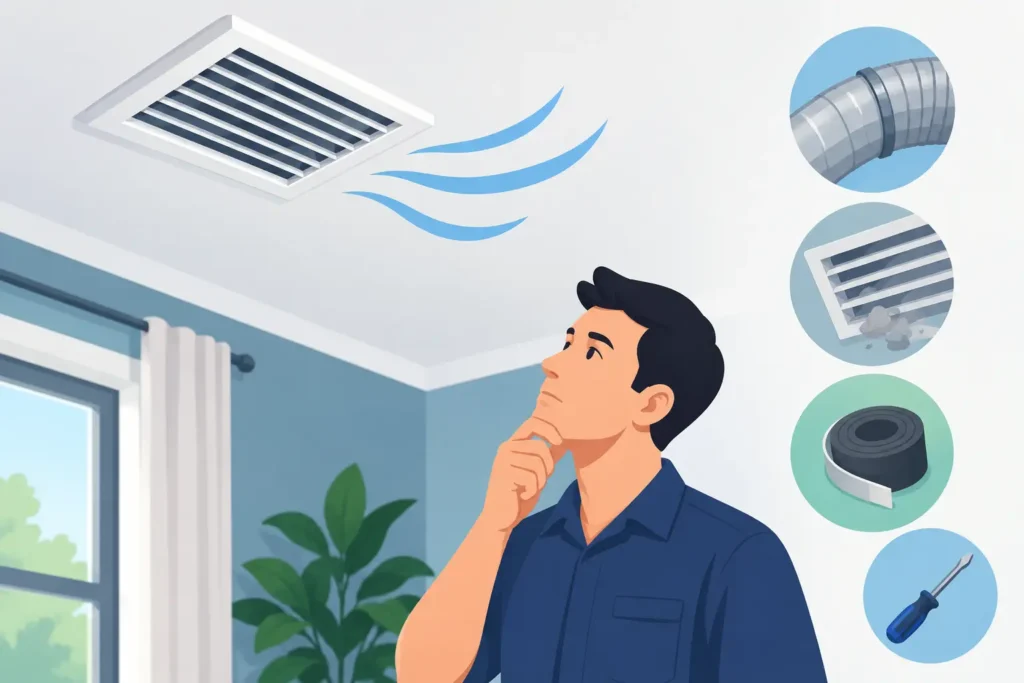
A whistle from a ceiling register can be sharp enough to interrupt sleep, TV time, or a quiet workday. So, why do vents whistle? In most homes, the sound comes from air being forced through an opening that is too narrow, partially blocked, loose, or poorly balanced. The noise may be irritating, but it is also useful information: your HVAC system is telling you that airflow needs attention.
A quick adjustment may solve the problem. Other times, whistling points to a dirty filter, a damaged duct connection, an improperly set damper, or a system that needs professional inspection. The right fix depends on whether the sound comes from an HVAC vent, a return grille, or a dryer vent.
Why Do HVAC Vents Whistle?
Your furnace or air conditioner moves a large volume of air through ducts under pressure. When that air has to squeeze through a small gap or rush past a sharp edge, it creates a high-pitched sound much like blowing across the top of a bottle. A vent does not need to be completely closed to whistle. Even a partly closed register can create enough restriction to make noise.
Whistling can happen only when heating or cooling is running, only at a certain fan speed, or during very cold or hot weather when the system runs longer. Those patterns matter. A sound that starts after a filter change, furniture move, renovation, or vent adjustment often has a straightforward cause.
A register is closed too far
Closing vents in unused rooms seems like an easy way to direct more heat or cooling where you need it. In a forced-air system, though, closing multiple supply registers can raise static pressure inside the ductwork. That pressure can cause a whistle at the remaining open vents, strain the blower, and leave rooms unevenly heated or cooled.
Start by opening the noisy register fully. Then check other supply registers around the home. You do not need every vent pointed directly into the center of a room, but avoid shutting several of them tightly. If comfort is uneven, the better answer may be balancing, insulation improvements, thermostat adjustments, or an HVAC assessment rather than closing off airflow.
The grille or vent cover is dirty
Dust, pet hair, and lint collect on register fins over time. That buildup makes the opening smaller and changes the way air moves through it. A dirty return grille is especially likely to whistle because it handles a high volume of air flowing back toward the furnace or air handler.
Turn the system off, remove the cover if it can be done safely, and vacuum it with a brush attachment. Wash a metal grille with mild soap and water, then let it dry completely before reinstalling it. Do not push debris into the duct opening. If the cover is bent, warped, or coated with years of buildup, replacing it can be a simple, low-cost improvement.
The HVAC filter is overdue for replacement
A clogged filter is one of the most common reasons for a new whistling sound. It restricts return airflow, making the blower work harder to pull air through the system. The sound may come from the return vent, the filter slot, or the blower compartment.
Check the filter size and airflow direction before replacing it. A filter that is installed backward, the wrong size, or too restrictive for the equipment can also contribute to noise. High-efficiency filters can be a good choice for some homes, especially where allergies are a concern, but the filter rating has to suit the system. More filtration is not automatically better if it starves the equipment for airflow.
For many households, checking the filter monthly and replacing it every one to three months is sensible. Homes with pets, active renovations, or heavy dust may need more frequent changes.
A damper is partly closed or out of position
Many duct systems have dampers that control airflow to different sections of the home. They may be located near the furnace, inside duct runs, or behind access panels. If a damper is partly closed, loose, or incorrectly positioned after seasonal adjustments, it can create a whistle that seems to come from a nearby vent.
Do not force a damper handle if it is stuck, and do not adjust dampers you cannot identify confidently. Commercial and condo systems can be more complicated, with shared mechanical infrastructure and controls that should be handled by qualified personnel. An airflow technician can identify the damper position and determine whether the system needs balancing instead of guesswork.
Ductwork has a leak, gap, or loose connection
A small gap in ductwork can produce a surprisingly loud whistle. Flexible ducts can also kink, sag, or become compressed, narrowing the path for airflow. In older homes, aging tape, loose joints, or poorly sealed transitions may allow air to escape at high speed.
Look for obvious signs around accessible ducts: rattling metal, disconnected sections, visible gaps, or air blowing from a joint instead of a register. Avoid crawling into tight attic or crawlspace areas, and do not attempt to seal ducts near combustion equipment without proper knowledge. Duct repairs need materials designed for HVAC use, not ordinary household tape.
What If the Whistle Comes From a Dryer Vent?
A dryer vent whistle is a different issue and deserves prompt attention. The sound may come from the exterior flap, a crushed transition hose, a blocked exhaust path, or strong wind pushing through the outside vent hood. Unlike an HVAC supply vent, a dryer exhaust system must safely remove hot, moist air and lint from the home.
If the dryer takes longer than usual to dry clothes, feels unusually hot, leaves a burning smell, or has visible lint around the connection, stop using it until the vent is checked. Those signs can indicate restricted airflow and an elevated fire risk. Cleaning the lint screen after every load helps, but it does not clean lint that has accumulated in the vent line or exterior hood.
An exterior flap that whistles in windy conditions may need cleaning, adjustment, or replacement. If it whistles only when the dryer runs, the vent line may be restricted or improperly routed. Long runs, excessive bends, and flexible plastic or foil-style connectors are common trouble spots. A proper dryer vent inspection can confirm that exhaust air is moving freely outside.
Simple Checks You Can Make First
Before booking service, make a few safe observations. Notice which vent whistles, when it happens, and whether the noise changes when you open the register fully. Check whether the filter is dirty or incorrectly installed. Vacuum accessible grilles, move furniture away from return vents, and make sure rugs, curtains, storage boxes, or beds are not blocking airflow.
Also listen carefully to the type of sound. A whistle is usually related to air restriction or a narrow opening. A banging sound may point to expanding ductwork. A rattling sound may be a loose grille or duct section. A grinding, screeching, or loud humming noise from the furnace itself is more urgent and can indicate a blower or motor issue.
Do not cover vents with magnetic sheets, cardboard, or furniture in an effort to quiet the noise. That may mask the sound while making the airflow problem worse. Likewise, avoid stuffing material into a grille or taping over a dryer vent flap.
When Whistling Means It Is Time for a Pro
Call for professional help if the whistle persists after opening registers and changing a dirty filter, if several vents are noisy, or if certain rooms are consistently too hot or too cold. These symptoms can point to improper duct sizing, air leaks, pressure imbalance, or equipment settings that need a trained eye.
For property managers and condo operators, recurring vent noise can also become a tenant comfort issue. Document the unit, time of day, system mode, and affected areas. That gives the technician a clearer starting point and helps distinguish a unit-specific issue from a building-wide mechanical concern.
If you suspect a dryer vent issue, act sooner rather than later. Reduced drying performance and overheating are not minor inconveniences. They are signs that airflow may be compromised. Dust Chasers provides professional duct and dryer vent cleaning across the Greater Toronto Area with a focus on clear airflow, cleaner indoor air, and practical safety outcomes.
A quiet vent is not just nicer to live with. It usually means air is moving where it should, without your system fighting against a restriction. Start with the simple checks, and if the sound keeps cutting through the room, have the airflow problem diagnosed instead of learning to live with it.