


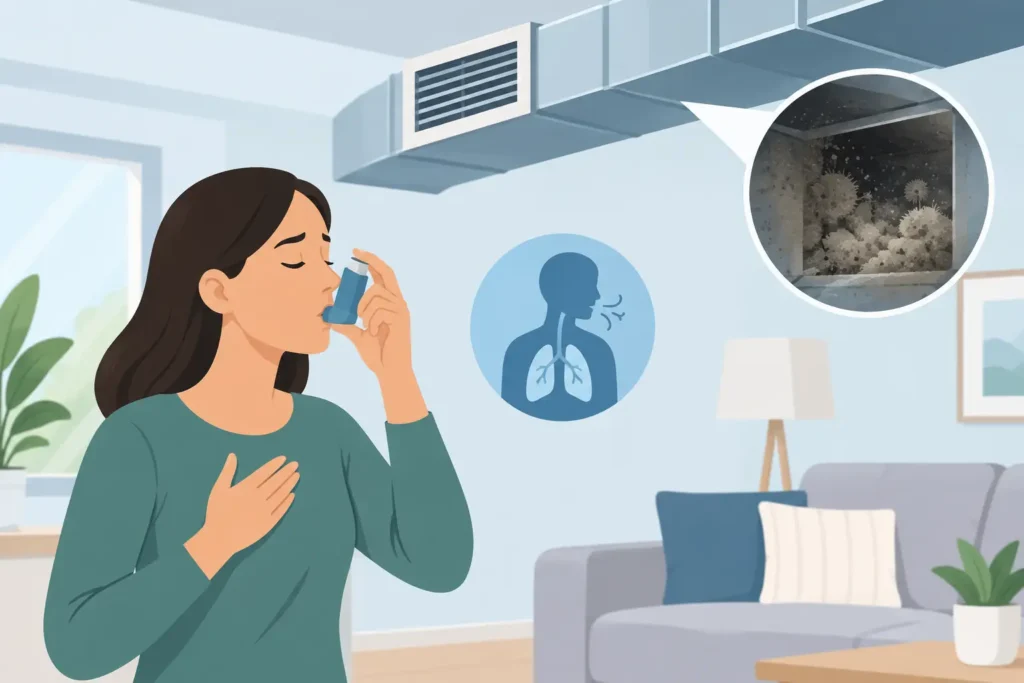
A child starts coughing more at night. You notice a dusty smell when the heat kicks on. One room feels stuffy while another barely gets warm. For families managing respiratory symptoms, these are not small inconveniences. So, can ducts worsen asthma? They can contribute to an environment that triggers symptoms when the HVAC system contains or circulates irritants such as dust, pet dander, pollen, mold particles, or other contaminants.
That does not mean ductwork is always the cause of asthma flare-ups, or that cleaning ducts cures asthma. Asthma is a medical condition with many triggers, including viruses, outdoor pollution, cold air, smoke, pets, and household allergens. But when a forced-air system is dirty, damp, neglected, or poorly maintained, it can make a sensitive indoor environment harder to manage.
Can Ducts Worsen Asthma Symptoms?
Ducts do not create asthma, but they can move airborne particles through a home or building. Every time the furnace or air conditioner runs, air travels through return vents, filters, equipment, and supply ducts before it reaches living spaces. If that pathway contains a heavy buildup of dust or debris, some particles may become airborne again.
The practical question is not whether a duct system is perfectly spotless. No home is. The question is whether there is enough buildup, moisture, or airflow trouble to add avoidable irritants to the air a person with asthma breathes every day.
For people with asthma, even ordinary particles can matter when exposure is frequent. Dust can carry dust mites and their allergens. Pet dander can settle in returns and registers. Pollen can enter through open doors, windows, and clothing, then collect in the system. In damp conditions, mold growth around HVAC components or inside insulated duct materials is a more serious concern and should be assessed properly.
What Makes a Duct System More Likely to Be a Problem?
A dirty vent cover alone is not proof that the entire system is affecting health. However, certain warning signs deserve attention, especially if symptoms seem worse indoors or when heating and cooling equipment is running.
Visible dust blowing from supply vents is one sign. Another is a return grille that becomes heavily coated shortly after cleaning. Musty or stale odors, uneven airflow, recurring dust on furniture, and unexplained debris near registers can also point to a system that needs inspection.
Water changes the situation. Condensation, roof leaks, basement humidity, clogged drain lines, or poorly insulated ductwork can create moisture around HVAC components. Moisture supports mold growth, and mold spores can be an asthma trigger for some people. The source of the moisture must be fixed first. Cleaning without correcting the leak or humidity issue simply sets up the same problem again.
Filter neglect is also common. A clogged filter can restrict airflow and allow more dust to settle around the equipment. An incorrectly sized filter can let air bypass its edges, reducing filtration. A high-efficiency filter may help capture smaller particles, but it must be compatible with the system. A filter that is too restrictive can strain airflow in older equipment.
The Difference Between Dust, Mold, and Poor Airflow
These issues often get grouped together, but they are not the same problem and should not be treated the same way.
Dust buildup is usually a maintenance issue. It may include ordinary household dust, hair, fibers, dander, and construction debris. Professional source-removal cleaning can be reasonable when buildup is significant, after renovations, after a move, or when debris is visible inside accessible parts of the system.
Mold is a moisture issue first. If there is suspected microbial growth, a qualified inspection should identify where moisture is coming from and whether duct materials need cleaning, replacement, or remediation. Spraying fragrance or disinfectant into a damp system is not a solution. Neither is treating every dark mark as mold without evidence.
Poor airflow is a comfort and equipment issue that can also affect indoor air. Restricted returns, blocked vents, a clogged filter, duct leaks, or an improperly balanced system can leave rooms stuffy and increase the time pollutants remain indoors. Poor airflow can also cause the HVAC system to run longer than necessary, increasing operating costs.
When Duct Cleaning May Help a Household With Asthma
Duct cleaning is most useful when there is a clear reason to remove debris from the system. It is not a replacement for medication, an asthma action plan, or medical care. Still, reducing a meaningful source of indoor dust and allergens can be part of a broader strategy for a cleaner home.
Consider a professional assessment if your household has had recent construction or drywall work, a pest issue, water damage, visible debris inside ducts, or a long history of skipped HVAC maintenance. It can also make sense after moving into a home when you do not know how the previous occupants maintained the system, particularly if they had pets or smoked indoors.
For condo residents, the responsibility may depend on the building design. Some units have individual fan coil systems, while others connect to shared building equipment. Property managers should understand where the unit’s responsibility ends and the building’s begins before authorizing work. Commercial facilities face similar questions, but the stakes can be higher when tenant comfort, maintenance records, and operational continuity are involved.
A legitimate service provider should explain what they found, what cleaning can reasonably address, and what falls outside the scope of duct cleaning. If moisture, insulation damage, mechanical failure, or suspected mold is present, those issues should be identified clearly rather than hidden behind a generic cleaning package.
What to Do Before Booking Duct Cleaning
Start with the basics. Replace the HVAC filter on schedule and make sure it fits correctly. Keep supply and return vents open and unblocked by furniture, rugs, or storage. Vacuum registers and surrounding areas with a vacuum that has effective filtration. If humidity is consistently high, address it with ventilation, dehumidification, or repairs rather than masking odors.
Next, watch for patterns. Are symptoms more noticeable in one room? Do they start when the furnace first turns on in the fall? Is there a musty smell near the air handler? These observations help distinguish a possible HVAC concern from other triggers, such as a damp bathroom, carpeting, bedding, pets, or outdoor air entering through an open window.
If asthma symptoms are severe, new, or worsening, contact a healthcare professional. Trouble breathing, chest tightness that does not improve, bluish lips, confusion, or difficulty speaking in full sentences requires urgent medical attention. Indoor air improvements support respiratory comfort, but they should never delay appropriate care.
Avoid the Cheap Duct Cleaning Trap
Households in the Greater Toronto Area regularly encounter vague, low-price duct cleaning offers that sound too good to be true. Often, they are. A suspicious offer may start with an unrealistically low price, then turn into aggressive upselling after workers arrive. Others use cold-call tactics, refuse to explain their process, or cannot provide clear business information.
Professional duct cleaning should involve more than waving a vacuum hose near a vent. The provider should inspect accessible system components, use appropriate negative-air or source-removal equipment, protect the home, and explain pricing before work begins. Ask what is included, whether the furnace or air handler is addressed, and whether there are extra charges for additional vents, sanitizing, or access issues.
For homes with gas-fired equipment, safety matters just as much as cleanliness. If work involves equipment connections or gas-related concerns, homeowners should use properly qualified technicians. Dust Chasers brings certified TSSA G2 Gas Technicians and transparent service practices to GTA homes and properties, helping customers avoid the uncertainty of bargain-basement duct cleaning pitches.
Build a Lower-Trigger Indoor Air Plan
The best approach for asthma is layered. Keep up with medical care, use prescribed medication as directed, reduce smoke and fragrance exposure, manage humidity, clean regularly, and maintain heating and cooling equipment. Duct cleaning can fit into that plan when there is evidence of debris or contamination, but it works best alongside filter changes, ventilation improvements, and moisture control.
If your home feels dusty, stale, or unevenly heated, do not assume you have to live with it. Start by identifying the source, choose qualified help when the system needs attention, and focus on practical changes that make the air at home easier to breathe.