


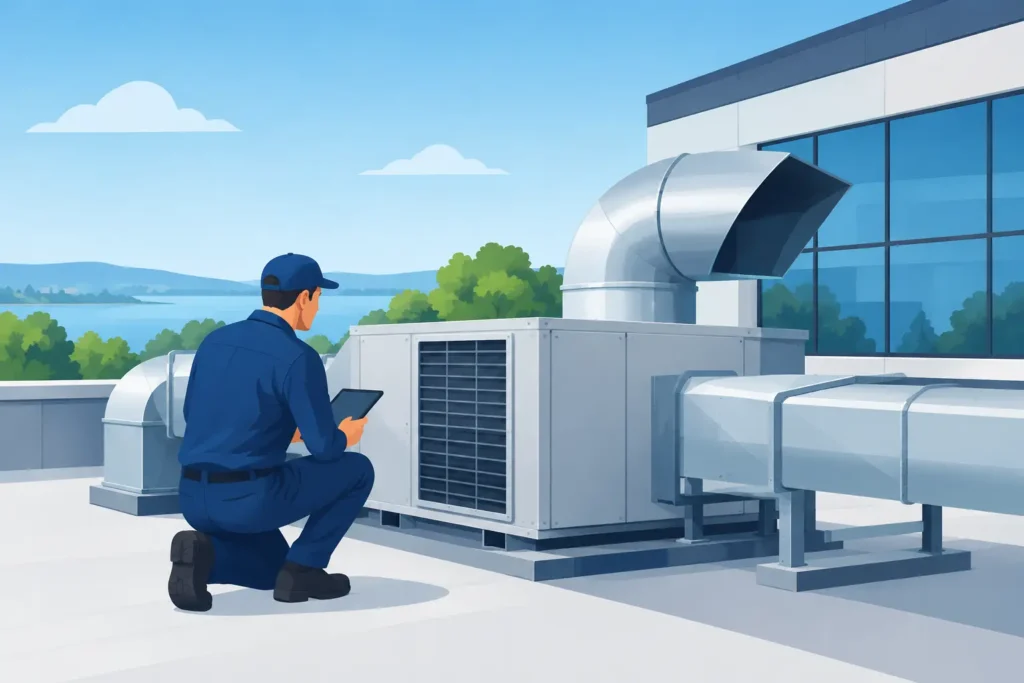
A commercial ventilation problem rarely starts with a dramatic failure. It shows up as dusty desks shortly after cleaning, stale meeting rooms, uneven airflow, musty odors, or a dryer that takes longer to finish a load. A professional Georgina commercial ventilation service addresses the buildup behind those symptoms before it affects staff comfort, tenant satisfaction, equipment performance, or safety.
For offices, retail spaces, multi-unit properties, clinics, gyms, and other working facilities, ventilation maintenance is not a cosmetic task. It is part of running a cleaner, safer building. The right service focuses on the ducts and vents that move air every day, identifies restrictions that are limiting performance, and gives property decision-makers clear information instead of vague promises.
What Commercial Ventilation Cleaning Actually Addresses
Commercial air ducts collect more than ordinary household dust. Depending on the building, they can carry construction debris, paper fibers, lint, pet dander, tracked-in dirt, pollen, and particles from busy common areas. When that material settles inside supply and return ducts, it can be redistributed through the space each time the system operates.
A proper commercial service is designed to remove accumulated debris from accessible ductwork and vents using professional negative-air equipment, agitation tools, and careful containment practices. The objective is straightforward: reduce the material sitting in the air distribution system and help air move more freely through the building.
That said, duct cleaning is not a cure-all. It will not repair a failing rooftop unit, solve an undersized HVAC design, or eliminate an active moisture problem. If a building has persistent odors, visible mold growth, water damage, or temperature-control failures, those conditions need to be investigated at their source. Cleaning is most valuable when it is part of a sensible maintenance plan, not a substitute for repairs.
When a Georgina Commercial Ventilation Service Makes Sense
There is no single schedule that fits every facility. A quiet professional office with a stable occupancy pattern does not accumulate debris at the same rate as a daycare, fitness facility, busy retail location, or property undergoing renovations. The practical question is whether the system and the people using the building are showing signs that maintenance is due.
Consider scheduling an assessment when dust returns unusually fast after cleaning, vents look visibly dirty, airflow feels weak in certain rooms, or employees regularly mention stale air. A service is also worth considering after a renovation, after a long vacancy, when moving into a previously occupied commercial space, or when a facility has experienced water intrusion that may have affected ductwork.
Property managers should also look at the building’s operational history. If no one can confirm when the ducts were last cleaned, that uncertainty is useful information. Maintenance records make it easier to plan budgets, respond to tenant concerns, and avoid treating every issue as an emergency.
Dryer Vents Deserve Their Own Attention
Commercial dryer vent cleaning is a separate safety priority. Laundry facilities in apartment buildings, salons, spas, gyms, and care environments can produce significant lint buildup. Unlike ordinary dust, lint is highly combustible. When it collects in the vent line, it restricts exhaust, forces dryers to work harder, increases drying times, and raises fire risk.
Warning signs include hot laundry rooms, a burning smell, frequent dryer shutdowns, unusually long cycles, and visible lint around exterior vent exits. These are not problems to ignore or cover up with extra cleaning around the machine. The vent path itself needs professional attention.
For gas-powered equipment, the work should be handled by qualified professionals who understand the equipment and safety requirements involved. Dust Chasers uses certified TSSA G2 Gas Technicians, giving commercial customers added confidence when dryer vent service involves gas appliances.
What a Professional Service Visit Should Look Like
A credible provider does not arrive with a vague low-price offer and disappear after a quick pass over a few registers. Commercial facilities need a clear scope of work, appropriate equipment, and communication that respects the realities of an occupied building.
Before work begins, the service team should discuss the facility layout, areas of concern, access requirements, and scheduling constraints. An early-morning, evening, or weekend appointment may be the better choice for a customer-facing business, while a condo property may need coordination around utility rooms and resident notices.
During cleaning, technicians should access relevant supply and return vents, use equipment designed to capture loosened debris, and protect nearby work areas. If sanitation is appropriate after cleaning, it should be explained clearly rather than presented as a mysterious add-on. Complimentary sanitation can be a valuable finishing step, but it should never replace physical removal of dust and debris.
Afterward, the customer should understand what was serviced and what concerns, if any, were observed. Clear documentation is especially useful for building operators who must report to owners, boards, tenants, or maintenance teams.
Choosing a Provider Without Falling for a Discount Scam
Commercial decision-makers have heard the ads: an unbelievably low price, urgent pressure to book immediately, and no meaningful explanation of what is included. This is where caution pays off. A cheap quote can become expensive when the crew is unqualified, the service is incomplete, or surprise charges appear after they are already on-site.
Ask for a transparent description of the work, including what parts of the ventilation system are included and whether dryer vents are priced separately. Confirm that the company is properly equipped for commercial work and can accommodate your building’s access and scheduling needs. If gas dryers are involved, ask directly about technician qualifications.
Price matters, but it should not be the only filter. A facility manager is buying more than a quick cleaning. They are choosing who will enter occupied spaces, work around tenants or staff, and handle systems connected to air quality and fire prevention. Clear answers, fair pricing, and professional conduct are worth more than a suspiciously cheap headline offer.
The Operational Benefits Go Beyond Cleaner Vents
When ventilation pathways are cleaner and dryer vents are clear, the immediate benefit is often better airflow. But the business value can extend further. Less dust circulating through work areas can reduce cleaning frustration. Better air movement can make rooms feel less stale. Clear dryer vents may help laundry operations run more efficiently and reduce unnecessary strain on equipment.
For landlords and property managers, proactive service can also reduce the number of avoidable complaints that become urgent calls. Tenants may not describe a ventilation issue in technical terms. They simply say a room feels stuffy, their clothes are taking too long to dry, or dust seems to be everywhere. Addressing the underlying system condition is more productive than repeatedly treating only the visible symptom.
The results still depend on the building. A large facility with filtration problems, heavy construction dust, or mechanical faults may need additional HVAC work beyond duct cleaning. A trustworthy service company should be willing to say that rather than oversell one service as the answer to every indoor-air concern.
Plan Service Around Your Building, Not a Generic Checklist
The best maintenance plan reflects how the space is used. A retail store may need to protect merchandise and schedule after hours. A property manager may need a staged approach that keeps common areas accessible. A gym may prioritize high-traffic ventilation and laundry equipment, while an office may focus on dust, meeting-room comfort, and minimal disruption to staff.
Start with the conditions people are noticing, the age and history of the system, and the areas where airflow seems weakest. From there, a qualified team can recommend a realistic scope rather than pushing a one-size-fits-all package.
Cleaner ducts and clear dryer vents are practical investments in the spaces where people work, live, and do business. When a ventilation issue is starting to affect comfort, cleanliness, or safety, the useful next step is not guessing – it is getting a clear professional assessment and a service plan that fits the facility.