


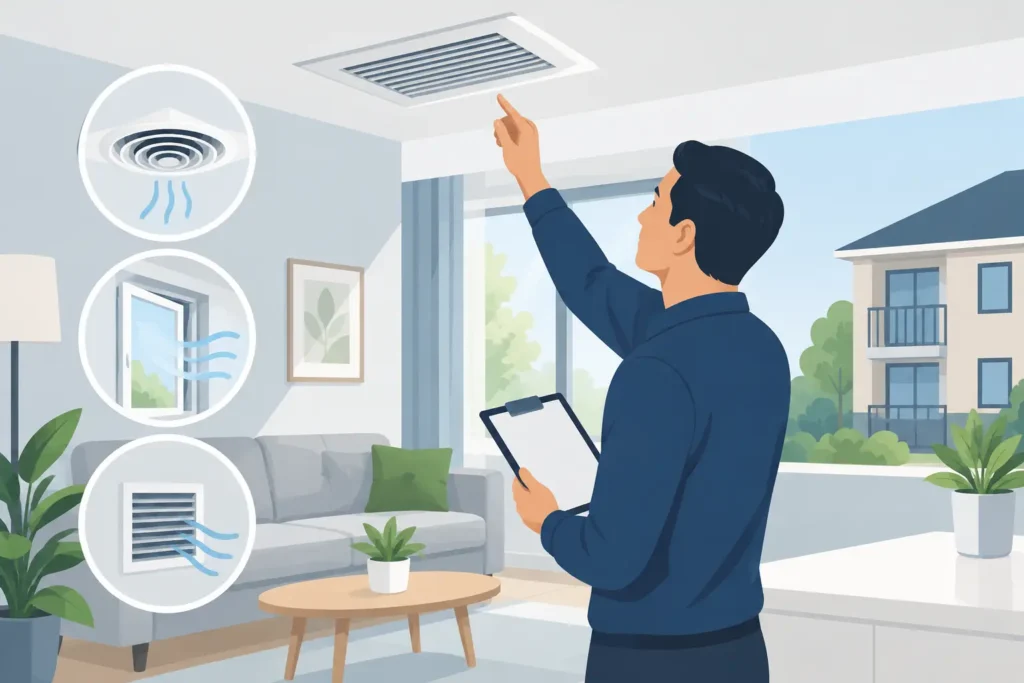
A tenant reports that the bathroom mirror stays fogged long after a shower. Another mentions a musty bedroom, while the laundry takes two drying cycles to finish. These are not small comfort complaints. They are early warnings that essential landlord ventilation checks may be overdue – and waiting can turn a manageable service call into moisture damage, unhappy tenants, mold concerns, or a dryer-fire risk.
For landlords and property managers, ventilation is part of protecting the building, not just making a unit feel fresher. A working system moves humid, stale, and contaminated air out while bringing balanced airflow back to the space. The goal is straightforward: identify restrictions before they affect tenant health, property condition, or operating costs.
Why Essential Landlord Ventilation Checks Matter
Rental properties work harder than owner-occupied homes. Tenants cook, shower, do laundry, and live in the space every day, often with windows closed during cold Greater Toronto Area weather. Humidity and airborne particles have to go somewhere. If exhaust fans, ducts, or exterior vents are blocked or underperforming, that moisture and contamination stay inside.
The results can show up slowly. Paint may peel around a bathroom ceiling. Condensation may collect on windows. Dust may return quickly after cleaning. A bedroom at the end of a duct run may feel stuffy while another room feels too warm. None of these signs automatically means the duct system needs cleaning, but each one deserves a real inspection instead of guesswork.
Ventilation also has a direct safety side. Dryer lint is highly combustible, and a restricted dryer vent makes the appliance run hotter and longer. A tenant may simply think the dryer is old or inefficient. A landlord should treat longer drying times as a reason to check the vent path promptly.
Check Exhaust Fans Where Moisture Starts
Bathrooms and kitchens create the most routine indoor moisture. Start with the fan itself. Turn it on and listen for unusual rattling, weak operation, or a motor that takes too long to start. Then check whether it is actually pulling air. A simple tissue held near the grille can offer a quick indication, though it does not replace airflow testing.
A fan can sound like it is running while moving very little air. Dust-coated grilles, clogged fan housings, crushed flexible ductwork, disconnected ducts, and blocked exterior caps can all reduce performance. In multi-unit buildings, the problem may also involve a shared shaft or a system design that requires a qualified building assessment.
Kitchen ventilation needs the same attention. A range hood that only recirculates air through a filter is different from one that exhausts outside. Both have a role, but they should not be treated as equal. Where an exterior-exhausted hood is installed, check the filters, airflow, duct condition, and outdoor termination. Grease buildup can restrict airflow and create an unnecessary cleaning burden throughout the unit.
Inspect Dryer Vents Before They Become a Fire Risk
Dryer vents deserve their own maintenance schedule. They are one of the clearest examples of a small airflow issue becoming a serious property risk.
During a turnover inspection or annual maintenance visit, look for four warning signs:
- Clothes take longer than one normal cycle to dry.
- The laundry room feels unusually hot or humid while the dryer runs.
- Lint is visible around the dryer connection or exterior vent hood.
- The exterior flap does not open properly when the dryer is operating.
The vent route matters as much as the visible opening. Long runs, excessive bends, sagging sections, damaged joints, and lint buildup all reduce airflow. Plastic or foil-style transition ducts are also more vulnerable to crushing and lint collection than properly installed rigid metal ducting.
Do not let a tenant solve a dryer problem by repeatedly running extra cycles. That increases energy use and heat exposure while the restriction remains in place. A professional dryer vent cleaning removes accumulated lint from the full path, not just the lint screen or the section behind the appliance.
Look Beyond the Vent Cover
Exterior vent covers are easy to overlook because they are out of sight. They are also where airflow often fails. Check for bird nests, leaves, snow buildup, damaged louvers, stuck dampers, and screens that trap lint. A vent cover should protect the opening from pests and weather without choking the system.
Inside, pay attention to supply and return vents as well. Furniture, tenant belongings, rugs, and heavy dust can block airflow at the grille. This is usually a simple fix, but it can make a major difference in rooms with weak circulation.
If one room consistently feels stale, do not assume the entire HVAC system is the problem. It could be a closed damper, a disconnected branch duct, poor return-air access, or an issue with the building envelope. The right fix depends on the cause. Cleaning ducts can improve airflow when dust and debris are the restriction, but it will not repair damaged ductwork, correct poor system design, or replace a failing fan motor.
Watch for Tenant Reports That Point to Ventilation Problems
Tenants often describe ventilation issues without using the word ventilation. They may report odors that linger after cooking, recurring bathroom mildew, dusty air, headaches from stale rooms, or a dryer that seems weak. Treat those reports as useful maintenance information, not just complaints.
A quick written log helps property managers spot patterns across units. Note the room, date, weather conditions, appliance involved, and whether the issue is constant or intermittent. For example, condensation only during freezing weather may point toward humidity management and insulation concerns, while a bathroom that stays damp year-round is more likely to need fan or duct inspection.
If a property has fuel-burning equipment, ventilation concerns should also trigger attention to carbon monoxide protection and proper appliance servicing. Exhaust ventilation, combustion safety, and HVAC performance can overlap, but they require the right qualified professional for the work involved.
Build Ventilation Checks Into Turnovers and Annual Maintenance
The most practical approach is to inspect ventilation at predictable points: before a new tenant moves in, during annual maintenance, and whenever a tenant reports a warning sign. Turnovers are especially valuable because access is easier and small issues can be fixed before they become a tenant experience problem.
Document what was checked, what was cleaned, and what needs follow-up. Photos of exterior vents, dryer connections, and damaged grilles can prevent confusion later. For condo landlords, keep in mind that certain ducts, shafts, and mechanical components may fall under condominium corporation responsibility. Confirm the building rules before authorizing work on shared systems.
A professional service provider should explain what they found in plain language. Be cautious of suspiciously cheap cold-call offers that promise whole-home duct cleaning without inspecting the property or clearly stating the scope of work. Real ventilation maintenance should be transparent: what is being cleaned, what equipment is used, what the technician observed, and whether there is a separate repair issue that cleaning alone cannot solve.
When Professional Vent Cleaning Makes Sense
Professional inspection and cleaning are a smart next step when there is visible buildup, restricted airflow, persistent dust, odor concerns, a neglected dryer vent, or evidence that the system has not been maintained between tenancies. It is particularly worthwhile after renovations, which can send drywall dust and construction debris into vents and return-air pathways.
For GTA landlords, Dust Chasers provides residential, condo, and commercial ventilation services with clear scope and scheduling that works around tenant access. Dryer vent cleaning is especially valuable when performance has dropped or the vent route is long and difficult to inspect. When gas-related equipment is involved, use appropriately qualified technicians, including TSSA G2 Gas Technicians where required.
A well-maintained rental should not leave tenants guessing whether the air is moving, the bathroom is drying, or the dryer is safe to run. Make ventilation part of your regular property care, act on the first warning signs, and keep every unit working the way it should.