


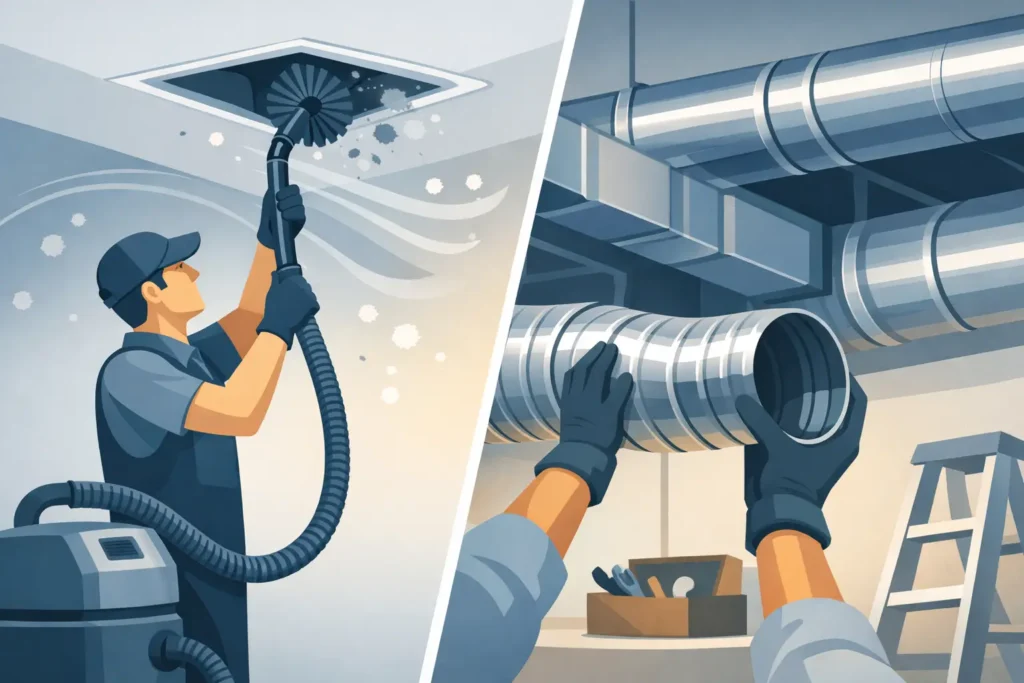
A dusty vent cover does not automatically mean your ductwork needs to be torn out. But if rooms stay stuffy, airflow has dropped, or you can see damaged duct sections in the basement or mechanical room, it is fair to ask a bigger question: air duct cleaning vs replacement – which one actually solves the problem?
For most GTA homes, condos, and commercial spaces, professional cleaning is the practical first move when the duct system is structurally sound. Replacement is the right call when the ducts themselves are damaged, poorly designed, contaminated beyond reliable cleaning, or no longer capable of moving air effectively. The difference matters because paying for cleaning when ducts have failed wastes money – and replacing a system that only needs a proper cleaning is just as unnecessary.
Air Duct Cleaning vs Replacement: Start With Duct Condition
Duct cleaning removes accumulated dust, debris, pet hair, construction residue, and other material from inside your supply and return ducts. A qualified technician uses professional equipment to agitate and collect debris without simply pushing it farther through the system. Cleaning can also help restore airflow when buildup is a contributing problem.
Duct replacement means removing existing sections and installing new ductwork. It is a larger repair or renovation project, often involving access to ceilings, walls, bulkheads, or mechanical spaces. Its purpose is not just to make ducts look cleaner. It corrects physical problems that cleaning cannot repair.
The key question is simple: are your ducts dirty, or are they failing? A visual inspection and airflow assessment should answer that before anyone recommends major work.
When cleaning is usually the better choice
Cleaning makes sense when the ductwork is intact and the concern is buildup. This is common after a renovation, a move into an older home, a period of heavy pet shedding, or years of missed HVAC maintenance. It can also be worthwhile when registers visibly collect dust quickly or when debris is released after the furnace or air conditioner starts.
A professional cleaning can improve the cleanliness of the air distribution system, but it is not a miracle cure for every air-quality complaint. If a home has high humidity, unsealed gaps, dirty filters, carpet dust, or an active moisture issue, those conditions need attention too. Clean ducts are one part of a healthier indoor environment.
For condo residents, cleaning may be especially useful when accessible in-suite ductwork has collected dust, although the building’s HVAC design and management rules can affect what work is possible. Property managers should confirm responsibility for common systems before scheduling service.
When replacement is the smarter investment
Replacement is worth considering when ducts are crushed, torn, disconnected, rusted through, sagging, or heavily patched. Flexible ducts can kink or collapse. Older metal ducts can develop leaks at joints. Poorly supported runs can restrict airflow long before the furnace itself shows obvious trouble.
Replacement may also be necessary when a system was installed with major design problems. If certain rooms are always too hot or too cold, the return-air path is inadequate, or the duct sizing does not match the heating and cooling equipment, cleaning will not correct the underlying issue. You may need an HVAC contractor to evaluate the design, balancing, and equipment capacity.
Moisture changes the conversation as well. Persistent condensation, water damage, or confirmed mold growth calls for source control first. Replacing contaminated porous duct material may be appropriate in some cases, but installing new ducts without fixing the leak, drainage issue, humidity problem, or ventilation failure only creates the same problem again.
Signs Your Ducts Need Cleaning, Not Replacement
Many warning signs point to debris rather than damaged ductwork. These include visible dust around supply vents, pet hair in return grilles, a dusty odor when the system starts after sitting idle, or debris left behind by drywall, flooring, or remodeling work.
You may also notice that filters load up quickly. That does not prove the ducts are the cause, but it is a reason to inspect the system. A clogged filter, a dirty blower compartment, or return ducts pulling air from a dusty basement can all contribute.
Cleaning is particularly useful before moving into a previously occupied home or after construction. Contractors create fine dust that travels farther than most people expect. If it has settled inside the return system, normal housekeeping will not reach it.
Be wary of anyone who claims every home needs duct replacement because dust is present. Dust in an operating air system is normal. The real issue is whether buildup is substantial enough to affect cleanliness, airflow, or occupant comfort – and whether the ducts remain sound.
Signs Replacement Should Be on the Table
A few conditions deserve a more serious inspection. Consider replacement or repair when you see damaged insulation around duct sections, exposed holes, disconnected branches, extensive rust, crushed flexible ducting, or evidence that pests have chewed through material.
Uneven comfort can be another clue. If one bedroom barely receives air while another is over-pressurized, the cause could be a closed damper, a blocked run, a leak, or poor system design. Cleaning may help if debris is the restriction, but it will not fix a severed line or undersized return.
Strange energy bills are not proof of bad ducts, yet leaking ductwork can make heating and cooling equipment work harder. In a commercial property, that lost conditioned air can become a recurring operating cost. For landlords and building operators, inspecting suspect duct sections early is usually less disruptive than waiting for tenant complaints or equipment strain to grow.
If duct insulation or older building materials may contain hazardous substances, do not disturb them casually. Use qualified professionals who can identify the proper next step and protect the occupied space.
Cost Is Not the Only Decision Factor
Cleaning generally costs far less than replacement because it does not require new materials, demolition, or reconstruction. That makes it the sensible option when the system is in good condition. Replacement costs vary widely based on access, duct material, the number of runs, building layout, and whether walls or ceilings must be opened and restored.
Still, the lowest upfront price is not always the best value. A cheap cleaning offer that does not include a real inspection, proper containment, or transparent scope can leave the actual issue untouched. Likewise, an aggressive replacement quote without clear evidence of damage should raise questions.
Ask what the technician found, where it was found, and whether it can be shown to you. A trustworthy provider explains the condition of the accessible ducts, the limits of the service, and why cleaning, repair, or replacement is being recommended. You should never feel pressured into a major decision by a cold call or a too-good-to-be-true price.
Do Not Forget the Dryer Vent
Your HVAC ducts and dryer vent serve different jobs, but both affect airflow and safety. A dryer vent packed with lint is not a duct-replacement issue – it needs professional cleaning and inspection. Long runs, crushed transition hoses, exterior vent blockages, and improper routing can require repair or replacement.
This is one area where delay is not smart. Restricted dryer vents can increase drying times, waste energy, and create a preventable fire risk. For condos, multi-unit properties, and busy households, regular maintenance is a practical safety measure.
Make the Decision With Evidence
Before choosing air duct cleaning or replacement, request an assessment based on what is actually inside and around the system. Look at the accessible duct condition, vent airflow, filter history, equipment maintenance, moisture concerns, and any rooms with persistent comfort problems.
If your ducts are intact but dirty, professional cleaning is often the direct, cost-effective fix. If they are leaking, collapsed, contaminated by an unresolved moisture problem, or badly designed, replacement or targeted repair may protect your comfort and HVAC performance for the long term.
For homeowners and property managers across the Greater Toronto Area, Dust Chasers takes the practical route: address the condition you have, not the most expensive service someone can sell. Clean what can be cleaned, repair what can be repaired, and replace only when the evidence says it is time.