


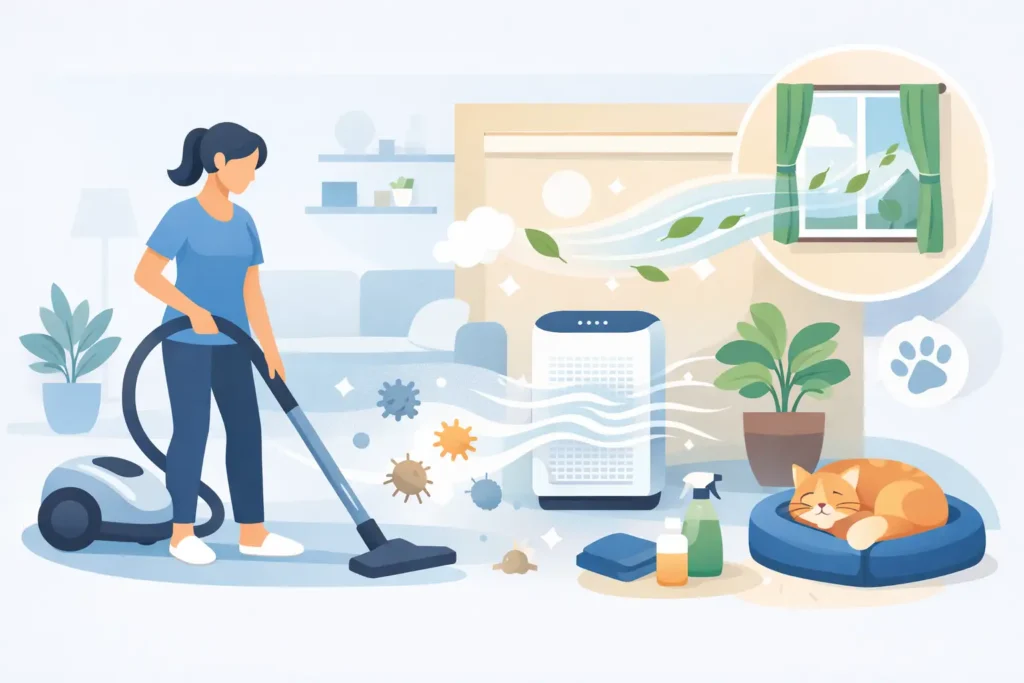
That scratchy throat in the morning, the constant sneezing on the couch, and the dust that seems to return a day after cleaning are not always signs that your home is simply dirty. They can point to allergen buildup. Knowing how to reduce allergens indoors means controlling what collects in your living space, not just masking it with a scented spray.
For GTA homeowners, condo residents, and property managers, the goal is practical: make the air and surfaces easier to live with. You cannot create a completely allergen-free building, but you can reduce the exposure that triggers symptoms and makes rooms feel stale.
Start With the Allergens You Can Actually Control
Indoor allergy symptoms are commonly connected to dust mites, pet dander, pollen, mold spores, and cockroach particles. These do not behave the same way. Pollen often enters from outside on shoes, clothing, open windows, and pets. Dust mites thrive in fabrics and humidity. Mold needs moisture. Pet dander settles into upholstery, bedding, and carpeting.
That is why one product rarely solves the whole problem. A room can look clean while holding allergens in mattress fibers, furnace filters, return vents, blinds, and soft furniture. The smartest approach is to reduce the source, remove what has settled, and improve how air moves through the space.
How to Reduce Allergens Indoors Where They Build Up Most
Make the bedroom your first priority
People spend hours each night in close contact with pillows, bedding, and mattresses. If allergies feel worse when you wake up, start there. Wash sheets and pillowcases weekly in hot water, and use allergy-proof covers on mattresses and pillows when dust mite sensitivity is a concern.
Keep extra pillows, heavy throws, and decorative fabric items to a reasonable minimum. They can look great, but every washable or removable layer is another place for dust to settle. If you have pets, keeping them out of the bedroom can make a meaningful difference for sensitive sleepers, even when the rest of the home remains pet-friendly.
Clean floors and fabrics without sending dust back into the air
Vacuuming helps, but technique and equipment matter. A vacuum with a sealed system and HEPA filtration is a better choice for allergy-prone households because it captures fine particles instead of pushing some of them back into the room. Move slowly over rugs and upholstered furniture, especially in the areas where people sit, sleep, and walk most often.
Hard floors should be damp-mopped rather than aggressively dry-dusted. Dry feather dusters can move allergens from one surface to another. Use a damp microfiber cloth on shelves, baseboards, blinds, and ceiling fan blades so particles are captured instead of stirred up.
Carpet is not automatically a problem, but it needs more attention than hard flooring. If a room has persistent symptoms, an older carpet, and heavy foot traffic, professional cleaning or replacing the carpet with a smooth, washable flooring surface may be worth considering. The right choice depends on the budget, the condition of the carpet, and who uses the space.
Control humidity before mold and mites take over
Humidity is one of the biggest factors homeowners miss. Indoor air that stays too damp can support dust mites and mold growth, especially in bathrooms, basements, laundry rooms, and poorly ventilated bedrooms. Aim to keep indoor relative humidity roughly between 30% and 50%.
Use bathroom exhaust fans during showers and leave them running afterward long enough to clear moisture. Repair plumbing leaks promptly, dry wet materials quickly, and do not ignore condensation around windows or persistent basement odors. A dehumidifier can help in a damp lower level, but it must be emptied and cleaned regularly or it can become part of the problem.
Keep pollen from settling in for the night
During high-pollen periods, small routines matter. Leave shoes near the entrance, change clothes after extended outdoor time, and shower before bed if pollen symptoms are severe. Wiping down pets after walks can also reduce what they carry onto furniture and bedding.
Opening windows can be pleasant, but it is a trade-off during pollen season. If outdoor conditions trigger symptoms, keep windows closed during peak pollen times and rely on properly maintained mechanical ventilation and air conditioning instead. A home should not feel sealed up or stuffy, so the answer is controlled airflow, not permanently closed windows.
Improve Filtration and Airflow
A portable HEPA air purifier can be useful in bedrooms, nurseries, and other rooms where people spend long periods. Size it for the room, run it consistently, and replace filters on schedule. A small unit placed in a large open-concept space will have limited impact, so placement matters as much as the label on the box.
Your central HVAC filter also deserves attention. Check it monthly during high-use seasons and replace it based on the manufacturer’s guidance or sooner if it looks loaded with dust. A higher-efficiency filter can capture more fine particles, but not every system can handle the added resistance. Using a filter that is too restrictive may reduce airflow and put strain on equipment. When in doubt, ask a qualified HVAC professional what your system can support.
Keep supply and return vents clear of furniture, rugs, and storage boxes. Blocked vents create uneven airflow, which can leave some rooms stuffy while dust and moisture linger in others. For condo residents, this may mean checking fan coil filters and ensuring building-maintained ventilation components are not being overlooked.
Do Air Ducts Cause Allergies?
Air ducts are part of the picture, but they are not a magic explanation for every allergy symptom. Cleaning ducts will not remove allergens from a mattress, stop pollen from entering through an open window, or fix a hidden moisture problem. Any company claiming otherwise is selling a shortcut, not a real solution.
Still, ductwork can collect dust and debris over time, particularly after renovations, construction, pest activity, or years of skipped maintenance. If you see dust blowing from registers, notice weak airflow, find visible debris around vents, or have recently completed a renovation, a professional inspection can be sensible.
A proper service should be transparent about what is being cleaned, what the price includes, and whether there is evidence of a problem. Be cautious with unsolicited cold calls and suspiciously low offers that suddenly turn into expensive add-ons at the door. Dust Chasers takes a direct approach: professional duct cleaning should support cleaner airflow and a better-maintained HVAC system, not rely on scare tactics.
Do Not Forget Moisture, Pets, and Pests
Allergen reduction gets harder when there is an unresolved building issue. Musty smells, visible spotting, repeated condensation, water stains, or frequent pest activity need more than surface cleaning. Find and correct the source. A moldy bathroom ceiling may need better exhaust ventilation. A damp basement may need drainage repairs or dehumidification. Pest concerns may require a licensed pest-control provider and better food storage.
Pet owners do not necessarily need to choose between their animals and a more comfortable home. Regular grooming, frequent vacuuming, washable pet bedding, and keeping pets off beds and upholstered furniture can lower dander levels. The best routine is one you can sustain every week, not an extreme plan that disappears after a few days.
A Maintenance Plan That Actually Sticks
Trying to deep-clean everything at once usually leads to burnout. Build a simple rotation instead. Handle bedding and high-touch dusting weekly, vacuum high-use areas at least weekly, check bathroom moisture often, and inspect HVAC filters monthly. Schedule deeper work, such as upholstery cleaning, carpet care, dryer vent maintenance, and duct inspection, based on your household, building age, pets, renovations, and equipment use.
For landlords and property managers, the same principle applies at scale. Clean shared ventilation components on a documented schedule, respond quickly to moisture complaints, and make filter responsibilities clear. A tenant should not have to guess whether poor airflow is caused by a clogged filter, a blocked grille, or a larger mechanical issue.
The most effective home changes are often the least dramatic: a clean filter, dry bathroom, freshly washed bedding, unobstructed return vent, and fewer dust-holding fabrics where you sleep. Make those habits routine, and your indoor air has a far better chance of feeling as clean as your home looks.