


You usually notice it on laundry day first. A load that should be dry in one cycle comes out warm, damp, and frustratingly unfinished. If you are wondering how to know dryer vent is clogged, that change in drying time is one of the clearest warning signs – and one you should not ignore.
A clogged dryer vent is not just an inconvenience. It can drive up energy use, wear out your dryer faster, push moisture into the wrong places, and raise the risk of a dryer fire. For homeowners, condo residents, landlords, and property managers, the real issue is simple: a vent blockage turns a basic appliance into a safety problem.
How to know dryer vent is clogged before it gets serious
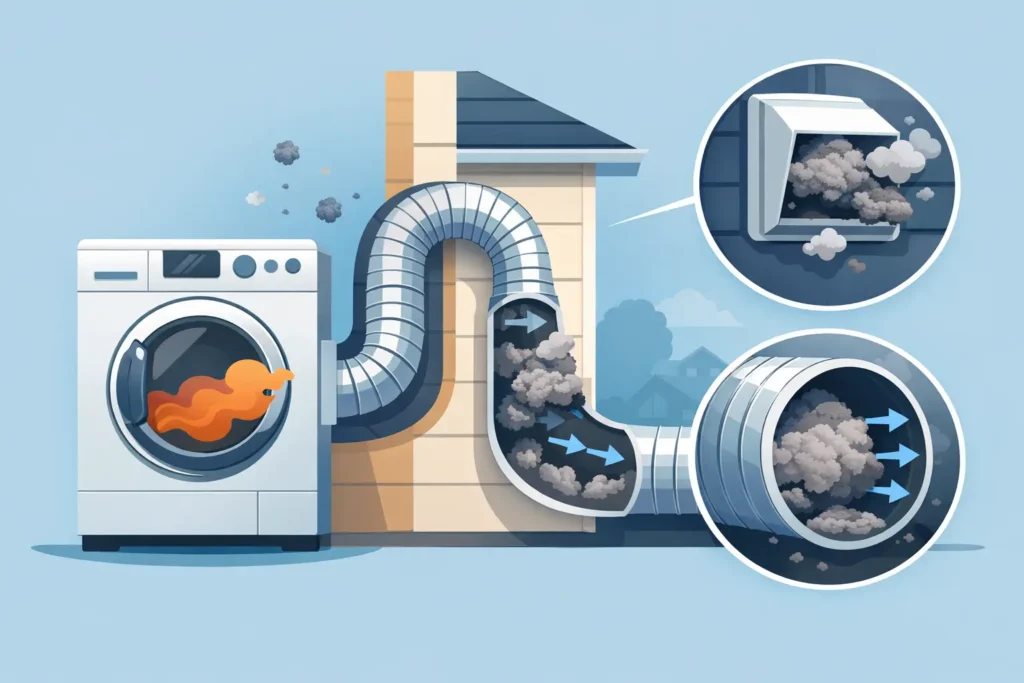
Most dryer vent clogs build slowly. Lint, dust, pet hair, and debris collect over time inside the vent line and at the exterior termination point. Because the blockage builds in layers, many people adapt to the symptoms without realizing what is happening. They run a second cycle. They clean the lint trap and assume that is enough. They blame the dryer itself.
The first major sign is longer drying times. If your dryer suddenly needs two or three cycles for a normal load, restricted airflow is high on the list of likely causes. Clothes may feel hot but still damp because the heated air cannot escape properly. The dryer is producing heat, but the system is not venting moisture out the way it should.
Another common clue is an unusually hot laundry area. If the room feels stuffy, humid, or hotter than normal while the dryer is running, trapped exhaust air may be backing up instead of moving outdoors. In smaller laundry rooms, closets, and condo utility spaces, this tends to show up quickly.
You may also notice a burning smell. That smell can come from lint overheating inside the vent or near internal dryer components. Not every odor means an active fire hazard in that moment, but it always means stop and pay attention. Heat and trapped lint are a bad combination.
The signs most people miss
Some symptoms are obvious. Others are easier to brush off.
One of the most overlooked signs is excess lint around the dryer, behind the appliance, or near the outside vent hood. A properly venting system should move exhaust air cleanly outside. If lint is escaping into the laundry area or collecting around the vent opening, airflow is likely restricted.
Another missed sign is the outside vent flap not opening properly when the dryer runs. That flap should move with the force of outgoing air. If it barely opens, opens weakly, or does not move at all, the line may be clogged. In colder months, some people assume weather is the problem. Sometimes it is. But if the vent stays sluggish in normal conditions, it needs attention.
Condensation is another red flag. You might see moisture on walls, windows, or nearby surfaces after a drying cycle. That means humid air is not leaving the system effectively. In multifamily buildings and tighter utility spaces, this can contribute to stale air, mildew smells, and moisture-related damage over time.
Then there is the dryer itself. If it shuts off mid-cycle, trips a safety limit, or seems to overheat, the machine may be protecting itself from restricted airflow. That does not mean the problem is solved. It means the vent system may already be stressing the appliance.
Why a clogged vent is more dangerous than it looks
People often think of lint as soft and harmless. Inside a dryer vent, it is fuel.
When hot, moisture-heavy air cannot move out freely, heat builds up inside the dryer and vent line. Lint collects in bends, joints, long runs, and poorly installed sections of duct. The more buildup there is, the harder the system has to work. That creates the exact mix you do not want – trapped heat, restricted airflow, and combustible debris.
The risk is not limited to older homes. It shows up in houses, condos, rental units, and commercial laundry setups alike. In condo buildings especially, hidden vent runs can make problems harder to spot early. A resident may only notice longer dry times, while the actual buildup sits deeper in the line.
There is also the cost issue. When a dryer runs longer than necessary, utility bills rise and appliance parts wear down faster. Heating elements, thermostats, blowers, and motors all take the hit. What starts as a vent maintenance issue can turn into a repair or replacement bill.
A simple way to check for a blockage
You do not need to take the whole system apart to spot a likely problem.
Start with a load of freshly washed clothes and run the dryer for several minutes. Go outside and check the vent hood. You should feel a steady, noticeable flow of warm air. If the airflow is weak, inconsistent, or absent, the vent may be restricted.
Look at the vent cover while the dryer is running. The flap should open fully or close to it. If it barely moves, that points to poor exhaust pressure. If the cover is packed with lint, debris, or even nesting material, that alone can create a blockage.
Inside, check whether the dryer feels excessively hot to the touch. Warm is normal. Very hot is not. Pay attention to whether clothes are drying evenly and whether the laundry area feels humid after one cycle.
You can also inspect the lint trap, but this is where many people get a false sense of security. A clean lint screen is good maintenance, but it does not tell you the vent line is clear. Plenty of serious clogs happen beyond the lint trap, especially in longer vent runs.
When it might not be the vent
A fair question is whether every drying problem means the vent is clogged. Not always.
Sometimes the issue is overloading the dryer, which prevents proper tumbling and airflow through the clothes. In other cases, a crushed transition hose behind the dryer is the real problem. You can also see poor drying from a failing heating element, a bad moisture sensor, or an improperly installed vent line.
That is why context matters. If you have multiple symptoms at once – longer dry times, heat buildup, humidity, lint around the vent, and weak outside airflow – a clogged vent becomes much more likely. If it is just one symptom and the dryer is otherwise behaving normally, the cause may be more specific.
Still, vent blockage is common enough that it should be ruled out early, especially before anyone starts replacing appliance parts unnecessarily.
How often should a dryer vent be cleaned?
It depends on use. A single occupant doing light laundry will not build lint as quickly as a large family washing daily. Homes with pets usually see faster buildup. Shared laundry systems, rental properties, and commercial settings can need more frequent attention because usage is heavier and more varied.
As a general rule, annual dryer vent cleaning is a smart baseline. If you are already seeing warning signs before that mark, do not wait. Buildings with long duct runs, multiple turns, or rooftop venting often need closer monitoring because those setups collect debris more easily and are harder to clear fully without the right equipment.
For property managers and landlords, this is one of those maintenance items that pays for itself in reduced risk. It also helps avoid the tenant complaint cycle of poor dryer performance, rising energy use, and recurring service calls.
When to bring in a professional
If the vent is short, accessible, and lightly obstructed at the exterior, some minor maintenance may be straightforward. But many vent systems are not simple. They run through walls, ceilings, shafts, and long concealed pathways. In condos and multifamily buildings, access and code concerns matter too.
Professional service makes the most sense when airflow is clearly poor, the vent line is long, the blockage is not visible, or the dryer has been showing repeated overheating signs. A proper cleaning should address the full run, not just the easy-to-reach ends. That is the difference between a real fix and a temporary improvement.
In the Greater Toronto Area, where many homes and condos have tight mechanical spaces and complex vent routing, a thorough inspection matters just as much as the cleaning itself. That is where a serious company separates itself from cheap, rushed operators. Dust Chasers built its reputation on that kind of direct, safety-first service.
The smartest move is acting early
If your dryer is taking longer, heating up your laundry room, or pushing out weak airflow, do not wait for a harsher warning sign. A clogged vent rarely fixes itself, and the cost of ignoring it can show up in fire risk, moisture problems, and a dryer that quits before it should. The safest habit is simple: treat those small performance changes like the early warning they are.